Spathiphyllum 'Mauna Loa': The classic.
The peace lily everyone's grandparent had. Reliable, tolerant, generous with flowers.
At a glance
- Mature size
- Large cultivar; allow room for foliage to spread
- Leaf
- Glossy dark green
- Bloom
- White spathes; timing varies with conditions
- Notable
- Large green-leaved cultivar
Care notes specific to 'Mauna Loa'
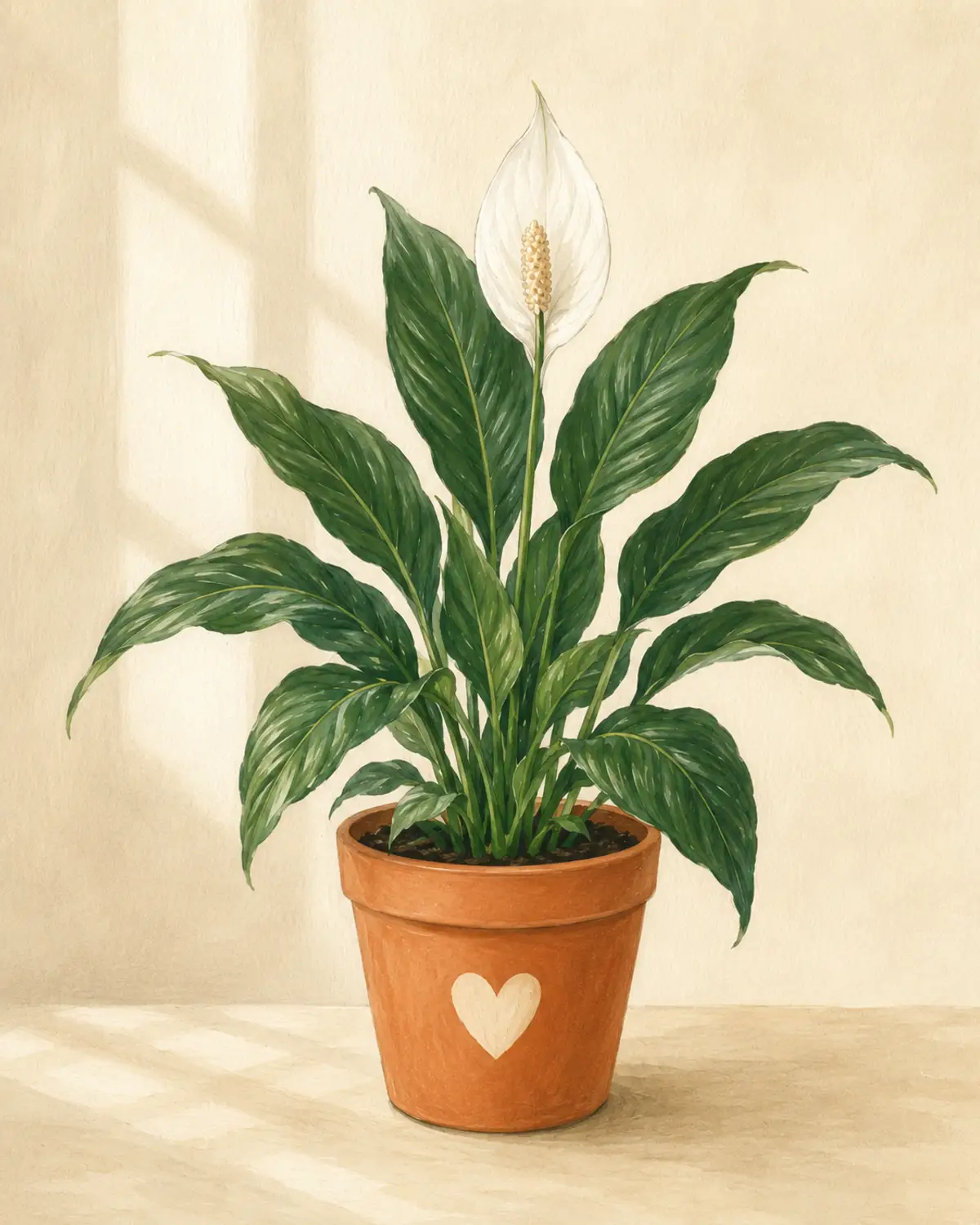
'Mauna Loa' is a large green-leaved peace lily. NC State Extension describes its long, broad foliage; allow space around the plant rather than treating a nursery pot as a guide to its final size. Confirm the full cultivar label and expected height and spread with the grower.
- Light: bright indirect light supports growth and flowering. Avoid a permanently dark corner.
- Pot size: match the pot to the root ball; several crowns do not automatically require a much larger container.
- Repotting: inspect for crowded roots before moving up. See the root-based pot-size guide.
- Bloom rate: variable indoors; good light helps, but no fixed annual number of blooms is guaranteed.
- Replacement: check the cultivar label and root health rather than selecting on price or flowers alone.
Best fit
'Mauna Loa' is the classic peace lily for people who want a reliable green plant with a good chance of blooming indoors. It fits plant stands, corners near bright windows, and medium-size rooms.
Why it is forgiving
The green leaves have plenty of chlorophyll, so this cultivar handles ordinary indoor conditions better than strongly variegated types. It still prefers bright indirect light, but it is less fussy than 'Picasso' or 'Domino' about maintaining leaf color.
Blooming expectations
'Mauna Loa' is a good candidate if flowers matter to you. Give it bright indirect light, steady warmth, and light spring feeding. If it stops blooming after purchase, keep the leaves healthy and give it time to adapt to home conditions.
Buying checklist
- Choose firm glossy leaves with no sour soil smell.
- Do not worry if some older blooms are green or brown.
- Check that the plant is not sitting in standing water.
- Inspect the crown for crowded stems if you plan to divide later.
Pot and placement
A mature plant usually needs a medium pot with drainage and enough weight to stay upright. Place it where the leaves can arch naturally. Rotate it every week or two if it leans toward the window.
Common issues
Yellow leaves usually point to watering or old age. Lack of blooms usually points to light. Brown tips can come from water quality, dry air, fertilizer, or repeated wilting. Use the symptom pages instead of guessing from one leaf.
Watering rhythm
Water when the upper soil begins to dry and the pot feels lighter. 'Mauna Loa' can forgive small mistakes, but it still dislikes standing water. Deep watering with drainage is better than frequent tiny sips.
Repotting notes
Repot when roots crowd the pot or water runs through too quickly. This cultivar often forms a full clump, so division during repotting is possible if each section has roots and a firm crown.
Cleaning and display
Glossy green leaves look best when dust-free. Wipe monthly and remove spent blooms at the base. A clean plant also makes pests and brown tips easier to catch early.
Choose 'Mauna Loa' if
Choose it if you want the classic peace lily experience: green leaves, white spathes, and forgiving care. It is a better first peace lily than a high-variegation cultivar.
How to compare it in a shop
Look for a full crown, firm stems, and leaves that are glossy rather than dusty and limp. Blooms are a bonus, but do not choose a plant only because it has the most flowers. Roots and leaves matter more for long-term success.
Long-term shape
'Mauna Loa' should become a rounded green clump. Rotate it, remove old bloom stalks, and divide only when crowded. A stable routine keeps the classic shape better than frequent moves and repots.
FAQ
Is 'Mauna Loa' good for beginners? Yes, it is one of the better classic choices. Will it bloom indoors? It can in bright indirect light. Is it pet-safe? No peace lily is safe for chewing by cats or dogs.
Best reason to choose it? It balances forgiving foliage with a good bloom potential.
Best place? A warm bright room where its leaves can arch naturally.
Biggest mistake? Chasing blooms before fixing light.
Best habit? Deadhead old blooms and keep leaves clean.
'Mauna Loa' compared to other cultivars
'Mauna Loa' is the default — but the right cultivar depends on your room and patience. Compare:
- 'Sensation' — the giant. Same green simplicity, but a 4–6 ft floor plant. Choose this if you want a statement specimen.
- 'Domino' — the compact tabletop variegated alternative. Smaller, prettier, slightly fussier about light.
- 'Clevelandii' — a green-leaved option to compare for leaf shape and available space.
- 'Picasso' — the dramatic panel-variegated cultivar. A collector choice that needs more light and costs more.