Peace lily soil problems: read the root zone.
Water sitting on top, running down the sides, or leaving the pot wet for days can have different causes. Check the mix, roots and drainage before changing your watering routine.
At a glance
- Water pools on top
- Check compaction, dry water-repellent mix and drainage
- Water escapes down the sides
- Check whether the center of the root ball is actually wet
- Soil stays wet
- Check light, pot size, drainage and watering frequency together
- Need a new mix?
- See the dedicated best-soil guide for ingredients and an example blend
If you are choosing a new bag or mixing soil for repotting, go to the best soil for a peace lily guide. This page helps you diagnose the mix already in the pot.
Water pools on top or runs around the edges
Do not judge soil by an exact drainage time. Container depth, moisture, root density and the amount poured all affect it. Water slowly in more than one pass and check whether the center of the root ball becomes evenly damp, rather than assuming runoff means it is watered.
A dry mix that has pulled away from the pot may repel water. Try careful rewetting and let the container drain fully. If the mix stays compacted or the roots occupy nearly all the pot, inspect the root ball and consider repotting. Do not keep soaking a plant whose center is already wet.
What good soil feels like
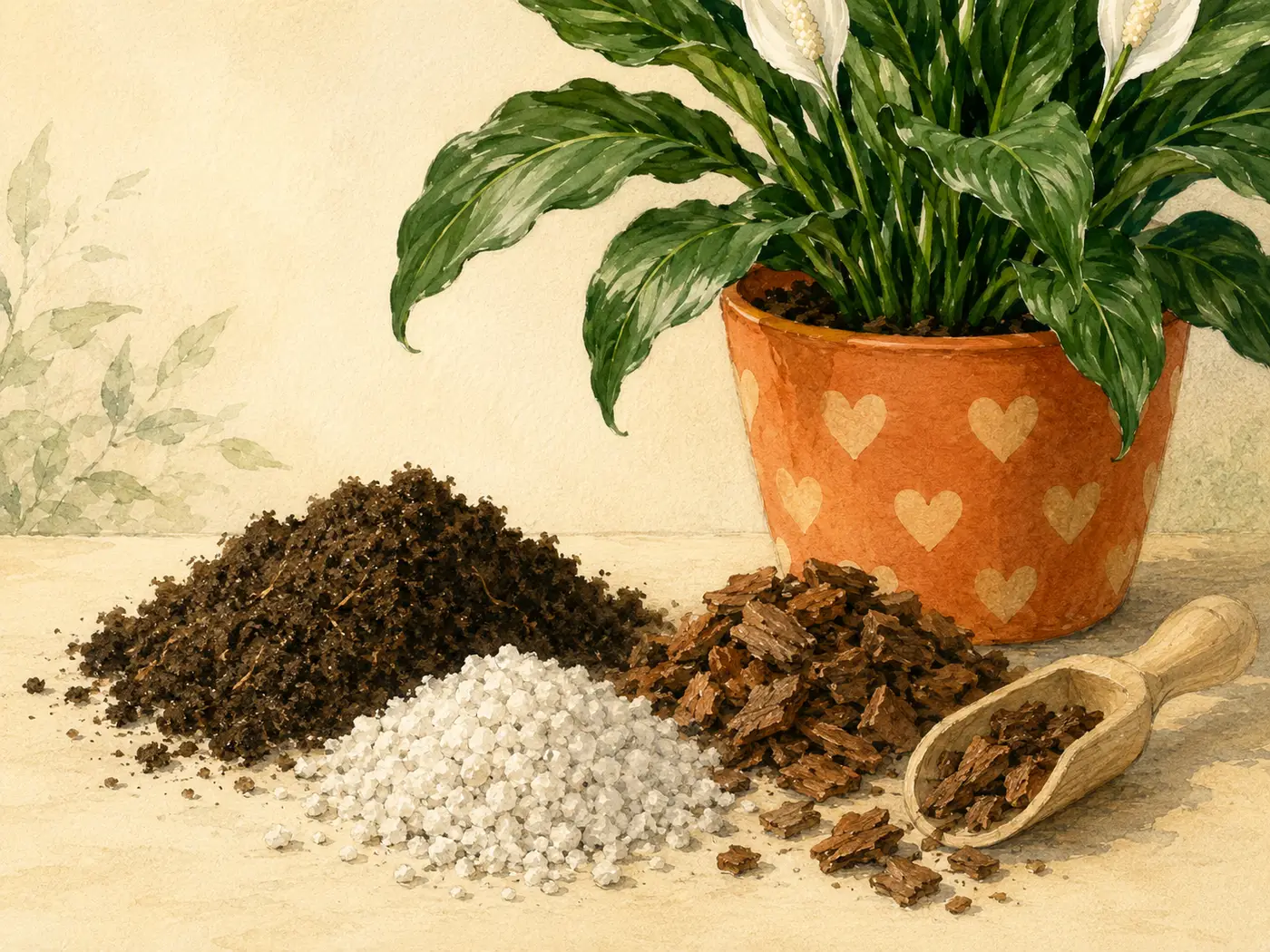
Good peace lily soil feels light, springy, and slightly chunky. When damp, it should hold together briefly but crumble apart when touched. If it turns into paste, it is too dense. If it refuses to absorb water, it may be too dry, old, or root-bound.
The mix should hold enough moisture for broad leaves, but roots still need oxygen. That balance matters more than the brand on the bag.
When soil is the real problem
- Water pools on top: the mix may be compacted or hydrophobic. Try bottom watering to rewet, or repot.
- Water runs down the sides: the root ball may be tight or pulled away from the pot. Time to repot.
- The pot stays wet for a week: the mix may be too dense, the pot too large, or light too low.
- The soil smells sour: unpot the plant and check for root rot.
Soil and pot size work together
Even a good mix can stay too wet in an oversized pot. A dense mix can cause trouble even in a correctly sized pot. When repotting, choose both carefully: a modest pot with drainage (see pot sizing) and a breathable mix that fits your room conditions. The detailed mix recommendations are in the best soil guide.
Adjust the mix for your room
No recipe is perfect for every home. In a bright, warm room, a peace lily can use water faster, so a slightly more moisture-retentive mix may be fine. In a cool or dim room, add extra perlite or bark so the root zone does not stay wet too long.
If you are a generous waterer, make the mix airier. If your home is hot and dry and the plant wilts too quickly, keep more moisture-holding material in the mix and use a pot that is not too small.
What about store-bought mixes?
Most indoor potting mixes can work if they are not dense and soggy. Before using one straight from the bag, look at the texture. If it is dark, fine, and heavy, cut it with perlite. If it already contains chunky material and drains well, you may only need a small adjustment.
Do not use garden soil in a pot. It compacts, drains poorly indoors, and can bring in pests or pathogens. A container plant needs container mix.
When to refresh soil without a full repot
If the plant is large and healthy but the top layer has crust, dust, or fertilizer buildup, remove the top inch or two and replace it with fresh mix. Do not disturb the whole root ball unless the plant is root-bound, the soil has collapsed, or there are root-health concerns.
If the plant is small, sick, or recently moved, avoid unnecessary soil work. Stability often helps more than another change.
After any soil change, water once to settle the mix, then let the top inch begin to dry before watering again. The new mix may dry at a different speed than the old one.