When to repot a peace lily.
Repot because the roots or soil need it, not because the leaves had one dramatic afternoon. These are the signs that actually matter.
Fast decision guide
- Most common timing
- Every 18-24 months for an actively growing indoor peace lily.
- Best season
- Spring or early summer, before the plant is under heat or low-light stress.
- Most reliable sign
- Roots circling the pot or pushing through drainage holes.
- Do not repot for
- One yellow leaf, a short thirst droop, or a plant that is already rotting.
The clearest signs it is time
The best repotting signals come from the pot, not the leaves. A peace lily can droop from dry soil, wet soil, heat, cold, low humidity, transplant shock, or root damage. Leaves are noisy. Roots and watering behavior are more useful.
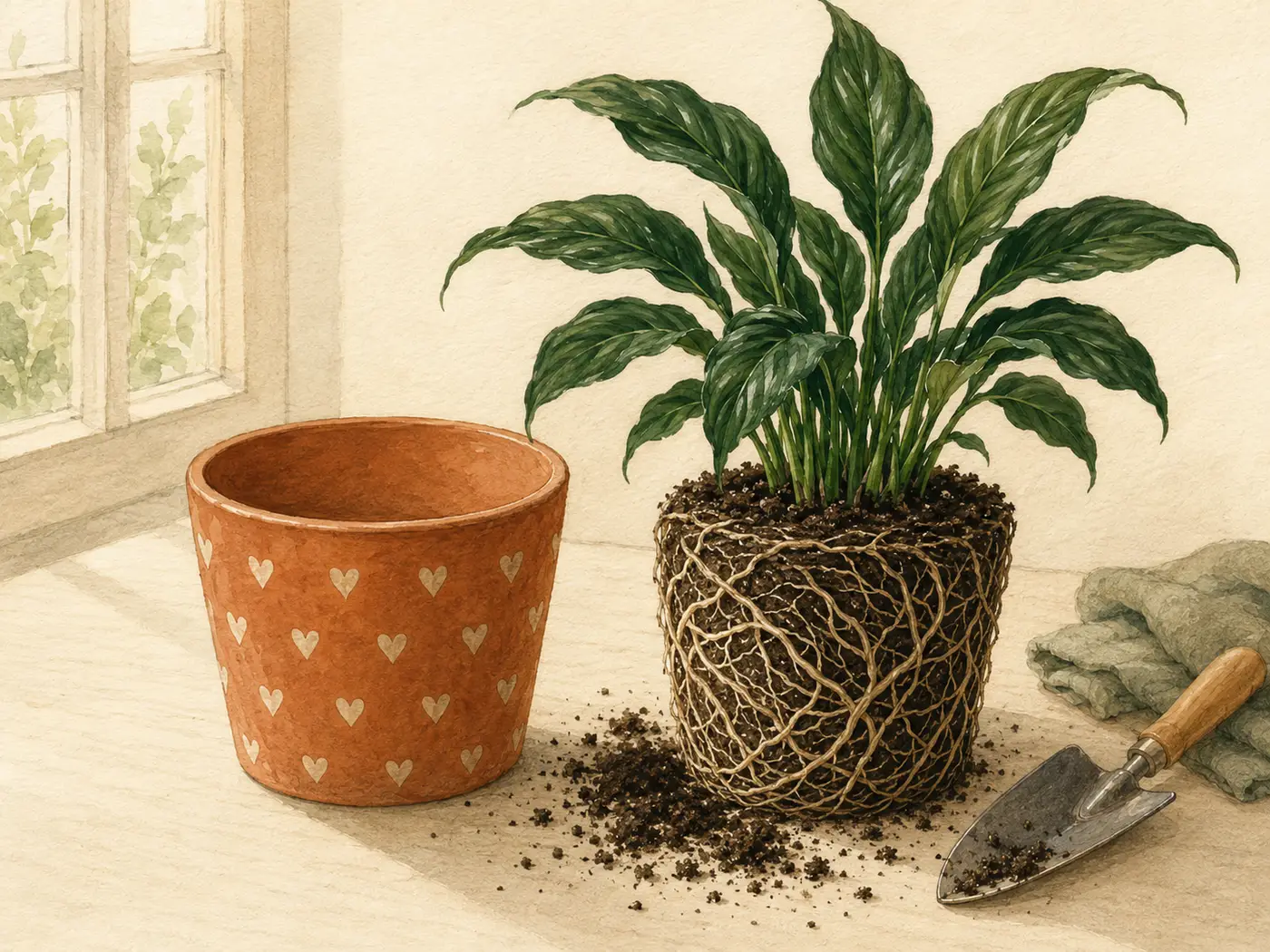
Repot when roots are circling tightly around the outside of the root ball, pushing out of drainage holes, or lifting the plant upward in the pot. Another good clue is water behavior: if water runs straight down the sides and out of the bottom within seconds, the root ball may be packed so tightly that the mix no longer absorbs evenly.
The check I would do first
- Water normally and watch the pot. If water pools on top for a long time, the soil may be compacted. If it disappears instantly and drains out cleanly, the root ball may be crowded or hydrophobic.
- Look under the pot. A few visible root tips are normal. A mat of roots pushing through drainage holes means the plant is running out of room.
- Slide the plant out if you are unsure. Tip the pot sideways and support the crown. If the root ball holds the exact shape of the pot and roots are wrapped around the outer wall, repotting is reasonable.
- Smell the soil. Fresh soil smells earthy. Sour, swampy, or rotten smells point toward root rot, which needs cleanup and a smaller recovery pot, not a casual size upgrade.
A peace lily can collapse when thirsty and recover within hours after watering. That is not a repotting signal by itself. Repeated wilting one day after watering is more suspicious, because the root ball may be too crowded or the soil may no longer hold water evenly.
When repotting can wait
If the plant is growing, flowering, and the soil still accepts water evenly, you do not need to disturb it just because two years have passed. Peace lilies often bloom better when they are slightly snug. A pot full of roots is a problem only when the plant cannot use water properly, growth has stalled during the growing season, or the soil structure has broken down.
Wait if the plant is in winter low light, if it recently came home from a store, or if it is already stressed from a move. Give it stable care first. Once new growth appears again, repotting is less likely to pile one stress on top of another.
When repotting is urgent
Routine repotting can wait for spring. Root rot cannot. If the plant is wilting in wet soil, dropping yellow leaves quickly, or smelling sour, remove it from the pot and inspect the roots. Trim mushy roots, refresh the soil, and use a pot that matches the reduced root mass. That is a rescue repot, not an upgrade.
What to do next
If the signs point to a crowded but healthy plant, choose a pot only one size larger and use a loose mix. Then follow the full step-by-step repotting guide. If the signs point to wet soil and decay, read the root rot guide before you touch the plant.
If the signs are mixed, wait a week and observe watering behavior. A plant that dries normally and keeps growing can wait. A plant that stays wet, smells sour, or keeps wilting needs root inspection sooner.
Sources & further reading
- University of Florida IFAS Extension — Spathiphyllum cultural notes.
- RHS plant database, retrieved May 2026.
- Missouri Botanical Garden — Spathiphyllum wallisii.