Peace lily care, made practical.
Give it bright indirect light, water when the top inch starts to dry, keep the soil airy, and protect it from cold drafts.
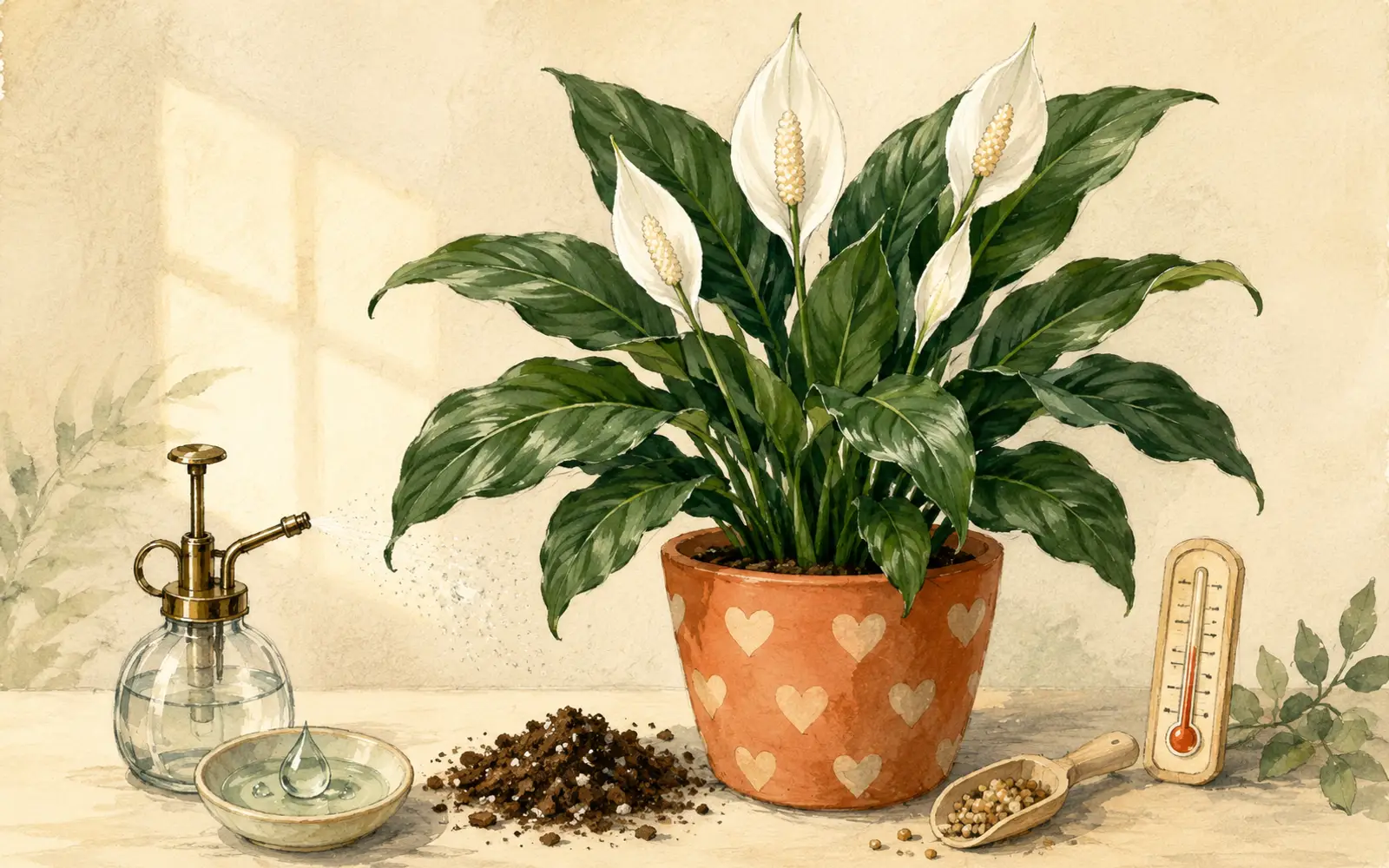
Quick care answer
- Light
- Bright indirect light. Near an east window, filtered south/west light, or a bright room away from harsh direct sun.
- Water
- Water thoroughly, then wait until the top inch of mix begins to dry. Do not keep the saucer full.
- Soil
- Indoor potting mix amended with perlite or fine bark so water drains and roots still get air.
- Humidity
- Average home humidity is workable; 40-60% is better. Brown tips often mean dry air or inconsistent watering.
- Temperature
- 65-80°F is ideal. Keep it away from cold windows, AC vents, heaters, and exterior doors.
- Fertilizer
- Half-strength balanced fertilizer every 6-8 weeks in spring and summer only.
Light
Bright indirect light, translated into real rooms and windows.
Watering
How to water deeply, then wait long enough to avoid rot.
Water quality
Tap water, minerals, salts, and brown-tip troubleshooting.
Soil
A loose, moisture-retentive mix that still drains freely.
Humidity
What brown tips mean, and which fixes actually help.
Temperature
Warm, steady rooms without cold drafts or heat blasts.
Fertilizer
Light feeding in the growing season, not year-round pushing.
Cleaning leaves
Dust removal, pest checks, and what not to wipe on leaves.
Pruning
Remove yellow leaves, spent blooms, and brown tips correctly.
Summer care
Heat, patio shade, faster drying, pests, and AC stress.
Winter care
Slower watering, cold windows, dry rooms, and no forced growth.
Before care: the plant has to be healthy when you bring it home
This guide assumes you started with a healthy plant. If you are still shopping or recently bought a struggling plant from a discount shelf, work through the buying and inspection guide first. A plant that arrived with root rot, mineral burn, or a heavy pest load is a rescue project, not a routine-care project, and the advice on this page only works once those underlying issues are resolved.
The care idea that matters most
A peace lily is forgiving, but it is not random. Most bad advice treats care as a fixed schedule: water every Saturday, fertilize monthly, mist daily, repot every year. Real care is more responsive than that. The plant changes with light, season, pot size, soil age, room temperature, and how much root mass it has.
The best routine is simple: give the plant enough light to use water, use a pot and soil mix that do not stay swampy, then water based on the soil instead of the calendar. Once those basics are stable, humidity, fertilizer, and repotting become refinements instead of emergency repairs.
Light decides how much water the plant can use
Peace lilies are often sold as low-light plants, but "tolerates low light" is not the same as "thrives in low light." In a dim corner, the plant grows slowly and uses water slowly. If you water that plant like it is sitting beside a bright window, the soil can stay wet long enough to damage roots.
A good placement is bright enough that you can read comfortably without turning on a lamp during the day, but not so harsh that direct afternoon sun burns the leaves. East windows are usually easy. South and west windows often need distance or a sheer curtain. North windows can work if the room is genuinely bright.
Water deeply, then wait
When it is time to water, water the whole root ball until water drains from the bottom. Then empty the saucer. Small sips encourage uneven moisture and can leave dry pockets inside the pot. Constant standing water does the opposite problem: it removes oxygen from the root zone.
Check the top inch of soil with your finger or a wooden skewer. If it is still cool and damp, wait. If the top is starting to dry and the pot feels lighter, water. A thirsty peace lily may droop dramatically and recover after watering, but repeated drooping every few days usually means the pot, roots, or soil need closer attention.
Soil should hold moisture without suffocating roots
A peace lily likes an evenly moist mix, not dense mud. Many bagged indoor potting mixes work better after you add perlite or fine bark. The amendment keeps air spaces open and helps water move through the pot instead of sitting in a heavy lower layer.
If water races through instantly, the plant may be root-bound or the soil may have become hydrophobic. If water sits on top, drains slowly, and the pot stays heavy for a week, the mix may be too dense or the plant may not be getting enough light to use the water.
Humidity helps, but it is not a magic fix
Peace lilies prefer moderate humidity, especially during winter heating. Brown tips can become worse in dry rooms, but humidity is only one possible cause. Mineral-heavy water, fertilizer buildup, inconsistent watering, heat vents, and old leaf tips can all look similar.
A small humidifier near a plant group is more useful than casual misting. Pebble trays add only a tiny amount of local humidity, but they can still keep a pot out of standing water if used correctly. The main goal is steady conditions, not a wet leaf surface every morning.
Temperature and fertilizer are quiet care factors
Peace lilies prefer the same temperatures people usually enjoy: warm, stable rooms. Cold drafts are the bigger danger. A plant near a winter window, exterior door, or AC vent can develop limp, dark, or damaged leaves even when watering looks correct.
Fertilizer should be light. A peace lily growing in decent light can use diluted fertilizer in spring and summer. A plant in low light, fresh potting mix, or active stress does not need more food. Overfertilizing can create brown tips and salt buildup, which then gets mistaken for a humidity problem.
A simple weekly care rhythm
- Look at the light first. Has the plant been moved, shaded, or exposed to harsher sun?
- Check soil moisture before watering. Use your finger, the pot weight, or a wooden skewer.
- Inspect leaves while you water. Yellowing, brown tips, curling, and drooping tell you where to look next.
- Empty the saucer. This one habit prevents a surprising number of root problems.
- Rotate only if growth is leaning. A quarter turn every week or two is enough.
When something looks wrong
Do not change everything at once. If the plant droops, check whether the soil is dry or wet before watering. If leaves yellow, look at the oldest leaves first and compare watering, light, and root health. If tips brown, check water quality, fertilizer, dry air, and inconsistent watering before blaming one cause.
Good troubleshooting is sequential. One clear change, then observe. Peace lilies often respond within days to watering corrections, but root recovery and new growth take longer. For pot choice, use the peace lily pot-size chart; for a mix that needs replacing, use the soil selection guide. For one-line answers to recurring questions across all of these topics, the peace lily FAQ is the fastest reference.
Seasonal care, in one table
Peace lily needs shift with the seasons because indoor conditions change with the heating, AC, and light cycle. Use this as a calibration, not a calendar:
| Season | Watering | Light | Fertilizer | Watch for |
|---|---|---|---|---|
| Spring | Check more often as growth resumes; water when the mix needs it | Move to brightest indirect spot of the year | Begin half-strength feeding every 6 weeks | New leaf push; ideal repotting window |
| Summer | Check daily in heat waves; water according to soil moisture | Shade from harsh afternoon sun | Continue half-strength every 6 weeks | Spider mites in dry AC air; quick drying |
| Autumn | Allow for slower drying as light and growth decrease | Same indirect light; turn pot if growth leans toward dimmer windows | Last feed in early autumn, then stop | Cold-snap drafts near windows |
| Winter | Lift the pot and check the soil; cool rooms may dry slowly | Move closer to a window if growth pales | Usually reduce or pause if growth slows | Heater-dried air, cold glass, fungus gnats in slow-drying soil |
Common peace lily care myths
The advice repeated most often is not always the most accurate. These common shortcuts can make care harder:
- "Water once a week." A pot in a sunny room may need water in three days; the same pot in a cool corner may go three weeks. Use the soil as your trigger, not the day of the week.
- "They love low light." They tolerate low light. They bloom and grow well in bright indirect light. A dim corner means slow growth, no flowers, and higher risk of root rot because the plant uses less water than you give it.
- "Misting is humidity." Misting raises humidity only briefly. The water evaporates from leaves; the air dries out again. A humidifier can maintain humidity more consistently; a pebble tray has a limited effect.
- "They purify the air." The 1989 NASA chamber study showed VOC reduction in a sealed box. In a real home with normal airflow, the effect is essentially zero. Honest version of the air-purifying claim.
- "Bigger pot = healthier plant." The opposite. A pot too large for the root mass holds wet soil that the roots cannot reach, and that wet outer ring is where rot starts.
Care quick-reference, by symptom
| If you see this | Look here first |
|---|---|
| Yellow lower leaves, soil damp | Yellow leaves · Root rot |
| Brown crispy leaf tips | Brown tips · Water quality |
| Drooping leaves | Drooping · Watering |
| No flowers despite green leaves | Not blooming · Light |
| Fine webbing, sticky residue, or flying gnats | Pests & diseases |
| Pale, leggy growth | Leggy growth · Light |
| Black mushy leaves overnight | Black leaves · Temperature |
Sources & further reading
- University of Florida IFAS Extension — Spathiphyllum cultural notes.
- RHS plant database, retrieved May 2026.
- Missouri Botanical Garden — Spathiphyllum wallisii.