The flower has turned brown.
End of the bloom cycle. Time to deadhead — here's how.
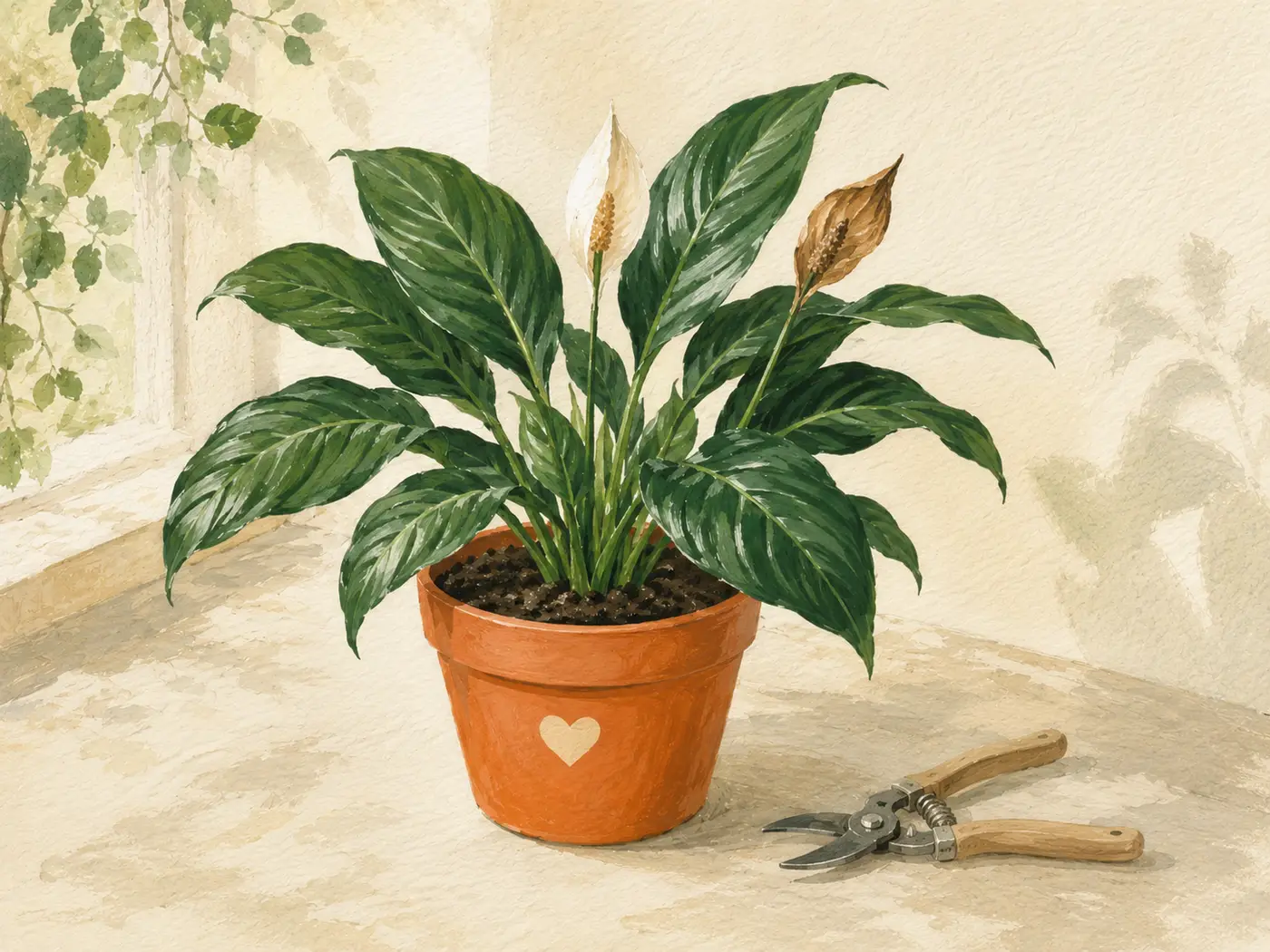
At a glance
- Cause
- Spathe is finished
- Lifespan
- 4–6 weeks per bloom
- Action
- Cut the stem at its base with sharp scissors
How to deadhead
Follow the spent flower stem all the way down to where it emerges from the crown. Cut at the base — never partway up. The plant will redirect energy to new buds.
When brown is normal
A peace lily bloom naturally ages from white to cream, green, tan, and brown. Once the spathe is brown, papery, or drooping, that bloom is finished. The plant is not dying just because an old bloom is done.
When brown is stress
Brown blooms can also appear early if the plant dries too hard, sits in direct sun, gets chilled, or is fertilized too strongly. If a new bloom browns within days instead of weeks, check the whole plant: leaves, soil moisture, light, and temperature.
Where to cut
Use clean scissors or pruners. Trace the flower stalk down through the leaves and cut as close to the base as you can reach without damaging nearby stems. Leaving a long bare stalk looks untidy and will not rebloom from the cut point. The full pruning guide covers this cut alongside removing yellow leaves and trimming brown tips.
Should you remove green blooms?
You can leave green blooms until they brown, or cut them once they no longer look attractive. Removing an old green spathe will not hurt the plant. If the plant is small or stressed, deadheading sooner can reduce the energy spent maintaining old bloom stalks.
After deadheading
Return to normal care. Do not fertilize immediately just because you cut a bloom. Future flowers depend more on bright indirect light, healthy roots, and season than on the act of deadheading itself.
What if all blooms brown at once?
If every bloom browns quickly, look for a recent change: the plant moved from a store to your home, a heat vent started running, the soil dried completely, or direct sun touched the spathes. Store-bought blooms often finish together because they opened around the same time.
How to encourage the next bloom
Keep leaves clean, provide brighter indirect light, and feed lightly during active growth if the plant is healthy. A spent bloom is not a failure; it is the end of one cycle and the start of the plant rebuilding energy for the next one.
Brown spadix vs brown spathe
The spadix is the small upright center. The spathe is the white or green hood around it. Sometimes the spadix browns first while the spathe still looks decent. You can leave it until the whole bloom declines, or remove the stalk if the brown center bothers you.
Do brown blooms mean you did something wrong?
Usually no. Every bloom has an end. The plant may still be perfectly healthy if leaves are green, upright, and growing. Browning is only a warning sign when it happens to new blooms very quickly or comes with leaf symptoms.
Deadheading after a store bloom
Store plants often arrive with several blooms at the same age, so they may all brown close together. Cut them as they fade and let the plant settle. The next home-grown bloom may take months because the plant is adjusting to new light, humidity, and watering.
Aftercare checklist
- Remove the spent stalk at the base.
- Keep the plant in bright indirect light.
- Do not feed heavily to replace the bloom.
- Watch new leaves as the main health signal.
Should you cut the stem before it browns?
You can cut a bloom any time it stops looking good to you. Waiting until it browns is natural, but cutting earlier is fine if the spathe is green, bent, or distracting. Always remove the whole stalk rather than trimming just the colored part.
Use clean scissors so the cut does not crush nearby stems.
Sources & further reading
- University of Florida IFAS Extension — Spathiphyllum cultural notes.
- RHS plant database, retrieved May 2026.
- Missouri Botanical Garden — Spathiphyllum wallisii.