The light a peace lily wants (without scorching it).
Bright, indirect light is the holy grail. But that phrase hides a lot — let's define it precisely.
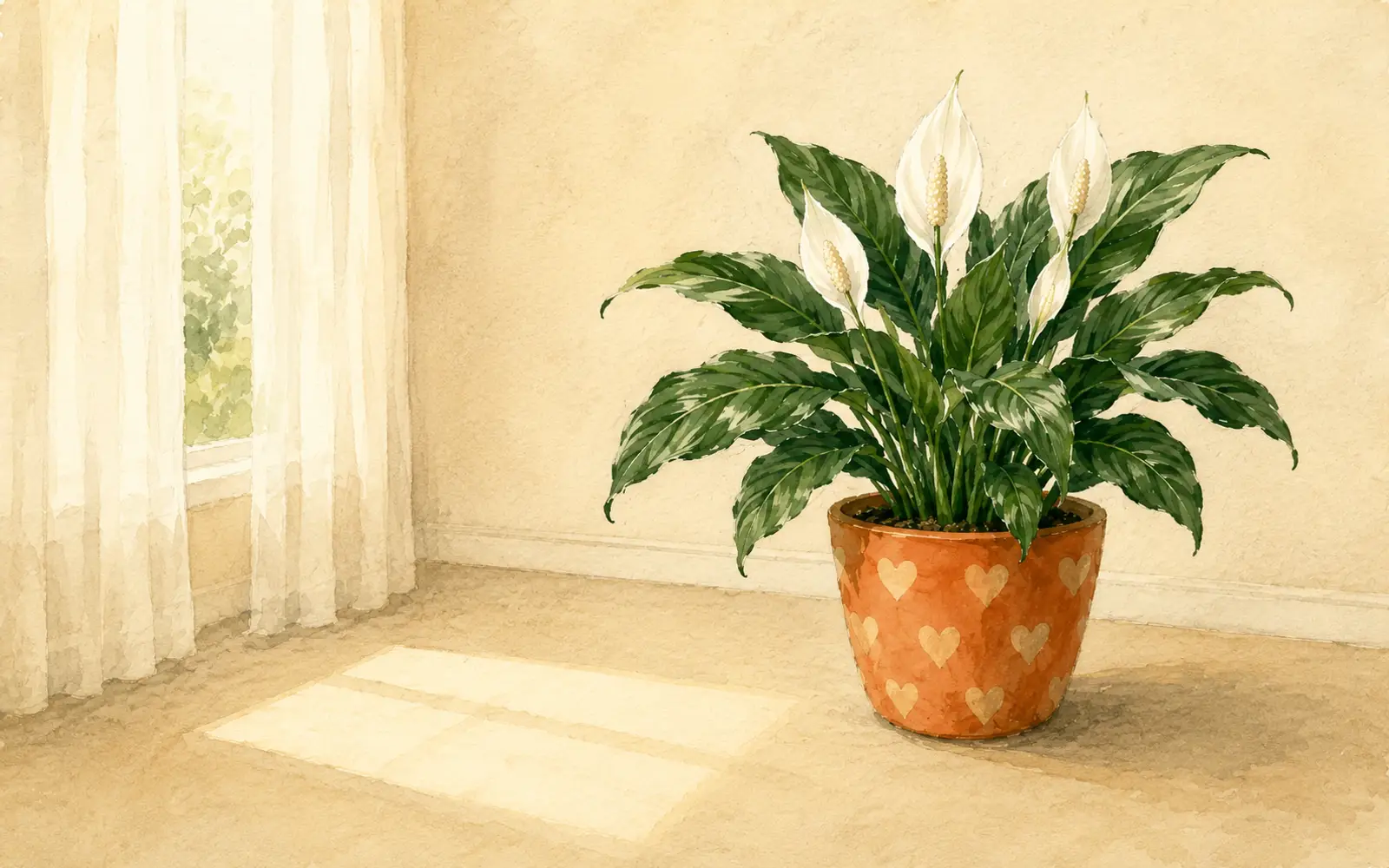
At a glance
- Ideal
- Bright, indirect light — 200 to 500 foot-candles.
- Tolerates
- Low light, but won't bloom there.
- Avoid
- Direct afternoon sun (south/west windows).
- Test
- You should be able to read a book at noon without a lamp.
What "bright indirect" actually means
If you can comfortably read a book at noon without a lamp, but you couldn't sunbathe in that spot, that's bright indirect. The plant should "see" the sky but not the sun.
Translated to real rooms:
- East-facing window: on the windowsill is fine — gentle morning sun won't burn.
- North-facing window: right on the sill, and the brightest spot in the room.
- South or west window: 4–6 feet back, or behind a sheer curtain.
Symptoms of too little light
- Long stems with leaves spaced widely apart (leggy growth).
- No flowers for over a year.
- Pale, faded green leaves.
Symptoms of too much light
- Yellowing on the upper, sun-facing side.
- Brown, papery patches mid-leaf (sunburn).
- Soil drying out within a day or two of watering.
Best spots in a real home
A peace lily usually does best close to a bright window but outside the harshest direct sun. A few feet from an east window is easy. A north window can work if the room is bright. A south or west window often needs distance, a sheer curtain, or placement off to the side.
If the only available place is dim, the plant may survive but it will grow slowly, use water slowly, and bloom rarely. In that situation, reduce watering frequency and watch the soil carefully. Low light and frequent watering are a common path to root rot.
Light and the rest of care
Light is the lever that controls everything else. A plant in bright indirect light uses water faster (so the watering rhythm shifts), produces more leaves (so it benefits more from light fertilizer), and reliably triggers flowering. Variegated cultivars like 'Domino' and 'Picasso' need the brighter end of indirect because their pale leaf areas have less chlorophyll.
Moving it to brighter light
Do not move a shade-grown plant straight into a hot window. Increase light gradually over a week or two. Watch the leaves facing the window first; they will show scorch before the rest of the plant. If pale tan patches appear, move it back or filter the sun.
Better light often improves growth before it improves blooming. New leaves may come first, then blooms later after the plant has had enough steady energy.
Light changes watering
A brighter plant uses water faster. A darker plant uses water slower. If you move a peace lily closer to a window, check the soil more often for the first two weeks. If you move it into a dimmer room, expect the pot to stay moist longer.
If you only have low light
You can still keep a peace lily in lower light, but change your expectations. It may grow slowly, produce fewer blooms, and need water less often. The goal in a dim room is steady foliage, not constant flowers. Keep it in the brightest part of that room, rotate it occasionally if it leans, and be careful not to water while the mix is still damp.
If the plant becomes leggy, pale, or stays wet for too long, add a small grow light or move it closer to a window. A simple full-spectrum bulb on a timer can make a dim corner much more workable.
If the leaves scorch
Sunburned patches will not turn green again. Move the plant out of the direct beam, keep watering normal, and let the damaged leaves remain if they still have plenty of green surface. Cut them later when new healthy leaves replace them. Sudden heavy pruning after sun stress can slow recovery.
If scorch happens repeatedly, the plant is telling you the placement is too harsh, not that it needs more water. Watering more often will not prevent sunburn; filtering the light will.
Use new growth as your scorecard: compact, rich green leaves mean the placement is working.
Sources & further reading
- University of Florida IFAS — Spathiphyllum cultural guidelines.
- Royal Horticultural Society plant database, 2026.
- Missouri Botanical Garden plant finder — Spathiphyllum wallisii.