Scientific name & family.
Genus Spathiphyllum, family Araceae — relatives include monstera, philodendron, and pothos.
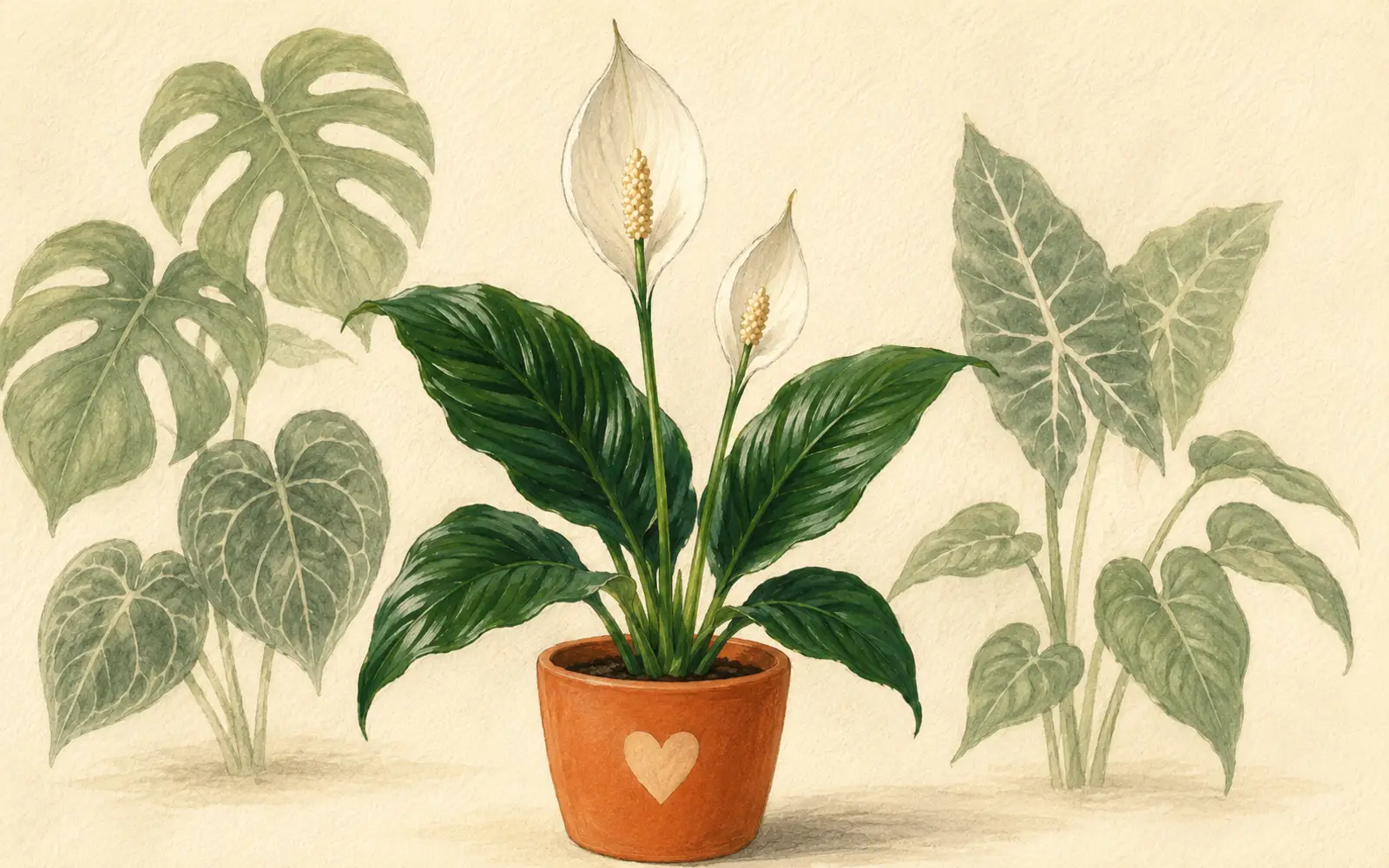
At a glance
- Genus
- Spathiphyllum
- Family
- Araceae
- Species (common)
- S. wallisii, S. floribundum, S. cochlearispathum
- Cultivars
- 40+ named
Why "Spathiphyllum"?
Greek spathe (the white sheath) + phyllon (leaf). The famous "flower" is named in the genus itself: a leaf shaped like a sheath.
The white part is not the true flower
The showy white or green part is a spathe, a modified leaf. The true flowers are tiny and arranged on the spadix, the central spike. This is why bloom color changes can look like leaf aging: the spathe really is leaf-like tissue.
Family traits
Peace lilies belong to Araceae, the aroid family. Many familiar houseplants are aroids, including pothos, philodendron, monstera, anthurium, and dieffenbachia. They often share similar preferences for warm rooms, airy potting mix, and bright indirect light.
Why names matter for safety
Common names can mislead. Peace lily is not a true lily, even though it contains the word lily. The scientific name Spathiphyllum separates it from true lilies in Lilium, which carry a very different risk for cats.
Species and cultivars
Many houseplants are sold simply as "peace lily" without a species or cultivar name. Named cultivars such as 'Domino', 'Picasso', 'Sensation', 'Mauna Loa', and 'Clevelandii' differ mostly in size, leaf shape, and variegation, while the basic care remains similar.
How to use the name
If you need help from a nursery, vet, or plant group, use both names: peace lily and Spathiphyllum. That reduces confusion with true lilies and helps people give advice for the right plant family.
Why the family matters for care
Aroid roots generally appreciate oxygen around them. That is why dense wet soil causes trouble even though the plant likes moisture. The family connection also explains why peace lily pet symptoms resemble pothos or philodendron chewing: the irritating calcium oxalate mechanism is shared across many aroids.
Why labels can be vague
Retail plants are often labeled by common name only because exact cultivar names are not always tracked through production. If your plant simply says "Spathiphyllum" or "peace lily," use size, leaf shape, and variegation to narrow it down rather than expecting the tag to tell the whole story.
Name checklist
- Peace lily: common name.
- Spathiphyllum: genus used for care and safety identification.
- Araceae: plant family.
- Spathe: the showy white or green modified leaf.
- Spadix: the central flower spike.
How the name helps with blooms
Once you know the spathe is leaf-like, bloom color changes make more sense. A spathe can turn green as chlorophyll returns and brown as it finishes. That is normal aging, not always a sign of bad care.
How the name helps with buying
A tag that says Spathiphyllum tells you the plant is a peace lily, but not necessarily the cultivar. Use the peace lily varieties guide to compare green and variegated types, leaf patterns, and mature sizes. For growing conditions, start with the peace lily care guide. Exact cultivar names are useful, but the plant's size and pattern are often enough for care.
How the name helps with pet questions
When speaking with a vet or poison helpline, "Spathiphyllum" is clearer than "lily." It points to calcium oxalate irritation rather than true lily kidney concerns. If you do not know the scientific name, send a photo and ask for identification.
Practical naming checklist
Use "peace lily" for everyday conversation, "Spathiphyllum" for identification, and the cultivar name when comparing varieties. If a pet has chewed the plant, scientific identification matters more than the store label.
The indoor-care takeaway
Because peace lilies are aroids, think airy roots, warm rooms, and filtered light. The name is not trivia; it points to the plant family and helps explain both care and safety. For the broader plant overview, see about the plant.
Sources & further reading
- University of Florida IFAS Extension — Spathiphyllum cultural notes.
- RHS plant database, retrieved May 2026.
- Missouri Botanical Garden — Spathiphyllum wallisii.