Can a peace lily live outside?
Yes, but only in warm shade. Outdoors, peace lilies are tropical shade plants, not sun plants, and cold can damage them quickly.
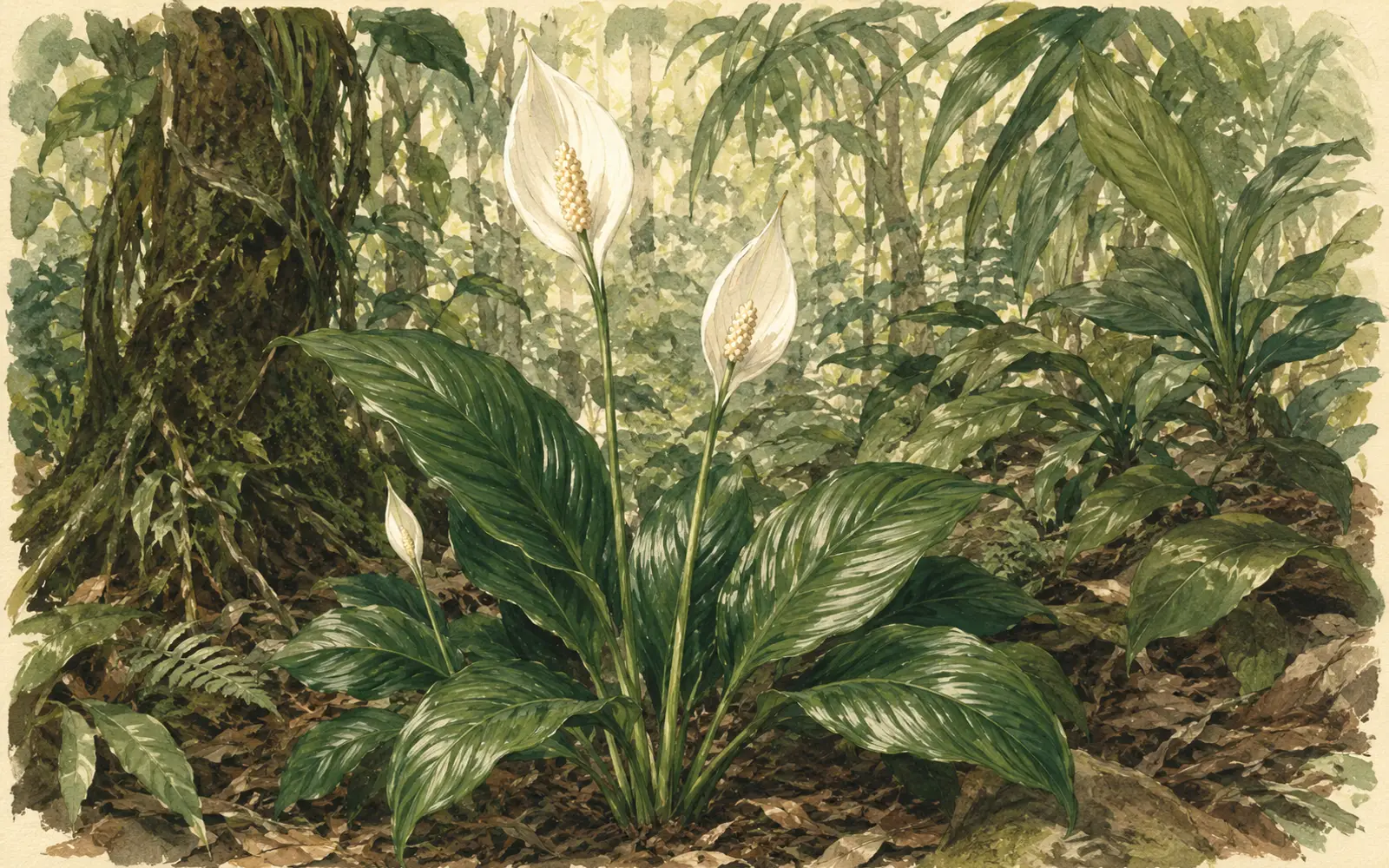
Outdoor answer
- In the ground
- Only in frost-free tropical or subtropical climates, roughly USDA zones 11-12.
- Patio season
- Warm months only in colder climates; bring indoors before nights get cold.
- Light outside
- Bright shade or filtered morning light. Avoid direct afternoon sun.
- Biggest risks
- Cold nights, sun scorch, heavy rain, soggy pots, and outdoor pests.
Outdoor peace lily care depends on climate
Peace lilies are commonly grown as houseplants because most climates are too cold for them outdoors year-round. NC State Extension and Missouri Botanical Garden list Spathiphyllum for warm USDA zones 11-12. That means a garden planting only makes sense where frost is not part of normal winter weather.
In cooler places, a peace lily can spend part of the warm season outdoors in a pot. Treat it like a houseplant on vacation: shaded, watched closely, and brought back inside before cold nights arrive.
Outdoor sunlight is much stronger than indoor window light. Direct afternoon sun can scorch peace lily leaves, especially pale or variegated leaves.
Best outdoor placement
Choose bright shade, a covered patio, a porch, or a spot under high tree canopy. Morning light can work if it is gentle. Afternoon sun against a wall or patio can be too hot. Watch for leaf fading, tan patches, curling, or sudden drooping after a move outdoors.
Acclimate slowly. Start with a few hours outside in shade, then extend the time over a week. A plant that lived indoors all year has thinner expectations than a plant already grown outside.
Watering outside is different
Outdoor pots dry faster in warm breezes, but heavy rain can also soak them for too long. Keep using the soil check. If the top inch is drying and the pot feels lighter, water deeply. If rain has saturated the mix, do not water again just because it is your usual watering day.
Make sure the pot drains freely. A decorative pot with no drainage is risky outdoors because rain can fill it without you noticing.
When to bring it indoors
Bring a potted peace lily indoors before nights become chilly. NC State notes that cold and drafty conditions slow growth, and extended temperatures below 40 F can damage leaves, stems, and roots. Do not wait for frost warnings.
Before bringing it in, inspect leaf undersides, leaf joints, and the soil surface for pests. Rinse or wipe leaves, isolate the plant for a week or two, and watch for fungus gnats, mealybugs, and mites.
Can it grow in the ground?
Only in warm, frost-free regions. In zones 11-12, a peace lily can be used outdoors as a shade perennial or container accent if the soil stays moist but drains well. It still does not want full sun. Think filtered light, organic soil, and protection from drying wind.
In colder zones, planting it in the ground is usually a seasonal experiment that ends when temperatures fall. A pot is safer because you can move it under cover during storms and bring it indoors before cold nights.
Outdoor problems to watch
- Sun scorch: pale tan patches after direct sun exposure.
- Cold injury: limp, dark, or blackened tissue after chilly nights.
- Overwatering from rain: heavy pot, fungus gnats, yellow leaves, or sour soil.
- Pests: mites, mealybugs, slugs, and insects that were not present indoors.
Moving back indoors without bringing pests in
Before the plant comes back inside, clean the leaves, check the soil surface, and inspect the drainage holes. If the plant spent months outdoors, quarantine it away from your other houseplants at first. A week or two of separation can save the rest of your collection from an unnoticed pest problem.
Sources & further reading
- NC State Extension Gardener Plant Toolbox — Spathiphyllum hardiness and care notes.
- Missouri Botanical Garden Plant Finder — Spathiphyllum group.
- UF/IFAS Gardening Solutions — Peace Lily.