Dividing a peace lily, step by step.
Spring, when you're repotting anyway, is the perfect time. A mature plant can yield two or three new ones.
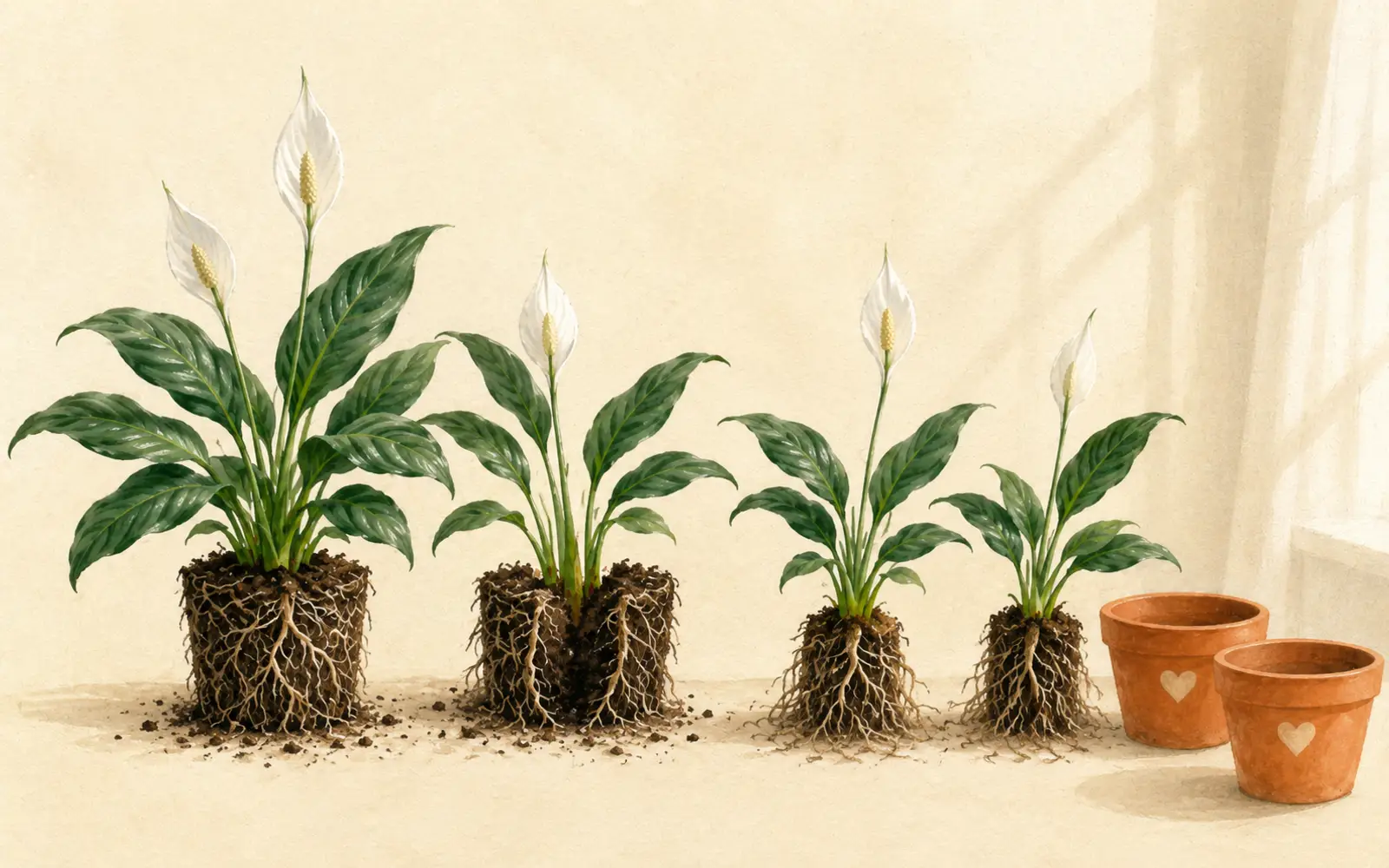
At a glance
- When
- Spring, while repotting
- Tools
- Sharp clean knife, fresh potting mix, new pots
- Recovery
- 2–4 weeks of moderate stress; new growth in 6–8
Step by step
- Tip the plant out of its pot. Shake off old soil to reveal the root mass.
- Identify natural clumps — each will have its own crown of leaves and a section of root.
- Pull clumps apart by hand where possible. Use a sterilized knife where roots have fused.
- Pot each division immediately in fresh, slightly damp mix.
- Water lightly. Place in bright indirect light. Don't fertilize for 6 weeks.
What counts as a good division
Each piece needs leaves, a firm crown, and its own roots. A loose leaf with no crown will not grow into a new peace lily. A tiny crown with only one weak root may survive, but it will recover slowly and is easier to overwater.
When to divide
Spring is best because the plant is entering active growth. Divide when the pot is crowded, several crowns are obvious, or you are repotting anyway. Avoid dividing a plant that is already collapsing from root rot, cold damage, or severe pests unless you are trying to save the only healthy crown.
Prepare before unpotting
Have fresh potting mix, clean pots with drainage holes, scissors or a knife, and water ready before you start. Division exposes roots to air, so it is better to work steadily and pot each section soon after separating it.
How many plants should you make?
Fewer larger divisions recover faster than many tiny ones. For most home growers, splitting one mature plant into two or three solid plants is better than making six weak starts. Keep each division proportionate: enough roots to support the leaves above.
Pot size after division
Use a pot that fits the new root ball, not the size you hope the plant becomes. Too much empty soil stays wet around a smaller division. A snug pot with drainage is safer while roots rebuild.
Aftercare for the first month
Keep divisions in bright indirect light, warm temperatures, and moderate humidity. Water lightly at first, then return to normal deep watering once roots begin using water again. Do not fertilize until new growth shows that the division is established.
Normal stress after division
Some drooping, a few yellow leaves, and slower growth are normal after division. Remove fully yellow leaves, but keep healthy green leaves. The plant needs them to rebuild energy. New growth in six to eight weeks is a good sign.
Common mistakes
- Dividing into pieces without roots.
- Putting small divisions into oversized pots.
- Fertilizing immediately after root disturbance.
- Keeping the soil soggy because the division looks droopy.
- Trying to divide during winter low-light conditions.
If a division droops badly
Check soil moisture before reacting. A freshly divided plant can droop from root disturbance even when the mix is moist. If the soil is damp, do not add more water. Raise humidity slightly, keep the plant warm, and wait a few days.
If a division has too many leaves
A small root system may not support a large top immediately. Remove the oldest yellowing leaves, but keep healthy green leaves. If the division is very top-heavy, stake it loosely while roots settle.
Dividing while fixing root rot
If you are dividing because part of the plant has root rot, keep only firm crowns with healthy roots. Discard mushy crowns and old sour soil. Pot the saved sections smaller than usual and water cautiously until new growth appears.
How to label and track divisions
If you divide several plants, label the pot with the date. This helps you avoid fertilizing too early and makes it easier to judge recovery. A division that holds steady for a month and then pushes a new leaf is on track.
Sources & further reading
- University of Florida IFAS Extension — Spathiphyllum cultural notes.
- RHS plant database, retrieved May 2026.
- Missouri Botanical Garden — Spathiphyllum wallisii.