Spathiphyllum 'Clevelandii': The tabletop favorite.
A popular mid-sized green cultivar found in nearly every garden centre. Tough and adaptable.
At a glance
- Mature size
- Check the grower’s height and spread for its stock
- Leaf
- Long, narrow, dark green
- Bloom
- Tall white spathes
- Notable
- Often sold simply as "peace lily"
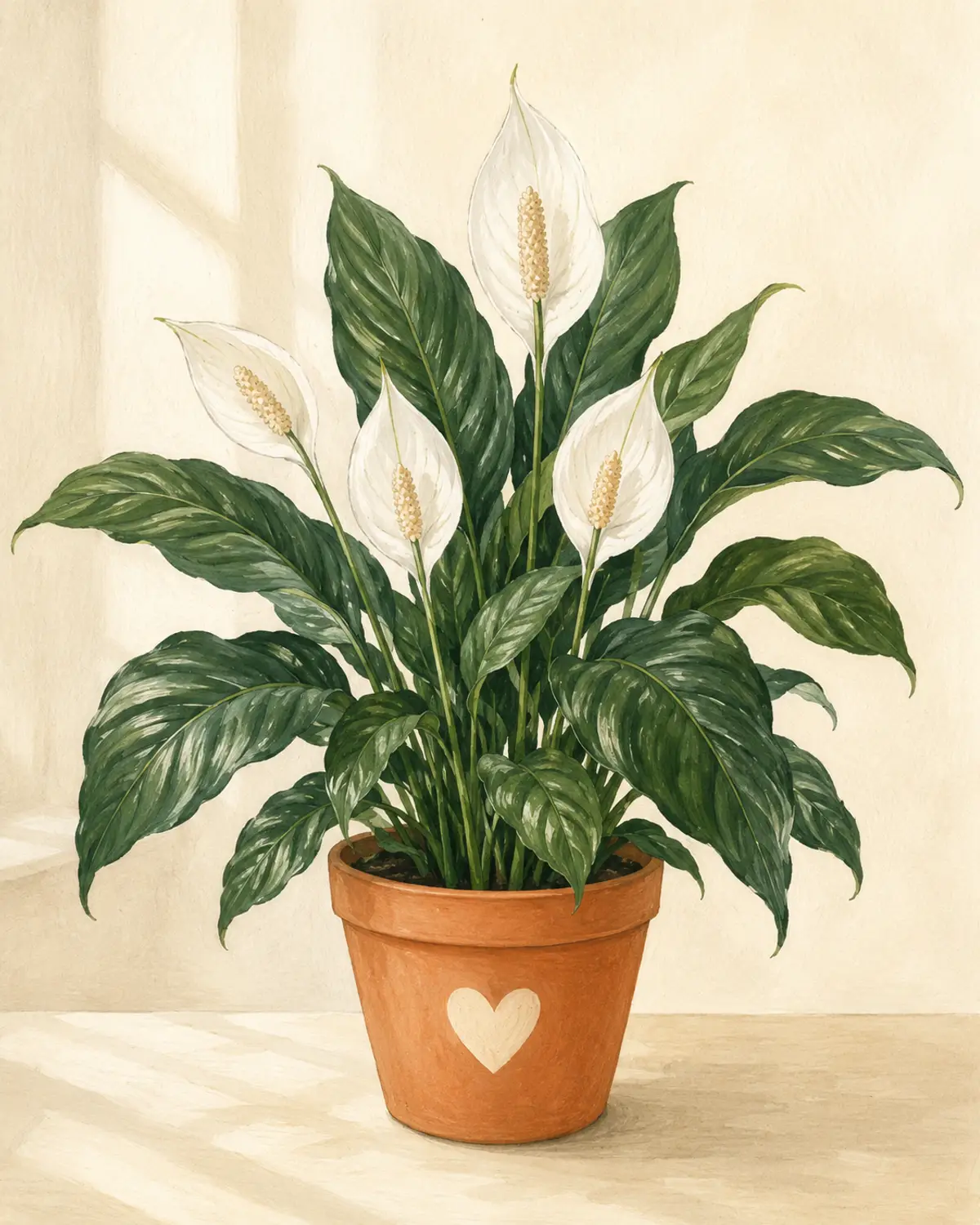
Care notes specific to 'Clevelandii'
'Clevelandii' is a green-leaved peace lily sold for its upright foliage. A small plant may suit a tabletop, but confirm the expected mature dimensions with its grower. A plain ‘peace lily’ or Spathiphyllum wallisii label does not establish that it is this cultivar.
- Light: bright indirect. Avoid direct scorching sun; growth and flowering slow in dim rooms.
- Pot size: choose by the root ball, not the cultivar name. Use the pot-size chart when roots are crowded.
- Leaf shape: narrow green leaves can help with comparison, but leaf shape alone does not confirm cultivar identity.
- Bloom: white spathes; timing depends on growing conditions and maturity.
- Misidentification: often labeled as plain "peace lily" without a cultivar name. A species name by itself does not establish the cultivar.
Best fit
'Clevelandii' is a practical mid-size peace lily for tables, plant stands, offices, and apartments. It gives the classic peace lily look without needing the floor space of 'Sensation'.
Light and placement
Give it bright indirect light for the best leaf shape and blooms. It can tolerate lower light, but growth slows and flowering becomes less reliable. Near an east window or a filtered south/west window is usually better than a dark corner.
Buying checklist
- Look for firm leaves and several active crowns.
- Avoid plants with many yellow lower leaves in wet soil.
- Check whether the label simply says "peace lily"; it may still be this type.
- Inspect leaf undersides before bringing it near other plants.
Watering and pot size
Use a draining pot that fits the roots, leaving only modest room for growth. Water deeply when the upper mix starts to dry, then let excess drain. Because this cultivar is often sold in decorative sleeves, check that the nursery pot is not sitting in trapped water.
Blooming expectations
'Clevelandii' can bloom well in bright indoor conditions. If it makes leaves but no flowers, improve light before changing fertilizer. Spent blooms should be cut at the base once they turn green, tan, or brown.
Common issues
Most problems are the usual peace lily basics: overwatering, low light, dry air, and brown tips. The advantage of this cultivar is that it is not especially specialized; good standard peace lily care works well.
Watering rhythm
Water when the top of the mix begins to dry and the pot feels lighter. If it is kept on a table or desk, use a saucer but empty it after watering. A small decorative cachepot can hide standing water, so check inside.
Repotting notes
Repot when roots crowd the pot or the plant dries too quickly. If the plant has several crowns, you can divide it during repotting. Keep divisions large enough to recover well.
Cleaning and display
Its narrower leaves are easy to wipe and inspect. Clean leaves monthly, rotate the pot, and remove old bloom stalks at the base so the plant keeps a tidy tabletop shape.
Choose 'Clevelandii' if
Choose it if you want a practical green peace lily that fits ordinary homes and offices. It is a good middle ground between compact 'Domino' and giant 'Sensation'.
How to compare it in a shop
Because it is often sold without a cultivar label, compare size, leaf shape, and overall condition. Pick the plant with firm upright leaves, clean new growth, and a pot that is not waterlogged.
Long-term shape
'Clevelandii' should stay manageable and balanced. Rotate it monthly, remove old outer leaves, and keep it in a pot that supports the crown without swallowing the roots in excess wet soil.
FAQ
Is 'Clevelandii' different from an ordinary peace lily? An ordinary peace lily label does not confirm this cultivar. Does it stay small? Do not assume a small nursery plant will stay small; ask the grower for mature dimensions. Is it a good office plant? Yes, if the office has bright indirect light and someone checks the soil before watering.
Best reason to choose it? It gives classic peace lily looks without unusual care demands.
Best place? A bright table, plant stand, or office corner away from vents.
Biggest mistake? Treating it like a dark-corner decoration forever.
Best habit? Rotate it and check soil before watering.
'Clevelandii' compared to other cultivars
Compare appearance and the grower’s mature-size information when choosing between cultivars:
- 'Mauna Loa' — a large green-leaved option with broad foliage.
- 'Domino' — similar tabletop scale but with cream variegation. Choose this if you want pattern, not just compact size.
- 'Sensation' — the size opposite. A 6 ft floor plant for completely different rooms.
- 'Picasso' — the dramatic variegated collector cultivar. More demanding and far less common.