Curling leaves: too hot, too cold, or too dry.
Curl is a defensive posture — the plant is reducing surface area to survive.
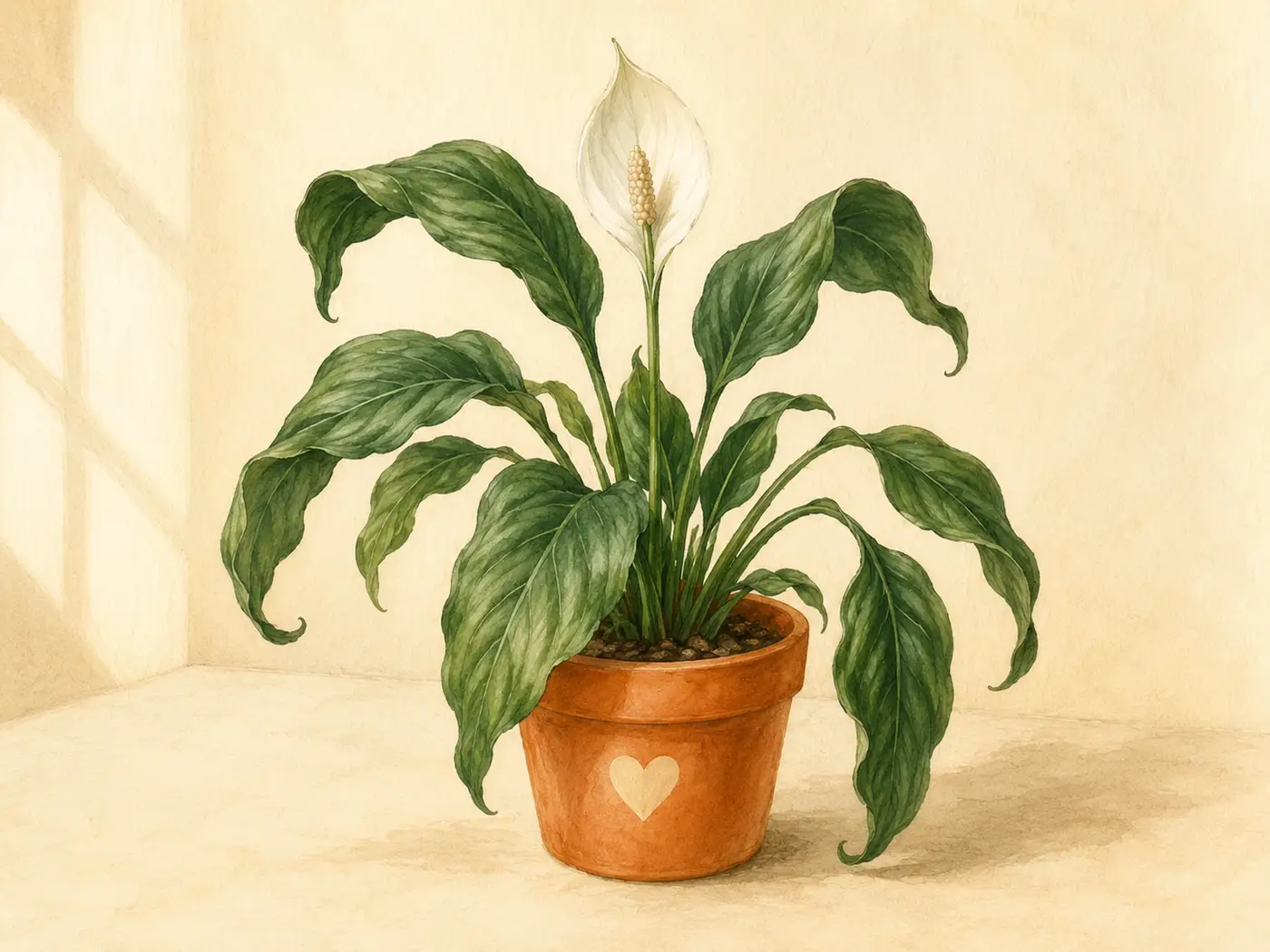
At a glance
- Curl inward
- Often heat or low humidity.
- Curl downward
- Cold or overwatering.
- New leaves curl
- Pest check — especially spider mites.
First: check for pests
Spider mites cause new leaves to emerge already curled. Look on the underside for fine webbing.
Also check for sticky residue, cottony white patches, or tiny moving dots. Pest-related curl often affects new leaves first because soft new tissue is easier to feed on.
Then: check humidity
Below 30% RH, mature leaves curl inward to conserve water. Add a humidifier.
Confirm with a hygrometer. If humidity is already moderate, the curl may be from heat, watering stress, or roots rather than dry air.
Last: check for drafts
Cold air from an AC vent makes leaves curl as a stress response. Move the plant.
Read the curl pattern
- Edges curling inward: dry air, heat, or repeated drought are likely.
- Leaves curling downward and soft: check for wet soil and root stress.
- New leaves twisted or stuck: inspect for pests and very low humidity.
- One leaf curled after moving: normal adjustment may be enough; watch the next leaf.
Watering and curl
Both underwatering and overwatering can cause curl, which is why the soil check comes before the fix. A dry plant curls to conserve water. A wet plant curls because damaged roots cannot move water up into the leaves even though the pot is damp.
How to uncurl future leaves
Existing curled leaves may relax partly, but badly deformed leaves often stay that way. Improve the growing conditions and judge the next leaf. New growth should unfurl smoothly when humidity, temperature, water, and pests are under control.
Quick reset
- Move the plant out of direct sun and away from vents.
- Check the soil two inches down before watering.
- Inspect undersides of leaves with a bright light.
- Clean dusty leaves so you can see new pest activity.
- Keep care steady for two to three weeks and watch the newest growth.
Curling after repotting
Some curl after repotting is normal because roots were disturbed. Keep the plant warm, out of direct sun, and slightly more humid while it settles. Do not fertilize until new growth resumes. If the soil is fresh and drains well, the plant should begin to look steadier within a couple of weeks.
Curling from sun or heat
Leaves can curl when the plant is too close to hot glass or direct afternoon sun. The leaf may also feel thinner, paler, or crispy along the edge. Move the plant back from the window and keep the light bright but filtered.
When curl is urgent
Act quickly if curling comes with webbing, sticky residue, black stems, or drooping in wet soil. Those combinations point to pests or root trouble, not a simple humidity issue. Isolate the plant if you suspect pests so nearby houseplants are not affected.
Prevention
Keep the plant in steady conditions: moderate humidity, warm temperatures, bright indirect light, and a watering rhythm based on the soil. Clean leaves monthly so you can catch pests before new growth starts curling.
Because peace lily leaves unfurl from the crown, early stress can mark a leaf before it opens. If one new leaf curls but the next opens normally, you may already have fixed the cause.
What to watch next
Watch the newest spear and the youngest open leaf. If they look smooth, clean, and upright, the plant is improving even if older curled leaves remain imperfect. If every new leaf emerges twisted, isolate the plant and inspect again for mites, mealybugs, and sticky residue.
Do the same check after watering changes, because roots need time to respond.
Steady improvement beats a dramatic overnight change.
Sources & further reading
- University of Florida IFAS Extension — Spathiphyllum disease management.
- RHS plant problems database, retrieved May 2026.
- Chen, J. — Common abiotic disorders of foliage plants, ENH-Florida.