Mealybugs: cottony tufts in leaf joints.
Slow-moving sap suckers that hide where leaves meet stems.
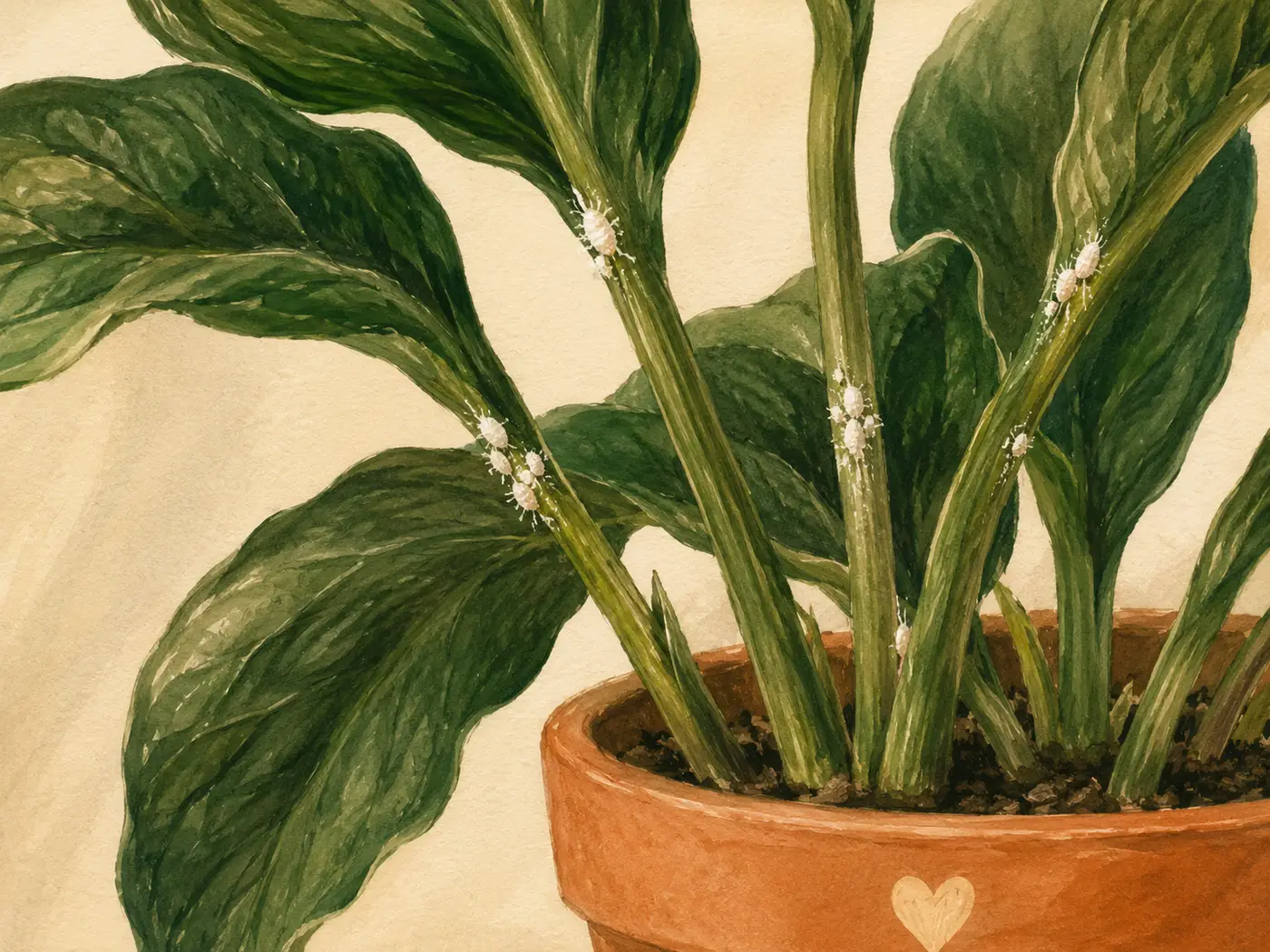
At a glance
- Tell
- White, waxy, cotton-like clumps in crevices
- Speed
- Slow — easy to catch early
- Treatment
- Cotton swab + 70% isopropyl alcohol
How to treat
Dab each visible clump with a cotton swab dipped in 70% isopropyl alcohol. Focus on leaf bases, the crown, and the tight folds where the petiole meets the plant. Wipe away the softened waxy residue with a damp cloth.
Repeat every 4-7 days for at least three rounds. Mealybugs hide well, and eggs or tiny crawlers can appear after the first clean-up.
First isolate the plant
Move the peace lily away from other houseplants before treatment. Mealybugs move slowly, but they can spread on leaves that touch, shared tools, hands, or a plant shelf. Keep it isolated until you have gone two weeks without seeing new white clumps.
Where to inspect
- Leaf joints and the crown.
- Undersides of leaves along the midrib.
- The rim of the pot and the top layer of soil.
- New leaves that are still folded.
If alcohol swabs are not enough
After removing visible insects, spray the plant with insecticidal soap or a labeled houseplant horticultural oil. Cover both sides of leaves and the crown area, then keep the plant out of direct sun while foliage dries. Follow the product label for dilution and repeat timing.
Avoid pouring oils or alcohol into the soil. Peace lily roots are already sensitive, and soil drenches can create a new stress problem if used casually.
How to know they are gone
The plant is not clear after one clean leaf check. Mealybugs can reappear from crevices. Inspect twice a week for a month, especially on new growth. If leaves stop yellowing, sticky residue disappears, and no new cottony patches appear, the treatment is working.
Prevention
Inspect new plants before placing them near your peace lily, and clean leaves regularly so early pests are easier to see. Avoid overfeeding; soft, lush growth can attract sap-feeding pests. If one plant in a collection has mealybugs, check every nearby plant the same day.
A simple treatment calendar
- Day 1: isolate, remove visible mealybugs with alcohol swabs, and wipe leaves.
- Day 5-7: inspect crevices again and repeat swabbing or soap treatment.
- Day 12-14: repeat the inspection, especially on new leaves.
- Day 21-28: keep isolated until no new cottony patches appear.
What damage looks like
Mealybugs suck sap, so leaves may yellow, new growth may look weak, and sticky honeydew can appear on leaves or nearby surfaces. The white cotton is the giveaway, but the plant may look tired before the infestation is obvious.
When to discard a plant
If mealybugs are deep in a collapsing crown, spreading to multiple nearby plants, or returning after repeated careful treatment, replacing the plant may be reasonable. For a valuable plant, you can keep treating, but do it in isolation and be strict about follow-up checks.
Common treatment mistakes
- Treating only the top of the leaves while insects hide in the crown.
- Returning the plant to a group too soon.
- Using strong alcohol on the whole plant instead of targeted swabs.
- Skipping follow-up checks after the first visible clumps are gone.
Helping the plant recover
After the infestation is controlled, remove badly yellowed leaves and keep the plant in bright indirect light. Do not fertilize immediately if the plant looks stressed. Wait until you see new clean growth, then return to light seasonal feeding if needed.
Keep the pot and shelf clean too. Fallen waxy residue and honeydew can make it harder to spot a fresh outbreak.
Check the newest folded leaf last; that is where a tiny missed population often reappears.
Patience matters: repeated small cleanups beat one harsh treatment.
Keep the plant isolated until that patience has paid off.
Sources & further reading
- University of Florida IFAS Extension — Spathiphyllum cultural notes.
- RHS plant database, retrieved May 2026.
- Missouri Botanical Garden — Spathiphyllum wallisii.