Less, less, much less.
Peace lilies are light feeders. Most newly killed plants are over-fertilized, not starving.
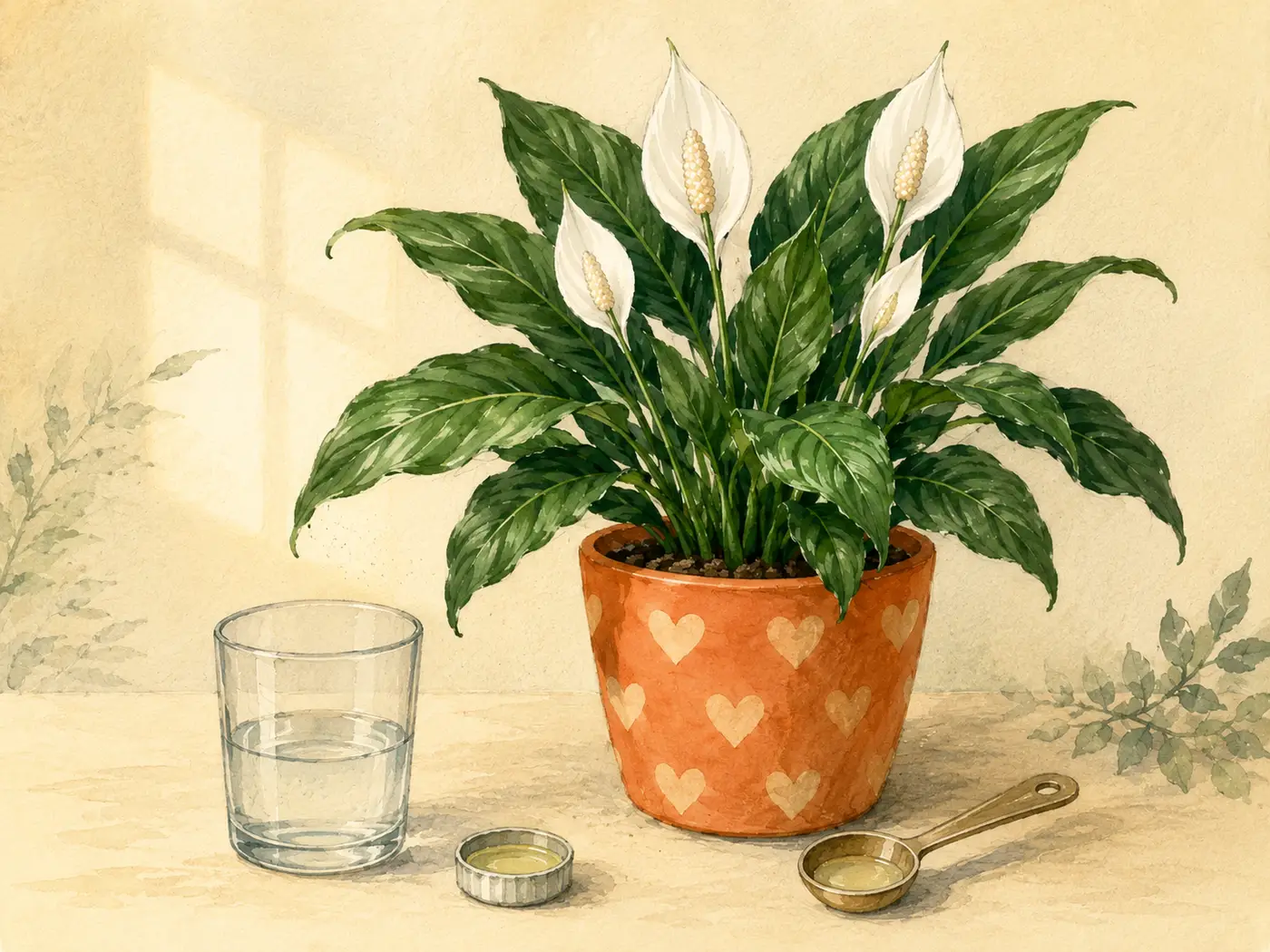
At a glance
- What
- Balanced 20-20-20 or 10-10-10 liquid feed.
- How much
- Half the label's recommended dose.
- How often
- Every 6 weeks, spring & summer only.
- Skip
- Winter entirely. The plant is resting.
Signs of over-fertilizing
- White, crusty buildup on the soil surface.
- Sudden brown leaf tips with a yellow halo.
- Wilting that doesn't respond to watering.
If you've over-fertilized
Flush the pot. Run lukewarm water through the soil for 5 minutes — about 4× the pot's volume. Let it drain fully. Skip the next two scheduled feedings. If you also have hard tap water, switch to a softer source while flushing — see the water quality guide for which sources actually carry the minerals that compound salt damage.
When fertilizer actually helps
Fertilizer helps when the plant is already growing in decent light with healthy roots. It does not fix a dark room, root rot, cold damage, or a pot that stays wet. If the plant is not producing new leaves, solve light and root health before feeding.
Skip fertilizer entirely during the dormant period — see winter care for the full slow-down routine.
A simple feeding schedule
- Spring: begin light feeding once new growth is active.
- Summer: feed every 6-8 weeks if the plant is growing well.
- Autumn: taper off as growth slows.
- Winter: skip fertilizer unless the plant is under strong grow lights and actively growing.
Fertilizer and blooms
A little fertilizer can support blooming, but light is the bigger trigger indoors. Do not chase flowers with stronger doses. A salt-stressed peace lily is more likely to make brown tips than beautiful spathes.
Underfeeding vs normal slow growth
A peace lily in low light may grow slowly even when nutrients are available. That is not a fertilizer deficiency; it is a light limitation. True underfeeding is more likely when a plant has been in the same old mix for a long time, is growing actively, and produces smaller pale leaves despite good light and watering.
Even then, start gently. One diluted feeding is enough to test the response. More is not better.
How to flush fertilizer salts
Every few months during the growing season, water slowly until extra water drains from the pot. Let it drain fully and empty the saucer. This helps move excess salts out of the root zone. It matters more if you use tap water or liquid fertilizer regularly.
What not to use
- Fertilizer spikes: they can create concentrated hot spots near roots.
- Strong bloom boosters: they do not replace good light.
- Fertilizer on dry soil: water first or use a diluted liquid feed on already lightly moist mix.
- Food scraps or coffee grounds: they can mold, attract gnats, and change the soil unpredictably.
If you are unsure, skip it
A peace lily can go a long time without fertilizer, especially if it was recently purchased or repotted into fresh mix. Skipping one feeding rarely hurts the plant. Feeding a stressed plant at the wrong time can.
Use leaf color, growth, light, and season together. A plant making new leaves in spring is a better candidate for fertilizer than a plant sitting in a dim winter corner.
Fertilizer after repotting
Wait 4-6 weeks after repotting before feeding. Fresh potting mix usually contains some nutrients, and disturbed roots are easier to burn. Once the plant is stable and growing, resume with a diluted dose.
Quick decision guide
If the plant is growing well in spring or summer, feed lightly. If it is newly purchased, newly repotted, sitting in low light, or showing root trouble, wait. If the leaf tips are browning and you see crust on the soil, flush before you feed again.
A calm feeding routine beats a strong one. Peace lilies respond better to steady care than to sudden attempts to force growth.
After feeding, watch the next leaf
Do not judge a fertilizer routine by old leaves. Existing brown tips, pale patches, or torn edges will not repair themselves. The useful signal is the next leaf: it should open normally, hold a healthy green color, and avoid new burned tips.
If the next leaf looks worse, stop feeding and review the basics: light, watering rhythm, drainage, and salt buildup. Fertilizer should be the finishing touch on good care, not the first tool used on a struggling plant.
Sources & further reading
- University of Florida IFAS — Spathiphyllum cultural guidelines.
- Royal Horticultural Society plant database, 2026.
- Missouri Botanical Garden plant finder — Spathiphyllum wallisii.