How to make a peace lily bloom.
Three things make the difference: light, age, and a phosphorus boost in spring.
At a glance
- Trigger
- Bright indirect light + spring temperatures
- Cycle
- Twice a year, spring and late summer
- Bloom-life
- 4–6 weeks per spathe
- Failure
- Too little light is the #1 cause
1. Get the light right
Move within 4 ft of a bright east window. A peace lily that won't bloom is almost always under-lit. Light guide →
Good bloom light is brighter than the light needed for survival. The plant should be able to make steady new leaves, not just hold its old ones. If the room is too dim to read comfortably without a lamp during the day, it is probably too dim for reliable blooms.
2. Use a phosphorus-heavy feed
In early spring, switch to a 10-30-20 (or similar) fertilizer at half-strength every 4 weeks until you see buds.
Only feed a healthy plant. Fertilizer will not overcome root rot, cold damage, or a dark room. If leaf tips brown after feeding, flush the pot and return to a gentler schedule.
3. Wait
Newly bought plants in full bloom have usually been forced with gibberellic acid. Give yours a year to settle into a natural cycle.
What a peace lily bloom really is
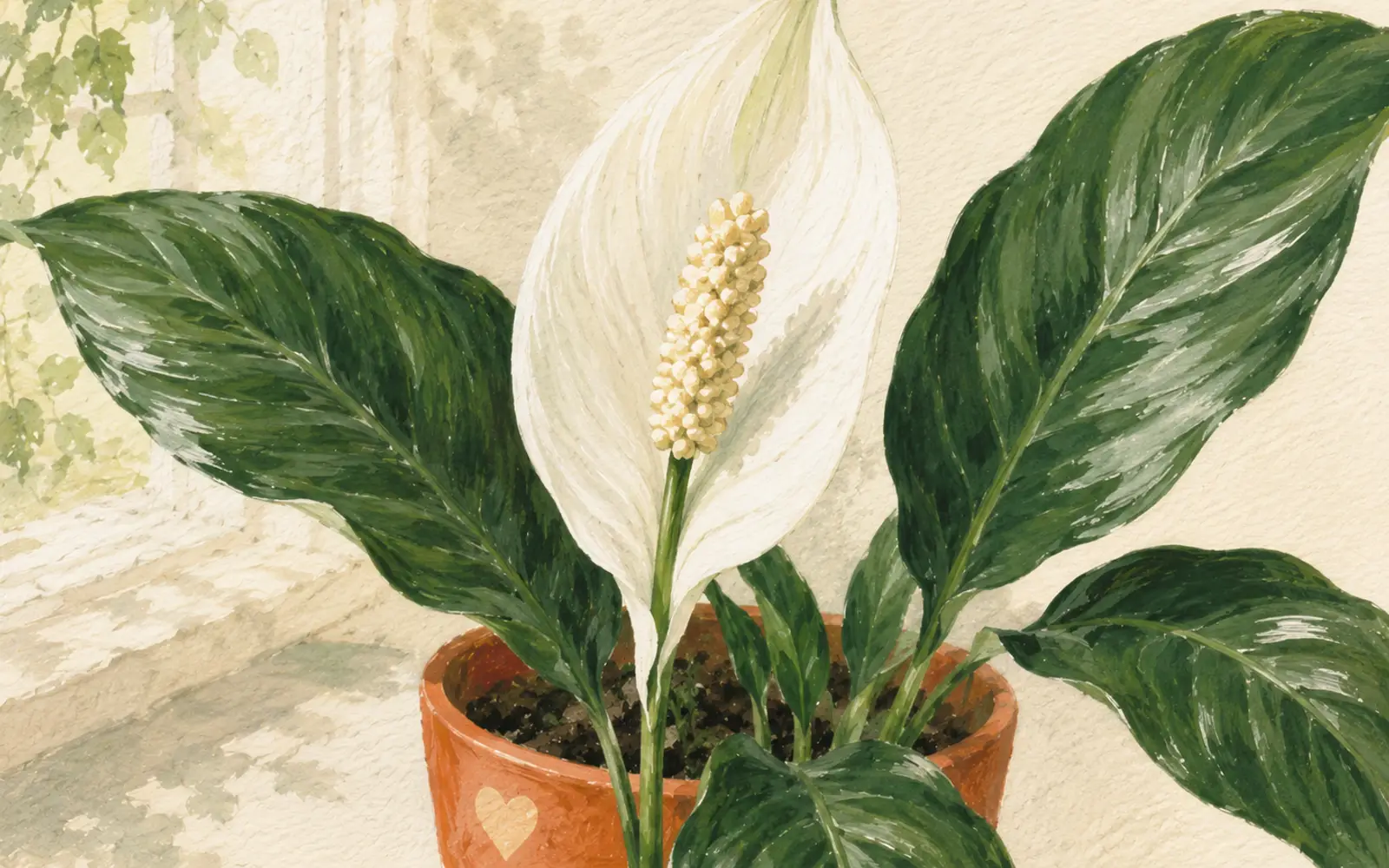
The white "flower" is a spathe, a modified leaf around the spadix. That matters because color changes are normal. A white spathe may fade green, cream, or brown as it ages. Deadheading old blooms helps the plant direct energy to leaves and future buds.
A realistic bloom plan
- Month 1: move to brighter indirect light and stabilize watering.
- Month 2: feed lightly only if the plant is actively growing.
- Month 3: watch for upright pointed shoots from the crown.
- Ongoing: deadhead spent blooms at the base and keep leaves clean.
Temperature and season
Warm steady rooms support flowering better than chilly windowsills or drafty entryways. Peace lilies often bloom most readily during active growth, especially in spring and summer indoors. A plant can still bloom off-season, but do not force a winter plant with heavy fertilizer if light is weak.
Pot size and roots
A slightly snug healthy root system is fine. A severely root-bound plant may dry too fast and struggle, while a plant in an oversized pot may stay wet and focus on roots instead of blooms. Repot only when the plant needs it, not as a bloom trick.
What not to do
- Do not place the plant in harsh direct sun.
- Do not overfeed with bloom booster.
- Do not cut healthy leaves to "send energy" to flowers.
- Do not repot repeatedly when light is the real issue.
How to know you are close
The best sign is healthy new leaf growth. Bloom shoots often come from the crown as firm upright spears. If the plant is making larger leaves, holding good color, and standing firm between waterings, it is in a much better position to bloom.
If your plant bloomed once and stopped
This is common after purchase. The plant was grown in ideal production conditions, then moved to a home with different light. Keep the leaves healthy and improve light gradually. A quiet year after store blooms is normal.
If it has never bloomed
First confirm it is mature and growing well. A small division or weak plant may need roots and leaves before flowers. If it is mature but only making leaves, the light is usually not bright enough for blooming even if it is bright enough for survival.
Blooming without harming the plant
The best bloom strategy is still ordinary good care: bright indirect light, warm room, clean leaves, correct watering, and modest feeding. Stronger fertilizer, harsh sun, and repeated repotting usually create stress before they create flowers.
A healthy peace lily with no flowers is better than a stressed plant pushed too hard.
Sources & further reading
- University of Florida IFAS Extension — Spathiphyllum cultural notes.
- RHS plant database, retrieved May 2026.
- Missouri Botanical Garden — Spathiphyllum wallisii.