Peace lily vs true lily: the name is misleading.
Peace lily is a common name for Spathiphyllum. It is toxic through mouth-irritating crystals, but it is not the same risk as true lilies for cats.
At a glance
- Peace lily
- Spathiphyllum; causes oral irritation, drooling, vomiting.
- True lily
- Lilium and Hemerocallis; dangerous kidney risk for cats.
- If unsure
- Call promptly and share plant photos; do not delay for identification.
- Emergency
- Any possible true lily exposure in a cat needs urgent vet advice.
Why the distinction matters
Peace lilies contain insoluble calcium oxalate crystals. When a pet chews the plant, those crystals irritate the mouth and throat quickly. Symptoms are usually immediate: drooling, pawing at the mouth, vomiting, or refusal to eat.
True lilies are different. Plants in the Lilium group, and daylilies in Hemerocallis, are especially dangerous to cats because even small exposures can be associated with kidney failure. That is why "lily" is not enough of an identification.
What peace lilies look like
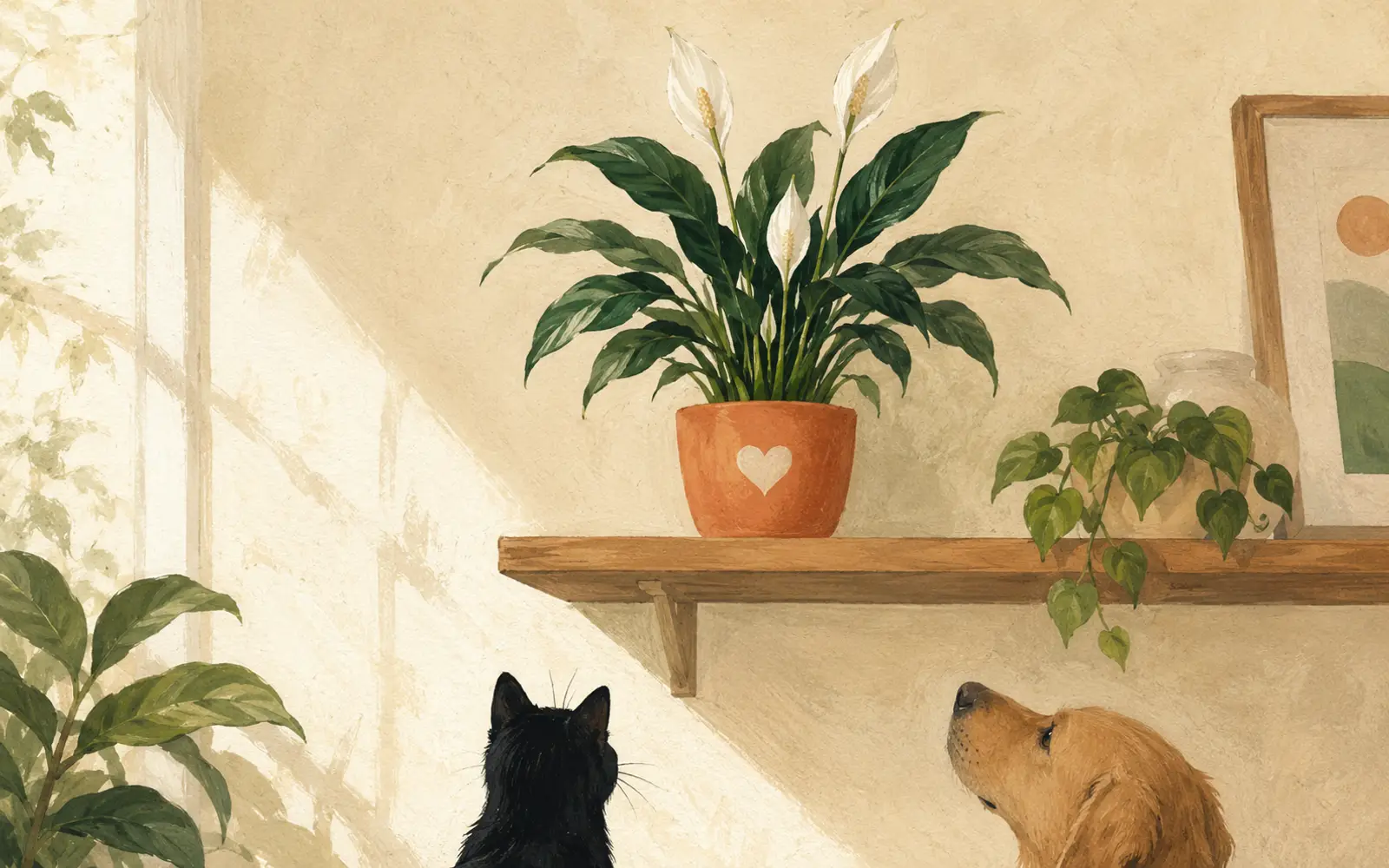
Peace lilies usually have glossy oval green leaves and white or green hood-like spathes around a central spadix. They are common houseplants and are often sold as foliage plants. The bloom looks elegant, but it is not a true lily flower.
Examples of true lilies
True lily concerns include Easter lily, tiger lily, Asiatic lily, Oriental lily, Japanese show lily, and daylily. These plants often have showy trumpet or star-shaped flowers and may be sold as cut flowers, garden plants, or holiday gifts.
If a cat chewed an unknown lily
- Do not wait for symptoms if true lily exposure is possible.
- Take photos of the plant, flower, leaves, label, and any chewed pieces.
- Call a veterinarian or pet poison helpline for identification and next steps.
- Keep the plant material available in case the clinic asks to see it.
If it was definitely a peace lily
Move the plant out of reach and contact a veterinarian or animal poison-control service promptly. Do not force water or induce vomiting. Breathing or swallowing difficulty, marked swelling, or collapse needs emergency veterinary care immediately.
Best prevention
Label plants when you bring them home and keep gift bouquets away from cats until every flower is identified. For homes with pets that chew plants, avoid keeping any "lily" plant in reach. The naming confusion is not worth the risk.
Cut flowers are part of the risk
True lilies often enter homes as bouquets, not potted plants. Pollen, vase water, leaves, and petals can all matter for cats. Keep unknown bouquets out of cat areas until the flowers are identified.
Why common names are not enough
Plant labels and gift cards often use casual names. "Lily" can refer to unrelated plants with very different risks. Scientific names are more reliable: Spathiphyllum for peace lily, Lilium for true lilies, and Hemerocallis for daylilies.
For dog owners
True lilies are most famous for cat risk, but dogs can still get stomach upset from many plants. Dogs that chew plants should be kept away from both peace lilies and true lilies, and any strong or unusual symptoms deserve veterinary advice.
If the plant label is missing
Use the safest assumption until you know more. Keep the plant away from pets, photograph it, and ask a vet, poison helpline, nursery, or plant-identification expert. A quick identification step can prevent the dangerous mistake of treating a true lily exposure like a mild peace lily nibble.
Houseplant rule for cat homes
For cats, do not bring home plants with "lily" in the common name unless you have checked the scientific name and toxicity profile. This is especially important with bouquets, where flowers arrive without nursery tags.
Bottom line
If the plant is definitely Spathiphyllum, contact a veterinarian after suspected ingestion and watch for mouth and stomach irritation while arranging advice. If true lily exposure is possible in a cat, treat it as urgent and call a veterinarian or poison helpline now. The same applies for human exposures, especially in children — see peace lilies and children for age-specific guidance.