Humidity helps, but it is not magic.
Peace lilies prefer moderate humidity, but brown tips can also come from minerals, fertilizer, drought, heat, or old damage. Improve humidity without keeping leaves wet all day.
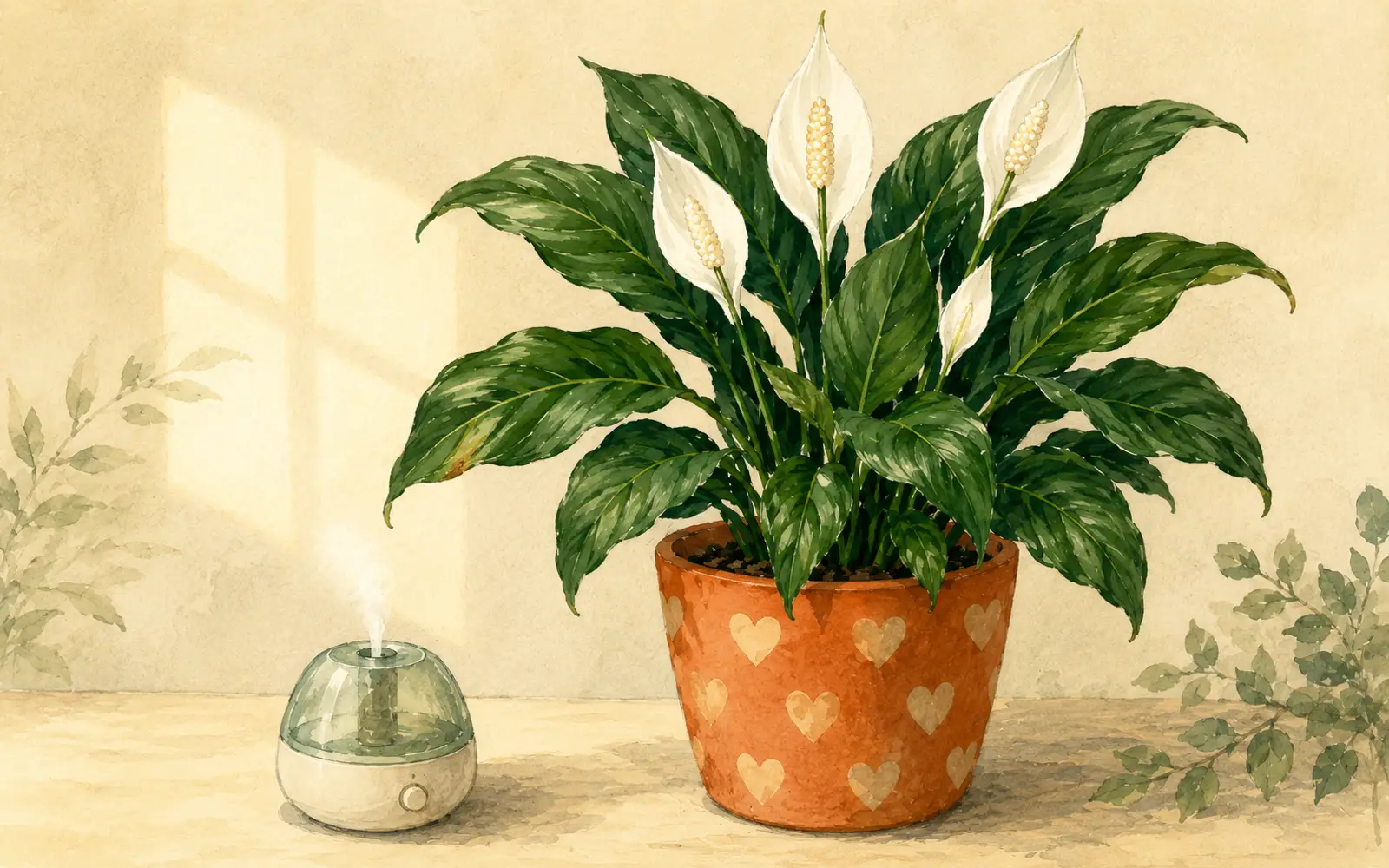
At a glance
- Ideal range
- 40–60% relative humidity.
- Bare minimum
- 30%.
- Easiest fix
- Group plants together; cluster effect raises local humidity 10–15%.
- Hygrometer
- $10 — buy one before you buy a humidifier.
Five ways to raise humidity, ranked
- Run a humidifier. The only reliable method. Set to 50%.
- Group your plants. Each one transpires; together they create a microclimate.
- Pebble tray. A shallow dish of pebbles + water under the pot. Modest effect.
- Move it to a bathroom. If there's a window, this is often best.
- Misting. Brief, marginal — but cheap and easy.
Why misting alone isn't enough
A mist raises humidity for about 20 minutes. To matter, you'd need to mist hourly — at which point the leaves stay wet, and that invites fungal disease.
How to tell humidity from other problems
Humidity stress usually shows up as dry brown tips or edges while the rest of the leaf remains fairly healthy. If the leaf is yellowing from the base, wilting in wet soil, or developing spots with halos, look beyond humidity — see yellow leaves, root rot, or leaf spot. Mineral-driven brown tips usually trace to water quality rather than air humidity. The pattern matters.
Winter heating often makes tips worse because rooms become drier and plants may sit near warm vents. Move the plant away from forced air before buying anything.
Best setup for most homes
A small room humidifier near a plant group is the most reliable fix. Set it around 45-55% and use a hygrometer so you are not guessing. Keep airflow gentle and avoid running humidity so high that walls, windows, or leaves stay wet.
What not to do
- Do not mist constantly in a cool room.
- Do not let the pot sit in pebble-tray water.
- Do not assume every brown tip means humidity.
- Do not place the plant directly over a heater to keep it warm.
Winter humidity
Winter is when many peace lilies get crispy tips. Heating systems dry the air, windows are colder, and growth slows. Move the plant away from heat vents, keep it off cold glass, and use a hygrometer before guessing. If humidity sits below 30% for weeks, a small humidifier is more useful than daily misting.
Bathroom placement
A bathroom can be a good spot if it has natural light. Humidity spikes after showers, and peace lilies often appreciate that. A windowless bathroom is different: humidity alone will not replace light. Without enough light, the soil stays wet longer and growth slows.
Humidity and pests
Very dry air can favor spider mites. Very wet leaves and poor airflow can encourage leaf spot. Aim for moderate, steady humidity rather than extremes. The plant should feel like it is in a comfortable room, not a sealed wet box.
Brown tips after humidity improves
Old brown tips will not heal after you improve humidity. Watch the new growth instead. If new leaves emerge clean and existing brown areas stop spreading, the change helped. If new tips still brown, check water quality, fertilizer strength, light, and whether the plant is drying too far between waterings.
Trim brown tips only for appearance. Use clean scissors and follow the natural leaf shape, leaving a thin brown edge instead of cutting into healthy green tissue.
If the plant also has yellow leaves or drooping, solve moisture and root health first. Humidity fixes support recovery, but they will not rescue roots sitting in wet soil.
How long to test a humidity change
Give a new humidity setup three to six weeks before judging it. Peace lilies respond through new growth, not instant repair. Keep watering and light steady during the test so you know what actually changed.
If the room hygrometer stays in range but tips continue on new leaves, the cause is probably not humidity. At that point, look for mineral-heavy water, too much fertilizer, a pot drying completely between waterings, or direct sun touching the leaves.
Sources & further reading
- University of Florida IFAS — Spathiphyllum cultural guidelines.
- Royal Horticultural Society plant database, 2026.
- Missouri Botanical Garden plant finder — Spathiphyllum wallisii.