Root rot: act now or lose the plant.
Caught early, root rot is recoverable. Caught late, the plant is already dying. Here's the inspection-and-rescue protocol.
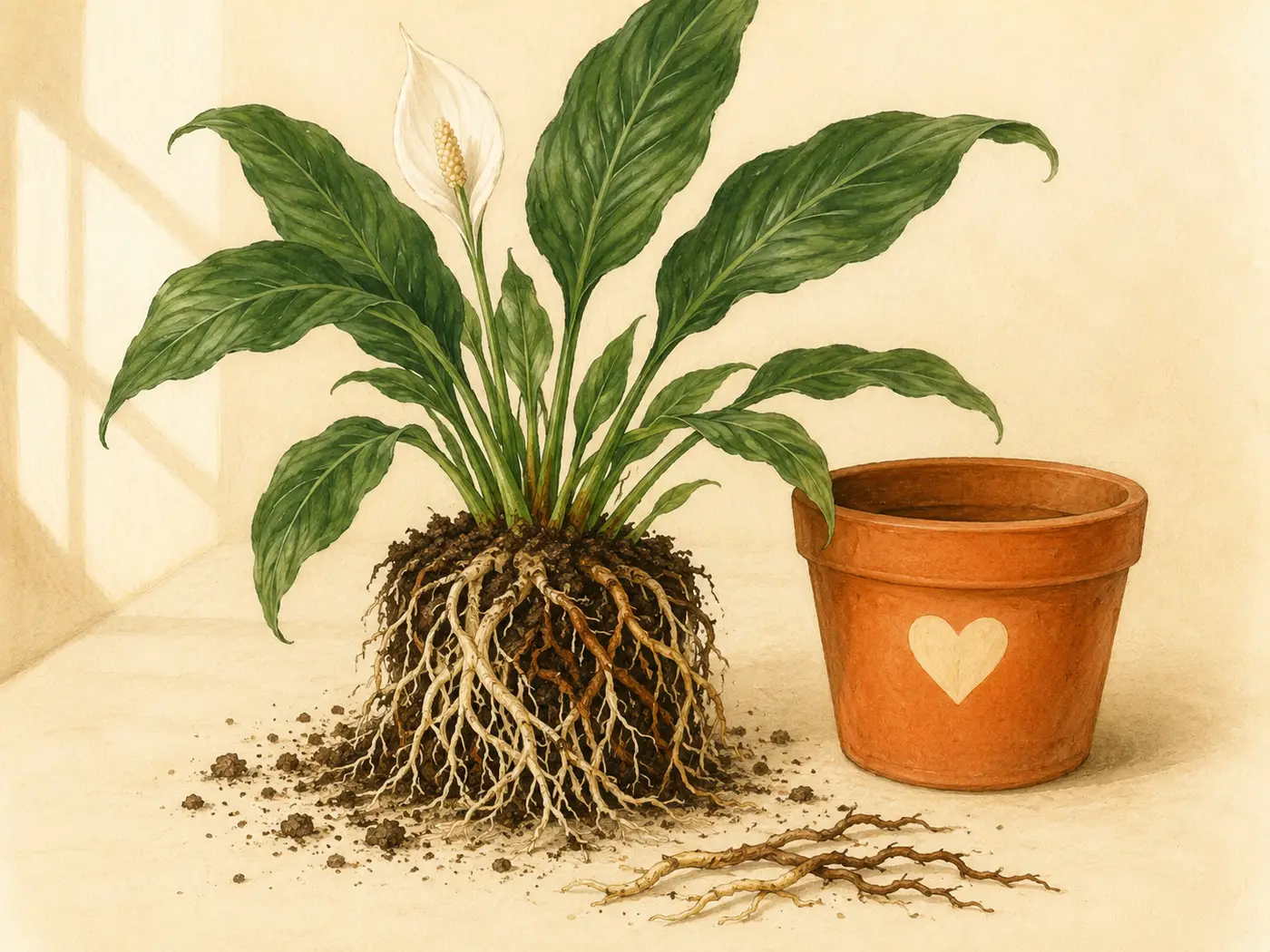
At a glance
- Cause
- Soggy soil starves roots of oxygen.
- Symptoms
- Wilting that doesn't respond to watering, sour smell, mushy roots.
- Survival rate
- Excellent if >50% of roots are still firm and white.
- Action
- Unpot, trim, repot in fresh dry soil — today.
Each day in soggy soil costs you roots. If you suspect rot, do the inspection today — even if you have to repot at midnight.
Step 1: unpot & inspect
- Tip the plant onto newspaper. Gently shake off old soil.
- Healthy roots: firm, white, springy. Rotting roots: brown, mushy, smell of sewage.
- Trim every rotted root with sterilized scissors. Cut back to firm white tissue.
- Discard old soil — never reuse rotted soil.
- Wash the pot with soap; rinse with diluted bleach (1:10).
If the soil was also producing fungus gnats, the soggy mix is the shared cause. Treat the rot first; the gnat population usually crashes once the wet mix is gone.
Step 2: repot
Use fresh, slightly damp (not wet) potting mix. Choose a pot one size down if you removed a lot of root mass — too much soil = too much retained moisture.
The new pot must have drainage holes. If the old decorative pot has none, use it only as an outer cover pot and keep the peace lily in a nursery pot inside it. Empty water from the cover pot after every watering.
Step 3: aftercare
Don't water for a full week. The remaining roots need to grow before they can drink. Keep humidity high and light bright but indirect. Expect to lose half the leaves while it rebuilds.
How much root loss is survivable?
If at least half the root system is still firm and pale, the plant has a good chance. If only a few healthy roots remain, survival is possible but slow. Reduce the leaf load by removing yellow, collapsed, or badly damaged leaves so the remaining roots have less plant to support.
If the crown is mushy where the leaves meet the soil, the problem has moved beyond ordinary root rot. You can try saving firm divisions, but a fully soft crown rarely recovers.
Watering after the rescue
After the first dry week, water only when the top layer is dry and the pot feels noticeably lighter. Give a modest drink, not a drenching, until you see new growth. Once the plant is actively growing again, return to normal deep watering with full drainage.
Common mistakes after root rot
- Using a bigger pot: extra soil stays wet around a smaller root system.
- Fertilizing immediately: damaged roots burn easily.
- Leaving old soil in the root ball: sour, compacted mix can restart the problem.
- Watering because leaves droop: after root loss, leaves may droop even when the soil is moist.
How to know it is recovering
The first sign is usually that decline stops: no new yellow leaves, no spreading mush, and the plant holds itself a little better. New leaves may take several weeks. Recovery is quiet at first because the plant is rebuilding roots before it makes a show above the soil.
Preventing rot from coming back
After a rescue, the new routine matters more than the rescue itself. Use a pot with drainage, a chunky enough mix, and a watering rhythm based on soil moisture. Bright indirect light also helps because a plant in better light uses water more predictably.
Never let a decorative cachepot hide standing water. Lift the inner pot after watering, pour out the outer pot, and make sure the base is not sitting in a puddle.
When to give up
If the entire crown is soft, all roots are mushy, and the plant smells rotten, replacement may be kinder than weeks of decline. If any firm crown section remains with healthy roots attached, you can try saving that section as a small division.
Sources & further reading
- University of Florida IFAS Extension — Spathiphyllum disease management.
- RHS plant problems database, retrieved May 2026.
- Chen, J. — Common abiotic disorders of foliage plants, ENH-Florida.