Are peace lilies toxic to dogs?
Yes. Peace lilies are toxic to dogs: chewing releases crystals that irritate the mouth and throat. Contact a veterinarian after suspected ingestion.
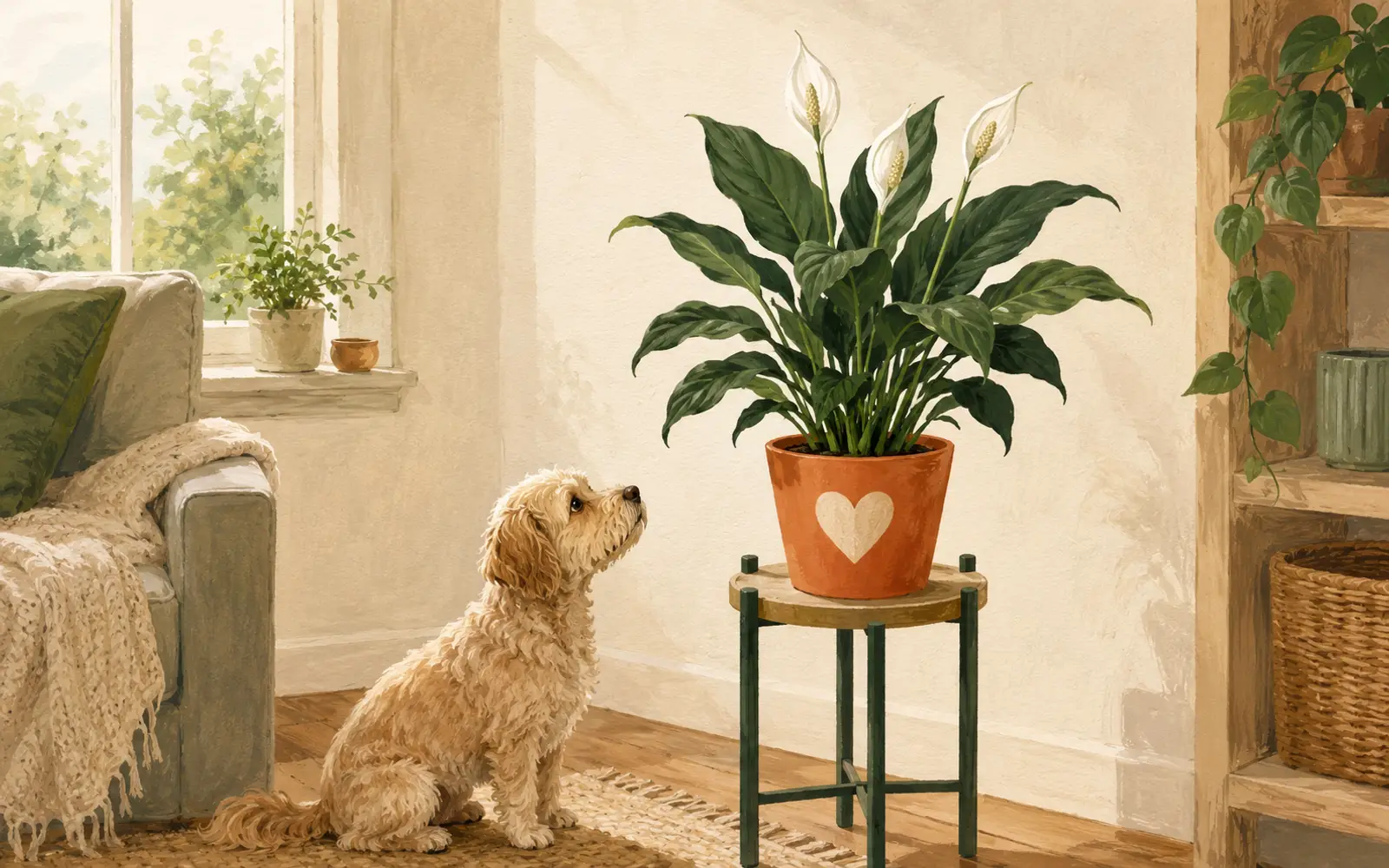
At a glance
- Toxicity
- Toxic to cats and dogs
- Mechanism
- Insoluble calcium oxalate crystals
- Possible symptoms
- Mouth irritation, drooling, vomiting, difficulty swallowing
- First action
- Contact a veterinarian or animal poison-control service
Why peace lilies are toxic
Peace lily (Spathiphyllum) contains insoluble calcium oxalate crystals. Chewing the plant can cause oral pain and irritation, excessive drooling, vomiting, and difficulty swallowing. The seriousness of an exposure cannot be decided from a missing leaf or body weight alone.
Does a large dog need veterinary advice?
Yes. Give the veterinarian your dog’s weight and the likely amount eaten, but do not use a weight cutoff to decide that an exposure is harmless. The plant’s identity, symptoms, health history, and possible ingestion of soil or fertilizer also matter.
A puppy or an adult dog may reach the plant, dig in the pot, or knock it over. Prevent access rather than assuming a particular age or breed will leave it alone.
What to do after suspected chewing
Move the plant out of reach and contact your veterinarian or an animal poison-control service promptly, even if symptoms have not appeared. In the U.S., ASPCA Poison Control is available at 888-426-4435; a consultation fee may apply. Elsewhere, call your local veterinarian or emergency veterinary clinic.
Do not induce vomiting, force water, or give medicines or home remedies unless a veterinary professional directs you. Avoid reaching into a distressed animal’s mouth. Follow the professional’s advice about cleaning away visible plant pieces and any home monitoring.
Difficulty breathing or swallowing, marked swelling, collapse, or seizures need emergency veterinary care immediately. Do not wait for a time threshold. See the symptoms and first-response guide for what information to have ready.
Information to give the veterinarian
- A photo of the plant, its label, and any damaged leaves or flowers.
- The time of exposure and an estimate of how much is missing.
- Your pet’s age, weight, health conditions, and current symptoms.
- Whether soil, fertilizer, or another plant may also have been swallowed.
Prevent another exposure
Keep peace lilies in a closed room your pet cannot enter. A high shelf alone is unreliable, particularly for climbing cats or pets that can knock over a pot. Pick up fallen leaves and flowers, and put pruning scraps in a closed bin immediately.
If you cannot keep the plant inaccessible, choose a replacement whose exact botanical name has been checked against a veterinary toxic-plant resource. Do not rely on a pet losing interest after one bite.