How to clean peace lily leaves.
Wipe the leaves with a soft damp cloth, support each leaf with your hand, and use the moment to check undersides for pests.
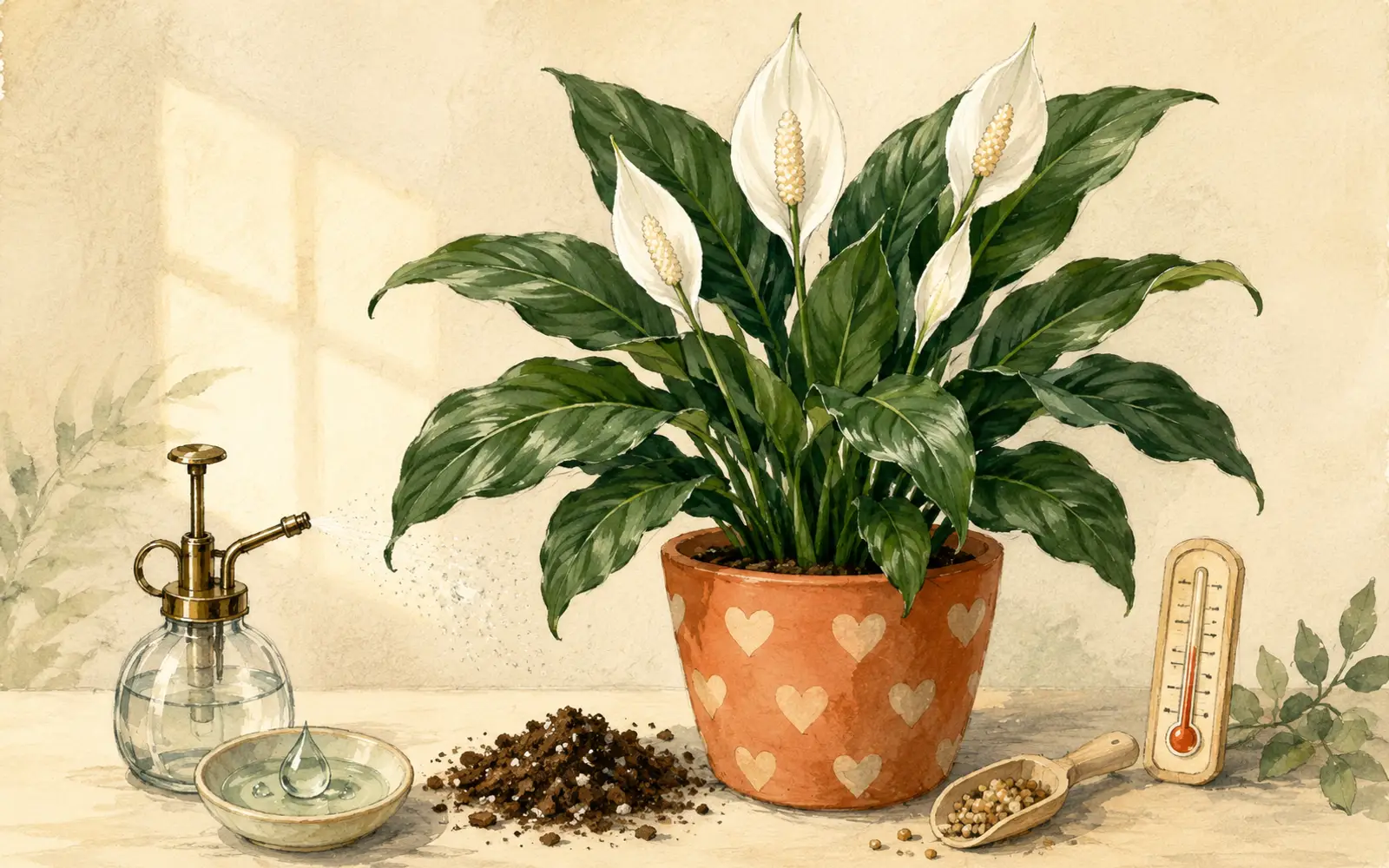
Leaf cleaning
- Best tool
- A soft damp cloth or microfiber towel.
- How often
- Whenever leaves look dusty, often every 2-4 weeks indoors.
- Avoid
- Leaf shine sprays, oil, mayonnaise, harsh soap, and abrasive wiping.
- Bonus check
- Look under leaves and at leaf joints for webbing, sticky residue, or cottony pests.
Why cleaning matters
Peace lily leaves are broad and glossy, so dust shows quickly. A dusty leaf looks dull, catches less light, and makes pest inspection harder. Cleaning is not about making the plant look staged. It is basic care for a plant with large indoor leaves.
NC State Extension also notes that wiping the wide foliage helps appearance and can remove some pests that gather on the undersides. That is the habit to build: clean gently, inspect closely, and catch small problems early.
The safe method
- Use room-temperature water. Dampen a soft cloth so it is moist, not dripping.
- Support the leaf. Hold one hand under the leaf while wiping with the other so the stem is not pulled.
- Wipe top and underside. The underside is where pests often hide.
- Rinse the cloth often. A dirty cloth just smears dust back onto the plant.
- Let leaves dry naturally. Keep the plant out of harsh direct sun while leaves are wet.
Leaf shine can leave residue, attract dust, or make pest inspection harder. A clean damp cloth gives peace lily leaves their natural gloss without coating them.
When to shower the plant
A gentle lukewarm shower can help a dusty or pest-prone plant, but protect the soil if it is already wet. Let extra water drain fully before putting the plant back in its saucer or cachepot. If fungus gnats are already a problem, avoid soaking the mix just to clean leaves.
What to inspect while you clean
Cleaning is the easiest time to catch pests early. Look for fine webbing along the underside of leaves, white cottony material where the leaf stem meets the crown, sticky residue, small black flies near the soil, and pale stippling on the leaf surface. If you see any of these signs, isolate the plant and use the pest guide to match the pattern.
Also notice the leaf itself. Dust wipes away. Mineral spots may need a second pass with plain water. Brown tips will not wipe away because they are dead tissue. Yellowing leaves are not dirty leaves; they are a care signal.
Common cleaning mistakes
- Scrubbing too hard. Peace lily leaves are sturdy, but the stems can bend or tear if you pull against them.
- Using oily shine products. Coated leaves collect dust again and make pest checks harder.
- Cleaning in harsh sun. Wet leaves in strong direct light can mark or scorch.
- Forgetting the underside. The underside is often where pests begin.
After pest treatment
If you treated mealybugs, spider mites, or sticky residue, cleaning is part of follow-up. Wipe leaves again a few days later, then repeat weekly until you stop seeing new signs. Keep the plant isolated during that period so any surviving pests do not move to nearby plants.
Should you mist after cleaning?
Misting is not necessary after cleaning. It can make leaves look fresh for a few minutes, but it does not raise room humidity for long. If the room is genuinely dry, use a humidifier or group plants instead. After wiping, let the leaves dry naturally and keep airflow gentle.
Clean leaves also make watering decisions easier because you can see new symptoms clearly. A newly yellowing lower leaf, fresh brown tip, or sticky patch is easier to notice on a plant that is not covered in dust.
Sources & further reading
- NC State Extension Gardener Plant Toolbox — Spathiphyllum care and pest notes.
- UF/IFAS Gardening Solutions — Peace Lily.