How to repot a peace lily, without trauma.
A peace lily does not need a bigger pot every time it looks dramatic. Repot only when the roots, soil, or watering behavior tell you it is time, then move up gently.
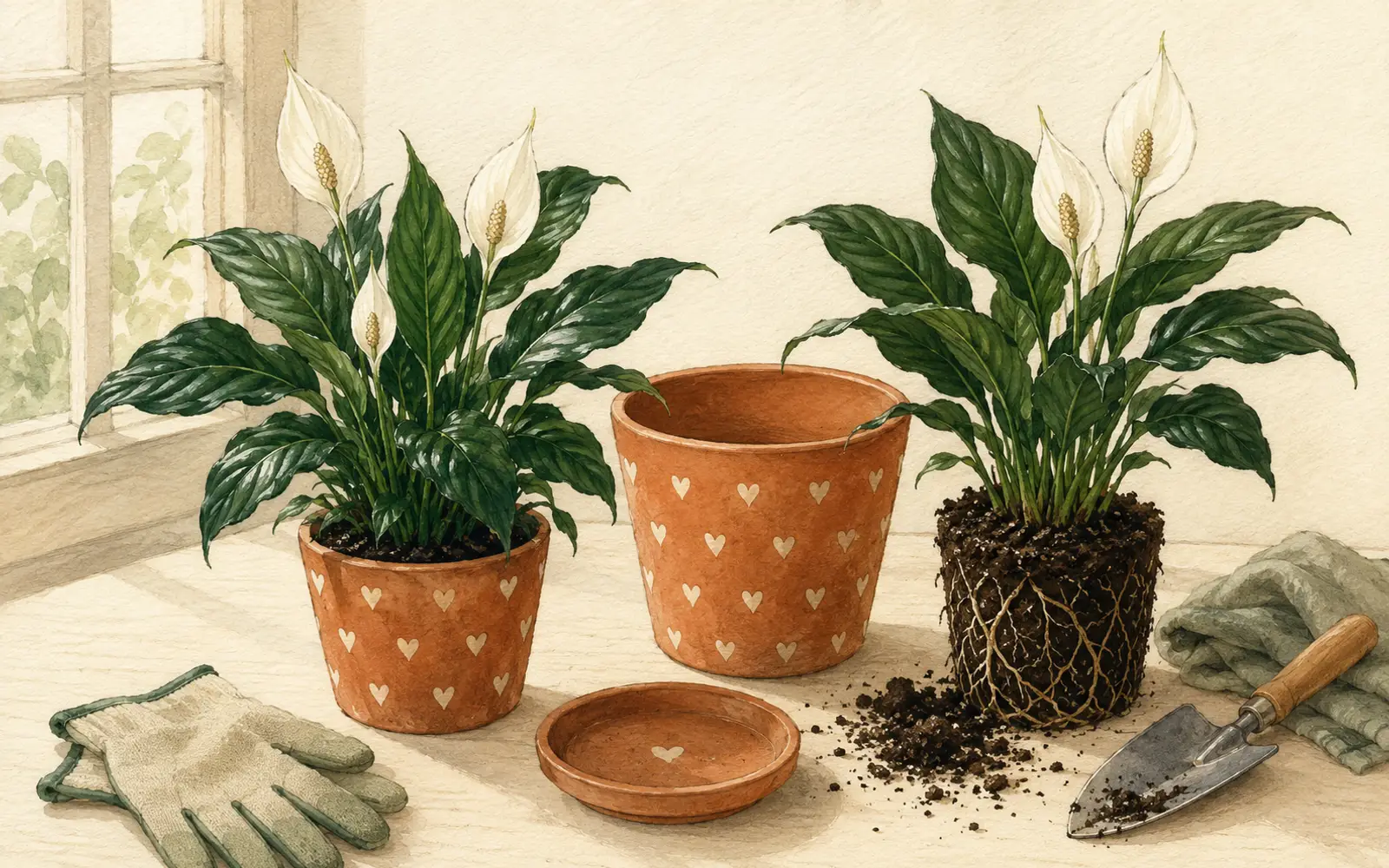
Repotting at a glance
- Best time
- Spring or early summer, when the plant is actively growing.
- Pot size
- For healthy crowded roots, move up 1–2 inches (2.5–5 cm); otherwise fit the existing root ball.
- Soil
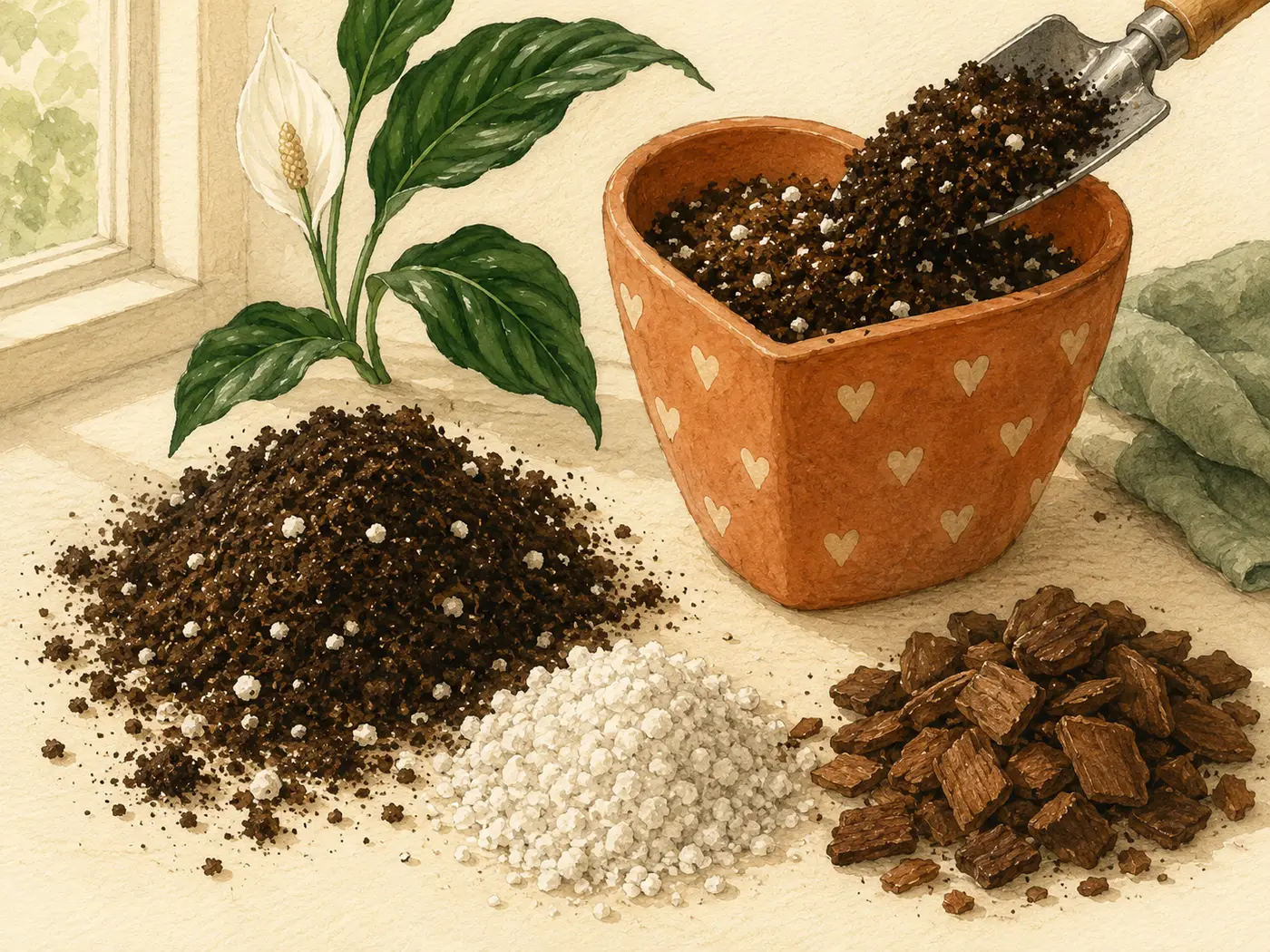
- Loose indoor potting mix cut with perlite or fine bark for drainage.
- Aftercare
- Water once, keep light steady, and skip fertilizer for 4–6 weeks.
Do you actually need to repot?
Repotting is useful when the plant has outgrown its root space or the soil has collapsed. It is not a cure for every droop, yellow leaf, or brown tip. Peace lilies tolerate being a little root-bound, and a stressed plant can get worse if you disturb the roots for no reason.
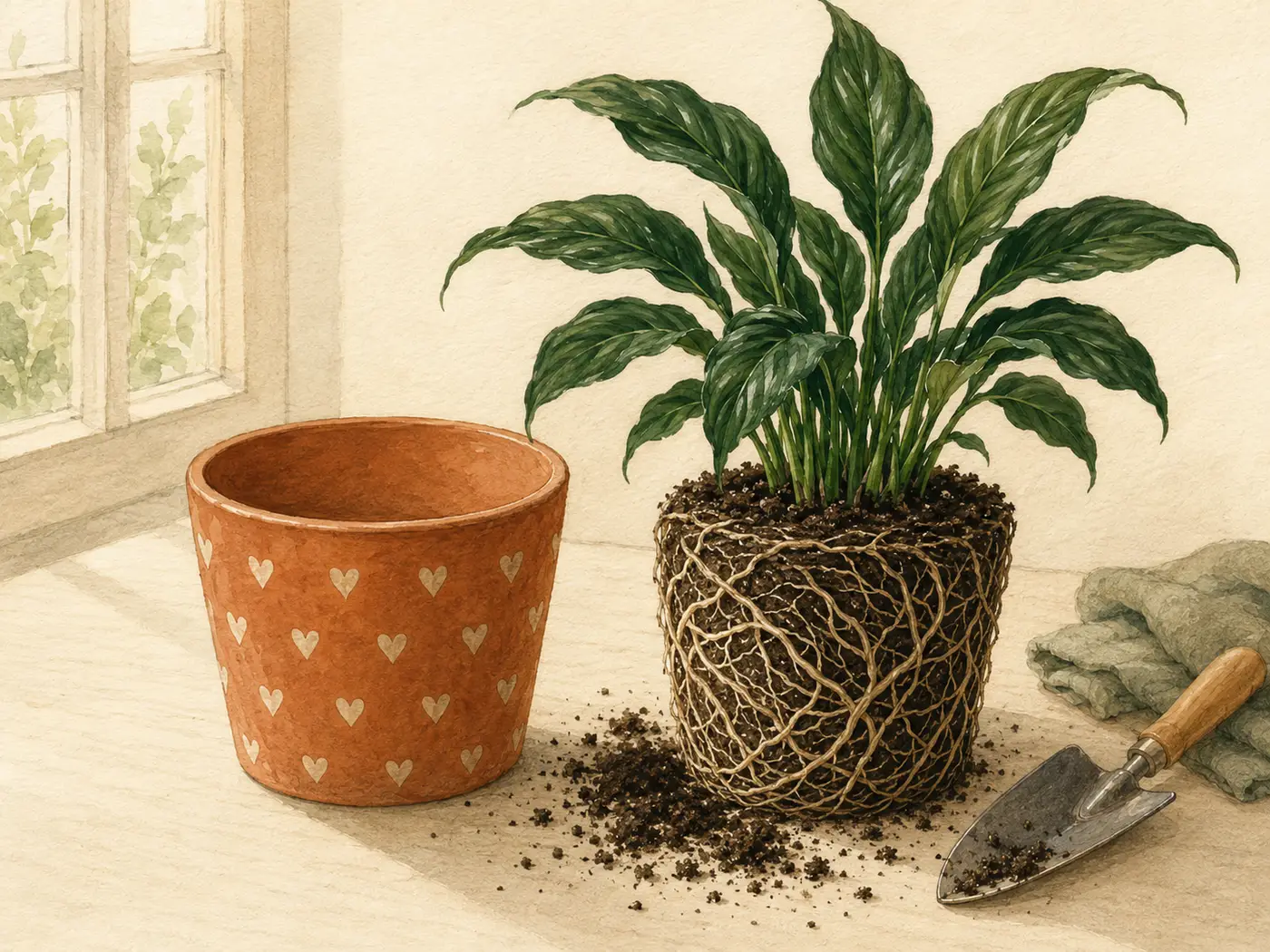
Repot when you see one or more clear signals: roots circling the bottom, roots coming through drainage holes, water racing straight through dry compacted soil, or growth stalling in spring despite good light and watering. If the plant is limp and the soil smells sour, treat it as a root rot problem first, not a routine repot.
What you need
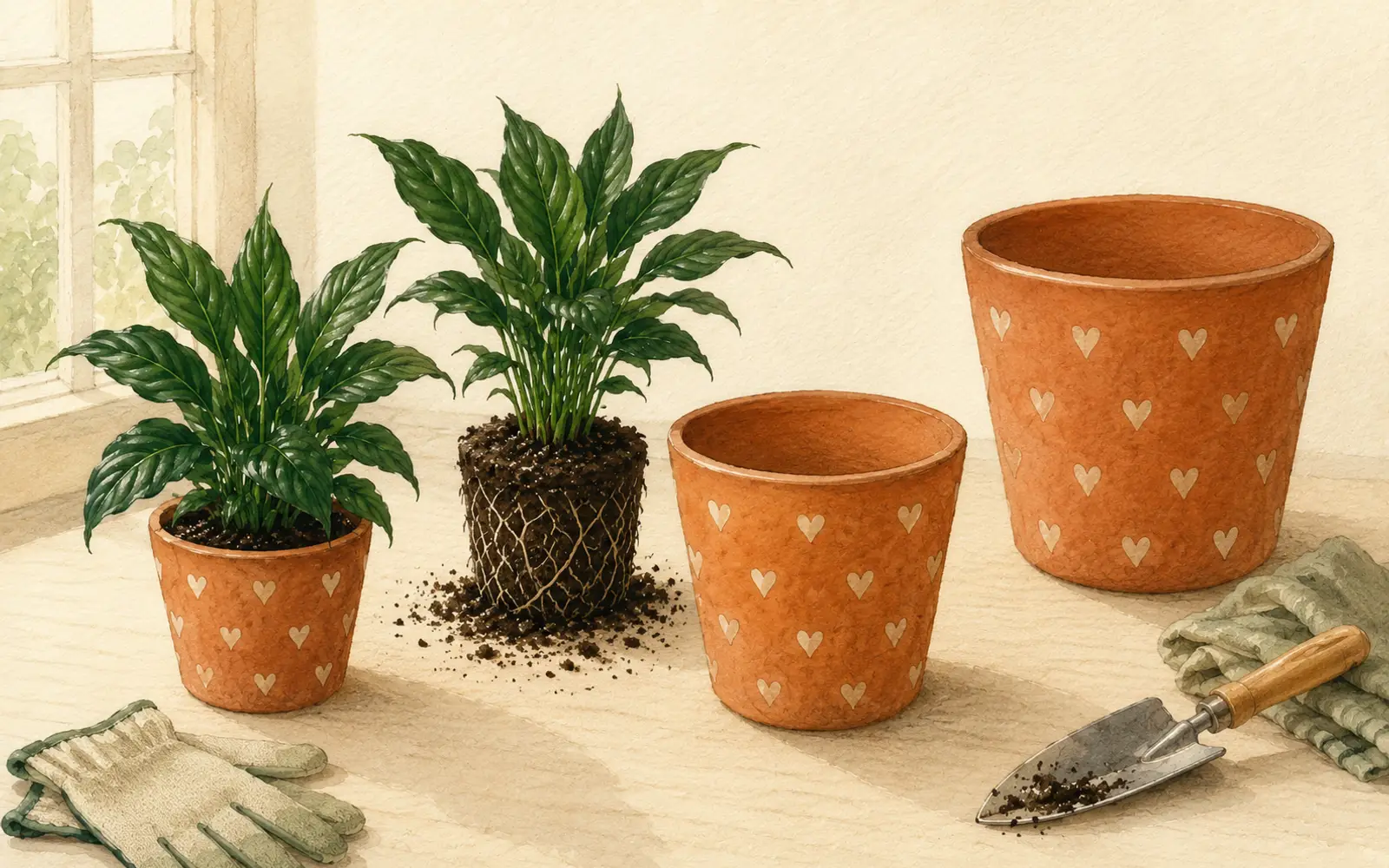
- A pot with drainage holes, 1–2 inches wider than the current pot.
- Fresh indoor potting mix, preferably lightened with extra perlite or fine orchid bark.
- Clean scissors or pruners for dead roots only.
- A saucer you can empty after watering.
- A towel or tray so you can work slowly without making the whole job feel urgent.
A too-large pot surrounds the root ball with wet soil the roots cannot use. That outer ring stays damp for too long and raises the risk of root rot.
Step-by-step: how to repot
- Water lightly the day before if the soil is bone dry. Slightly moist soil releases from the pot more cleanly. If the soil is already wet, do not add more water.
- Prepare the new pot first. Add a shallow layer of fresh mix so the crown of the plant will sit at the same height it did before. The crown should not be buried.
- Slide the plant out gently. Tip the pot sideways, support the base of the plant, and squeeze or tap the pot. Pulling hard by the leaves can tear stems from the crown.
- Inspect the roots. Healthy roots are firm and pale to tan. Old roots may be brown but still firm. Rotten roots are soft, hollow, slimy, or sour-smelling.
- Loosen only the outer roots. If the root ball is tight, tease the outside with your fingers. Do not shred the center. A peace lily recovers faster when most of the root mass stays intact.
- Trim only what is dead or rotten. Remove mushy roots and dead leaf stems with clean scissors. Do not prune healthy roots just to make the plant fit a smaller pot.
- Set the plant at the same depth. Center the root ball, backfill around the sides, and press just enough to remove big air pockets. Do not pack the soil hard.
- Water once, slowly. Water until it drains from the bottom, then empty the saucer after 10 minutes. This settles the mix around the roots.
Aftercare for the first month
Keep the plant in the same light it had before repotting. This is not the week to move it to a brighter window, start fertilizer, divide it, and change the watering routine all at once. Repotting is already a root disturbance; stability is the recovery plan.
Some drooping for 24–72 hours is normal. The leaves may look soft while the roots re-establish contact with the new mix. Wait until the top inch of soil begins to dry before watering again. If the plant stays wilted in wet soil for more than a few days, check the roots and drainage instead of adding more water.
Common repotting mistakes
- Repotting a newly purchased plant immediately. Let it acclimate first unless the soil is rotten or the pot has no drainage.
- Using garden soil. It compacts indoors and suffocates roots.
- Burying the crown. Soil should cover roots, not the base of the leaf stems.
- Fertilizing right away. Fresh mix already contains nutrients, and damaged roots are easier to burn.
- Watering on a schedule afterward. New soil may stay wet longer than the old mix, so use the finger test.
When repotting should wait
Delay routine repotting if the plant is blooming heavily, recovering from cold damage, sitting in soggy soil with possible rot, or newly arrived from a shop. In those cases, solve the immediate stress first. The exception is emergency root rot: if roots are actively rotting, removing wet soil and trimming dead roots matters more than waiting for the perfect season.
Sources & further reading
- University of Florida IFAS Extension — Spathiphyllum cultural notes.
- Royal Horticultural Society — Peace lily care guide, retrieved May 2026.
- Missouri Botanical Garden — Spathiphyllum wallisii, plant finder database.