The best soil for a peace lily.
Peace lilies want moisture, not mud. The right mix holds enough water for those broad leaves while leaving air around the roots.
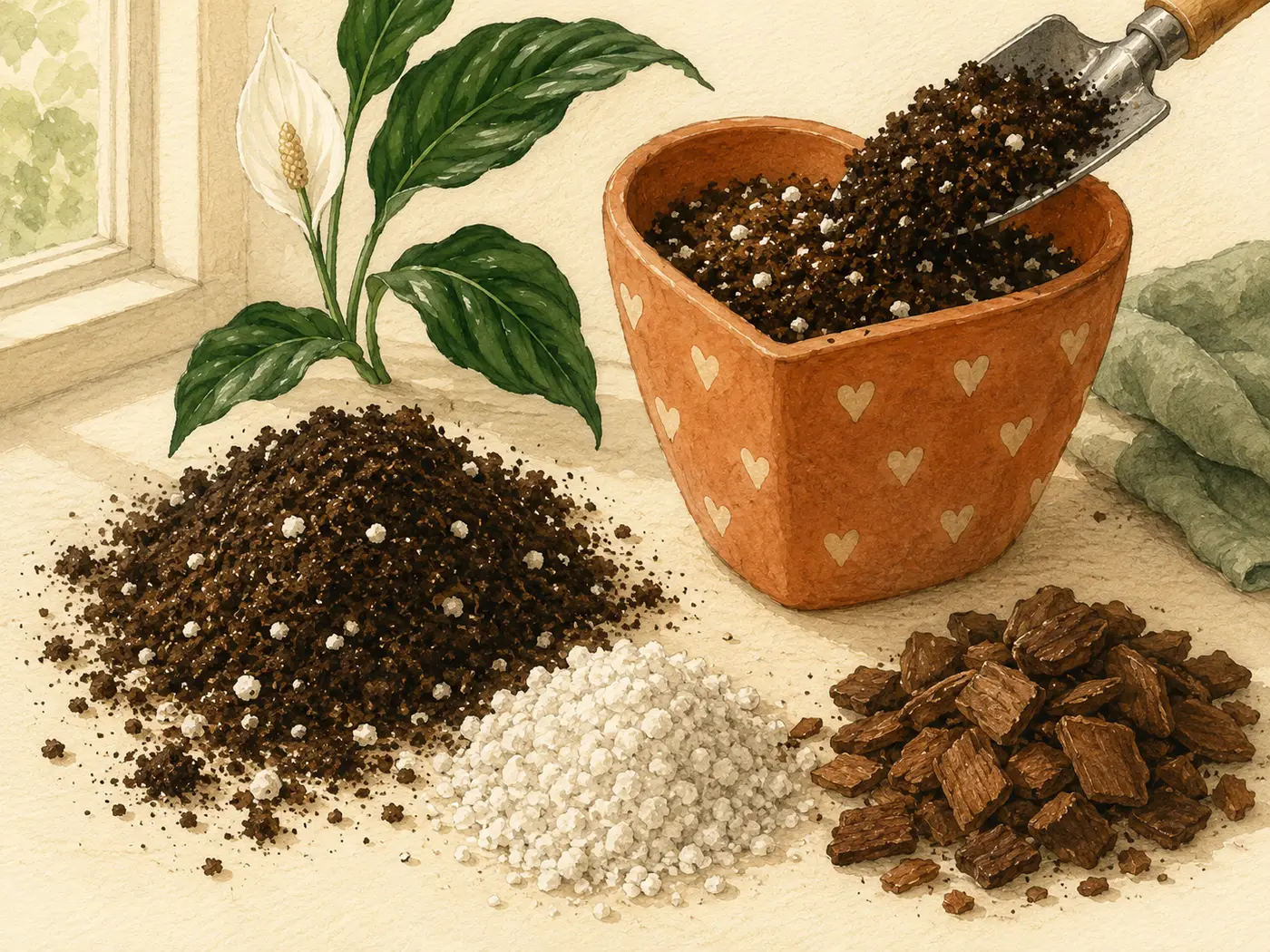
Soil mix snapshot
- Best texture
- Soft and moisture-retentive, but fluffy enough to spring back when squeezed.
- Easy recipe
- 3 parts indoor potting mix, 1 part perlite, 1 part fine bark.
- Avoid
- Dense garden soil, collapsed mix, and pots with no drainage.
- Repotting goal
- Refresh collapsed soil without burying the crown or drowning the roots.
What peace lily soil needs to do
A peace lily is not a cactus, but it is not a bog plant in a living room pot either. Its mix needs to hold moisture between waterings, drain extra water away, and keep air pockets around the roots. When soil collapses into a dense sponge, watering gets weird: the top can dry, the middle can stay wet, and the roots lose oxygen.
The best mix feels light in the hand. If you squeeze a damp handful, it should clump lightly and then break apart when touched. If it forms a heavy paste, it is too dense. If water runs through instantly and the mix refuses to rehydrate, it may be too dry, old, or bark-heavy for a peace lily.
A simple DIY mix
One starting blend is 3 parts indoor potting mix, 1 part perlite, and 1 part fine orchid bark, measured by volume. Use the same scoop for each part. This is an adjustable example, not a required formula; a ready-made mix that already drains and retains moisture appropriately may need no amendment. The potting mix holds moisture, the perlite keeps air in the root zone, and the bark slows compaction. This is forgiving for normal household light and watering habits.
If your home is very dry or warm, you can use a little less bark so the mix does not dry too fast. If your home is cool, low light, or you tend to water generously, add extra perlite and keep the pot modestly sized.
A breathable mix in a huge pot can still stay wet too long. A perfect pot with dense soil can still suffocate roots. Repotting works best when both are sensible.
Can you use bagged houseplant soil?
Yes, but many bagged indoor mixes are a little too fine straight from the bag. They work better when you cut them with perlite. If the mix already contains visible perlite and small bark pieces, you may only need a light amendment. If it looks like dark, uniform peat or compost, add more structure before using it.
Avoid garden soil. It is too heavy for containers, compacts quickly, and can carry pests or pathogens indoors. Cactus mixes vary; check their ingredients and behavior rather than relying only on the name on the bag.
Can I use cactus soil for a peace lily?
Sometimes, but it is not the simplest default. A very gritty mix may dry too quickly for your plant and room, while a fine peat-based product sold for cacti may hold more water than its name suggests. Read the ingredients and check how thoroughly the mix wets and how it dries in your pot.
If the plant repeatedly wilts in a rapidly drying mix, use a more moisture-retentive indoor potting mix when repotting is needed. If the mix stays saturated, check pot size, drainage and light before adding anything. Do not try to correct every bag with the same amendment ratio.
Can I use orchid bark on its own?
Fine bark can be an ingredient, but coarse orchid bark alone behaves differently from a complete houseplant mix. The recipe above combines bark with a moisture-holding base; it does not mean replacing all the soil with large bark pieces.
How to tell the old soil is done
- It shrinks away from the pot wall. Water slides down the gap instead of wetting the root ball.
- It stays wet for a week or more. The mix may be too dense, the pot may be too large, or the plant may not have enough light.
- It has a sour smell. That points to low oxygen and possible root decay.
- It has turned dusty or compacted. Old peat-based mixes can collapse and stop draining evenly.
What not to add
Do not add gravel at the bottom for drainage. It does not fix a pot without drainage holes, and it can leave a perched wet layer above the gravel. Do not bury fertilizer spikes in a stressed plant during repotting. Fresh mix and root disturbance are enough change for one day.
After repotting into fresh mix
Water once slowly until water drains from the bottom, then empty the saucer. After that, judge watering by the new mix, not by your old schedule. Fresh, airy soil may dry differently from the collapsed soil you removed. Wait until the top inch begins to dry before watering again.