What size pot does a peace lily need?
For a healthy, root-bound peace lily, choose a pot about 1–2 inches (2.5–5 cm) wider than the current one, with drainage holes. If the roots still have room, keep the same pot; after root loss, you may need a smaller one.
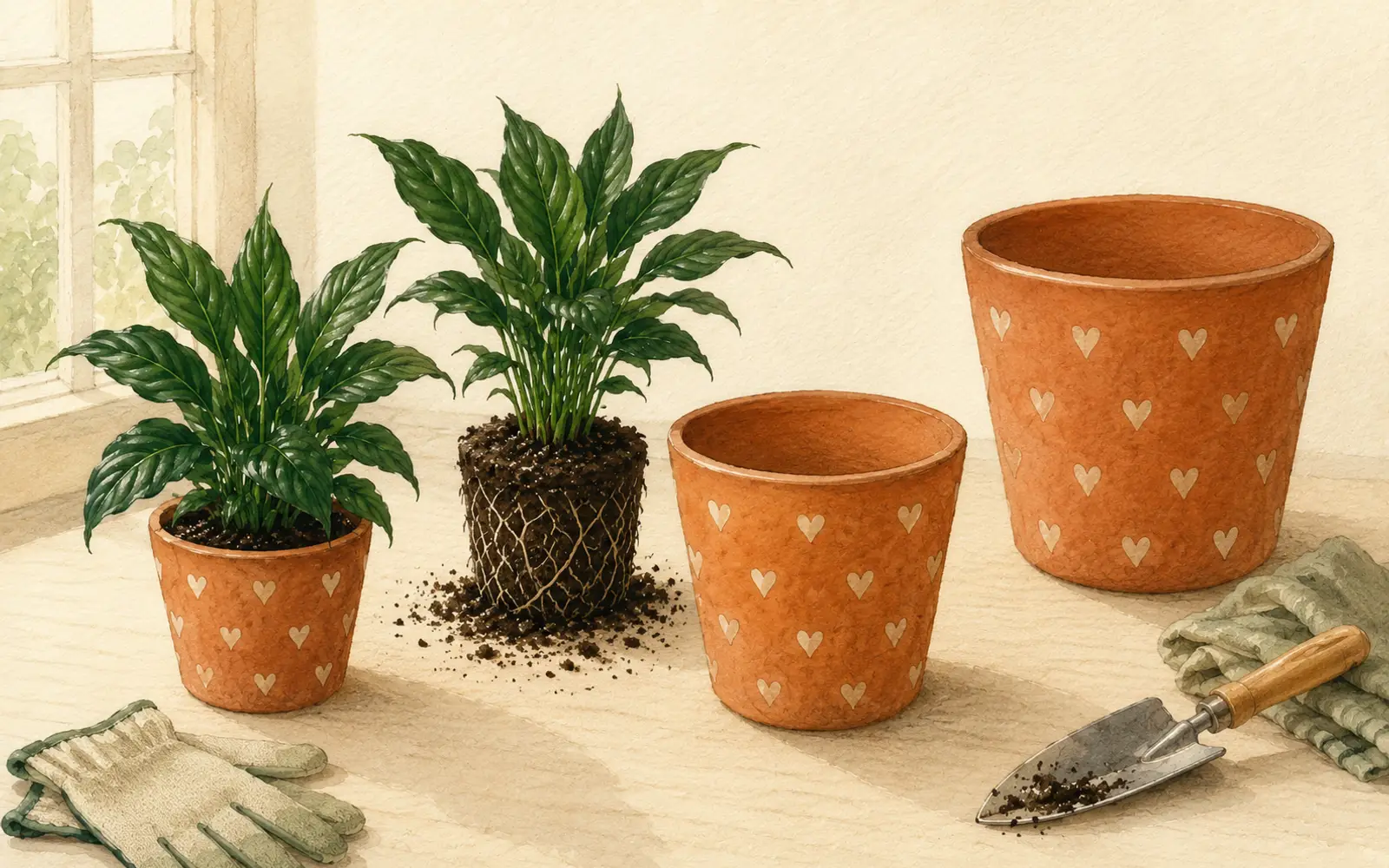
Pot size rules
- Standard upgrade
- Move up 1-2 inches in diameter, not several sizes.
- Drainage
- Required. Decorative outer pots are fine only if water can be emptied.
- For root rot recovery
- Use a pot that fits the remaining roots, even if that means sizing down.
- For division
- Pot each division to its own root mass, not the size of the original plant.
The one-size-up rule
If your peace lily is healthy and root-bound, choose a pot about 1-2 inches wider than the current one. A plant in a 6-inch pot usually moves to a 7- or 8-inch pot. A plant in an 8-inch pot usually moves to a 9- or 10-inch pot. That small increase gives the roots fresh space without surrounding them with a cold, wet ring of unused soil.
The goal is not to buy the final pot your plant will ever need. The goal is to keep the ratio of roots to soil sensible. Peace lilies like evenly moist soil, but they still need oxygen around the roots. Too much potting mix stays wet for too long, especially indoors.
Peace lily pot size chart
These are examples for plants whose healthy roots have filled the current container, not a schedule for every peace lily. Measure the inner diameter across the top of the growing pot, not the decorative outer pot.
| Current pot or root condition | Next choice | Check before changing |
|---|---|---|
| 6 in / about 15 cm pot | 7–8 in / about 18–20 cm | Roots densely fill the existing pot |
| 8 in / about 20 cm pot | 9–10 in / about 23–25 cm | Plant needs space, not just fresh mix |
| Healthy roots with space left | Keep the current size | Look at watering and soil before upsizing |
| Roots reduced after rot or division | Fit the remaining root ball | A smaller pot may be appropriate |
Leaf height alone cannot tell you which pot to buy. A tall plant with a small root system still needs a modest growing pot. Use a stable outer container for weight rather than adding a large volume of wet soil.
Does a peace lily like being root-bound?
A snug pot is different from a root ball packed so tightly that watering becomes difficult. A few roots at a drainage hole are a reason to inspect, not an automatic order to repot. Look for densely circling roots, little mix remaining, and unusually fast drying despite thorough watering. The signs that a peace lily needs repotting help you decide before buying a larger container.
It usually means harder watering decisions. The top may look dry while the deeper outer soil is still wet, so you water again and the root zone stays soggy.
Why oversized pots cause trouble
Roots take up water near the root ball. If the pot is much bigger than the root system, the outer soil has no active roots drinking from it. That soil can stay damp after the center has already changed, creating uneven moisture and low oxygen. Peace lily roots are fleshy and do not enjoy sitting in stale, saturated mix.
This is why a drooping peace lily often gets worse after someone "helps" by moving it into a very large pot. The plant was already stressed, then it received more wet soil than it could use.
How to choose the actual pot
- Use drainage holes. A pot without drainage turns every watering mistake into a longer problem.
- Match depth as well as width. A very deep pot can hold too much wet soil below the root ball.
- Choose stable weight. Big peace lilies can be top-heavy, so a lightweight nursery pot may need a heavier outer cachepot.
- Keep the crown at the same height. Do not bury the base of the stems to make the plant fit.
Best pot type: plastic, terracotta or glazed ceramic?
Drainage and fit matter more than material. Choose a container you can lift, inspect and empty after watering.
| Material | Useful when | Tradeoff |
|---|---|---|
| Plastic nursery pot | You want a light container that is easy to lift and check | Can be top-heavy; use a stable cachepot if needed |
| Unglazed terracotta | You want a porous pot that loses moisture through its walls | May dry faster in a warm room; check moisture more often |
| Glazed ceramic | You want weight and a decorative finish | Check for a drainage hole; glaze reduces evaporation through the sides |
Recheck your watering routine after changing material. Pair the container with a moisture-retentive, airy peace lily soil mix; a porous pot cannot compensate for badly compacted soil.
Does it need a deep or wide pot?
Start with the shape of the roots. A standard pot that accommodates their depth is usually easier to manage than a very tall planter with lots of unused soil underneath. Keep the crown at its existing soil level and leave space below the rim for watering. Do not bury the stems to make a shallow root ball fit a deep container.
Nursery pot inside a decorative pot
This setup works well if the inner pot drains and the outer pot is emptied after watering. It fails when water collects invisibly in the cachepot. After watering, lift the nursery pot after 10 minutes and dump any standing water. If you cannot easily lift it, use a turkey baster, towel, or saucer system that lets you remove excess water.
Special cases
If you are dividing a peace lily, each division gets a pot sized to its own roots, not the original plant. If you are rescuing root rot, trim dead roots first and choose a pot that fits what remains. A smaller healthy root system in fresh mix beats a damaged plant drowning in a large container.
If the plant is massive and already in a large floor pot, you may refresh the top few inches of soil instead of fully sizing up every time. Full repotting is still useful when the root ball is packed, but a heavy plant should be moved only when the signs are clear.
When in doubt, choose the smaller of two reasonable pots and improve the soil mix. You can always size up later after the plant is actively growing again.
Sources & further reading
- University of Minnesota Extension — Spring houseplant care — Repotting when needed and choosing a pot one size larger.
- Royal Horticultural Society — How to grow peace lilies — Inspecting roots before repotting.