About Spathiphyllum.
Where peace lilies come from, what they really are, and what they do (or don't) do for your air.
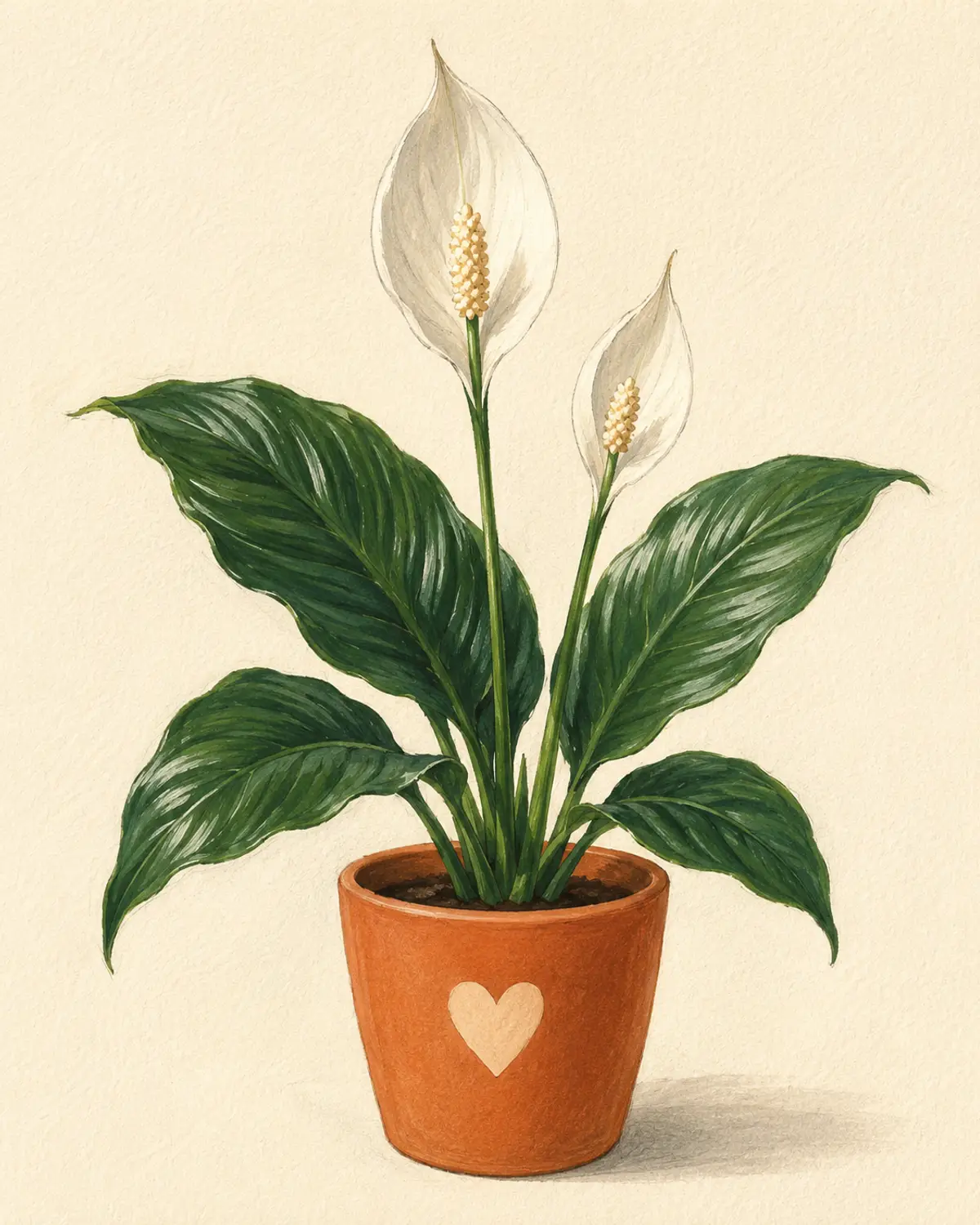
What a peace lily is
A peace lily is a tropical aroid in the genus Spathiphyllum. It is grown indoors for glossy green leaves and white or green spathes, which many people call flowers. The true flowers are tiny and sit on the central spadix.
Why it behaves the way it does indoors
Peace lilies come from warm, shaded, humid habitats. That background explains most of the care: bright indirect light instead of harsh sun, evenly moist but draining soil, warm rooms, and protection from cold drafts.
What makes it popular
It tolerates ordinary homes better than many tropical plants and gives clear signals when something is wrong. Drooping, yellow leaves, brown tips, and green aging blooms all have patterns you can learn. That makes peace lilies forgiving once the basics are steady.
What it is not
It is not a true lily, and it is not a magic air filter for a whole room. It is also not safe for pets or toddlers to chew. Understanding those limits helps you place and care for it more realistically.
Origin & habitat
Tropical Americas, dappled rainforest understory.
Scientific name
Genus Spathiphyllum, family Araceae — relatives include philodendron and monstera.
Benefits & air purifying
The 1989 NASA study, in honest context.
Common beginner misunderstandings
Low light means tolerant, not bloom-happy. Moist soil means evenly damp with air, not soggy. White flowers are actually spathes that age green or brown. Pet toxic means irritating and unsafe to chew, not the same as true lily kidney toxicity.
Indoor vs outdoor identity
In most climates, peace lilies are indoor plants that may spend warm shaded months outdoors. In frost-free warm zones (USDA 11–12), they can grow outdoors in shade. Either way, they remain tropical plants that dislike direct sun, cold soil, and harsh drying wind.
Where to go next
Start with origin if you want to understand the care logic. Read scientific name if bloom structure or plant family is confusing. Read benefits if you have seen claims about peace lilies purifying indoor air.