Origin & natural habitat.
Peace lilies grow wild on the dappled forest floor of tropical Central and South America.
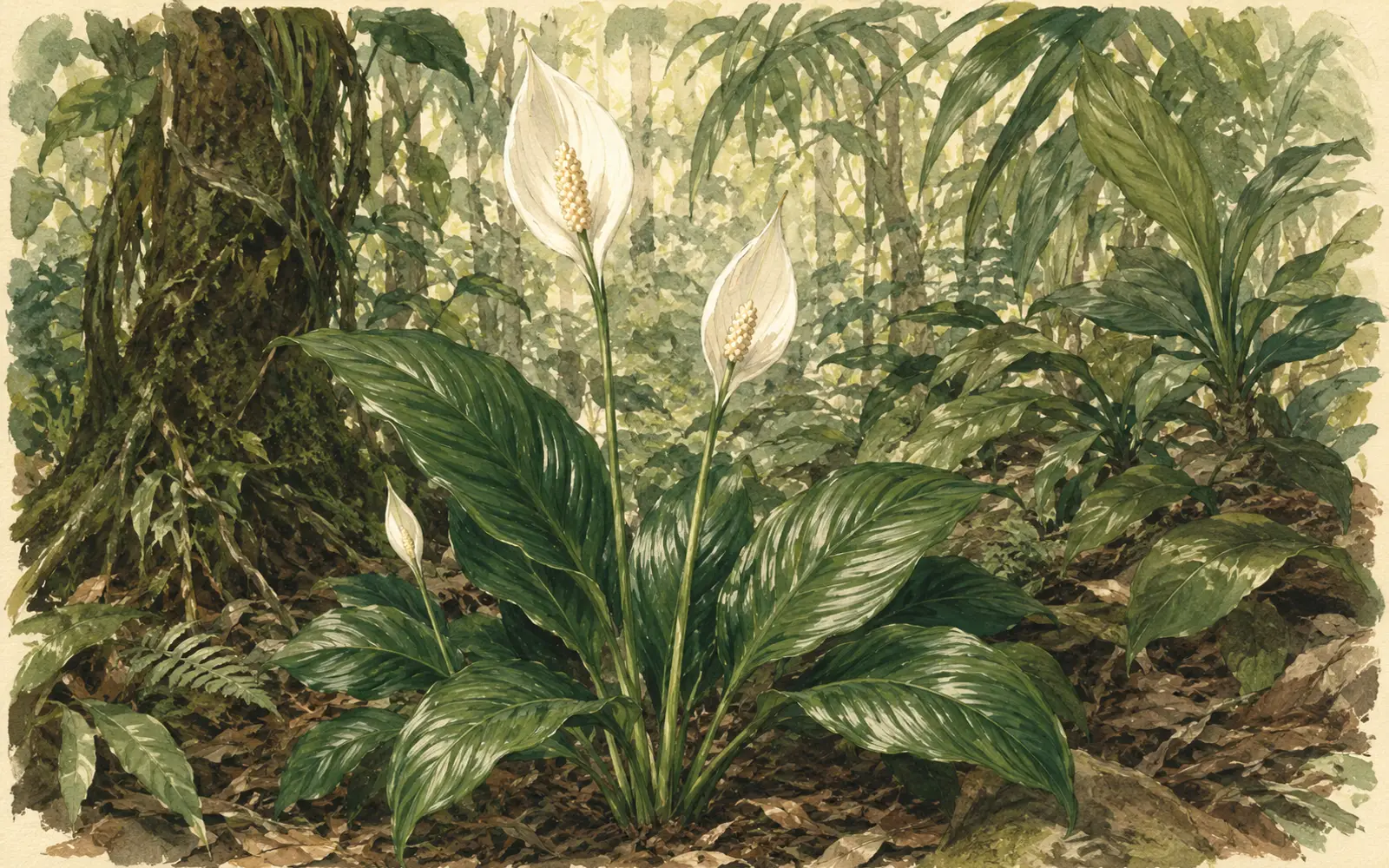
At a glance
- Native range
- Mexico → northern South America
- Habitat
- Dappled rainforest understory
- Climate
- Warm, humid, never freezing
Why it matters
Every care recommendation traces back to this habitat. Bright but indirect light = canopy-filtered sun. High humidity = rainforest air. Loose, fast-draining soil = leaf-litter forest floor. Knowing where a plant comes from is the simplest care guide of all.
Light in the understory
Peace lilies are adapted to filtered light, not desert sun. Indoors, that means they can tolerate lower light than many flowering plants, but they still grow and bloom better in bright indirect light. Direct afternoon sun can scorch leaves because it is much harsher than broken forest light.
Moisture without swamp conditions
Forest-floor plants often grow in organic material that holds moisture but still has air. That is the balance to copy in a pot. Keep the mix from drying rock-hard for long periods, but do not let the roots sit in stagnant water.
Why cold is a problem
The native climate is warm and frost-free. Indoors, cold windows, winter deliveries, and air-conditioning vents can damage leaves quickly. Outdoors, peace lilies are only suitable year-round in very warm climates and should be protected from cold nights.
Humidity in context
Peace lilies appreciate moderate humidity, but they do not need leaves wet all day. Rainforest air is humid and moving; a cool stagnant room with wet leaves can invite leaf spot. A room humidifier or plant grouping is more useful than constant misting.
How habitat guides indoor care
Use origin as a filter for decisions. Shade, warmth, drainage, and steady moisture are consistent with the plant's background. Harsh sun, cold drafts, dense soggy soil, and heavy fertilizer are not.
Outdoor growing limits
Peace lilies are not hardy garden perennials in cold climates. They can grow outdoors only where temperatures stay warm, and even then they need shade. Patio plants should come indoors before chilly nights, long before frost is expected.
Why indoor pots are different from habitat
A pot is a small closed root zone. Water cannot drain and disperse the way it can in a living forest floor. That is why drainage holes, airy mix, and careful watering are so important indoors. You are copying the useful parts of the habitat, not making a swamp.
What not to copy
Do not copy rainforest conditions by keeping the plant constantly wet, misting all day, or placing it in a dark bathroom with no window. Warmth, filtered light, and steady moisture matter together. One without the others can create problems.
Seasonal changes indoors
Indoor rooms are not tropical forests. Winter brings weaker light, drier air, colder windows, and slower growth. Summer can bring stronger sun, heat, and faster drying. Adjust care by observing the plant and soil, not by forcing the same schedule all year.
How origin explains blooms
Peace lilies bloom best when the plant has enough energy. In habitat terms, that means warmth, useful light, and healthy roots. Indoors, the closest match is bright indirect light, steady temperatures, and patient seasonal feeding.
How origin explains pests
Indoor air can be drier and dustier than the plant prefers, which can favor spider mites. Wet stagnant leaves can favor leaf spot. The goal is not maximum humidity; it is a balanced room with clean leaves, airflow, and no extremes.
Practical habitat checklist
- Bright indirect light, not harsh sun.
- Warm rooms, away from cold drafts.
- Moisture with drainage, not stagnant wet soil.
- Moderate humidity with airflow.
The indoor translation
The closest home version is near a bright window but out of direct sun, in a pot with drainage, away from heaters, AC vents, and cold glass. That simple translation solves most habitat-related care mistakes.
Copy the pattern, not every rainforest detail. For the broader botany context, return to about the plant.
Sources & further reading
- University of Florida IFAS Extension — Spathiphyllum cultural notes.
- RHS plant database, retrieved May 2026.
- Missouri Botanical Garden — Spathiphyllum wallisii.