Peace lily varieties: compare five types.
Most peace lilies want similar care, but size and variegation change where they fit. Choose the plant for the room you have, not just the label on the nursery pot.
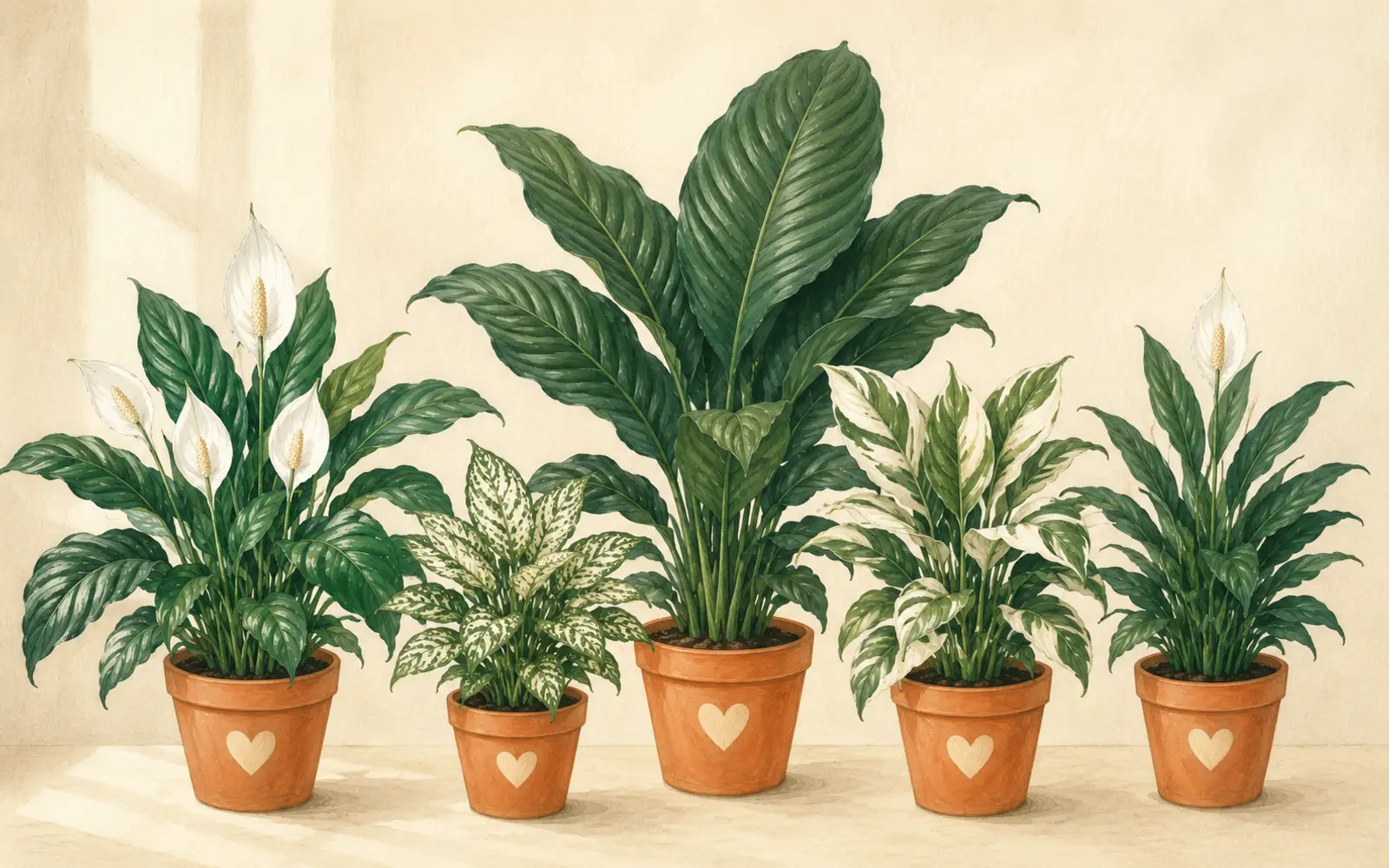
Choosing a variety
- Best all-purpose choice
- 'Mauna Loa' or a similar classic green peace lily.
- For a small space
- Check mature height and spread: a small nursery plant may grow much larger.
- Best statement plant
- 'Sensation' if you have floor space and bright indirect light.
- Care difference
- Give variegated leaves bright indirect light, but do not expect light to guarantee a particular pattern.
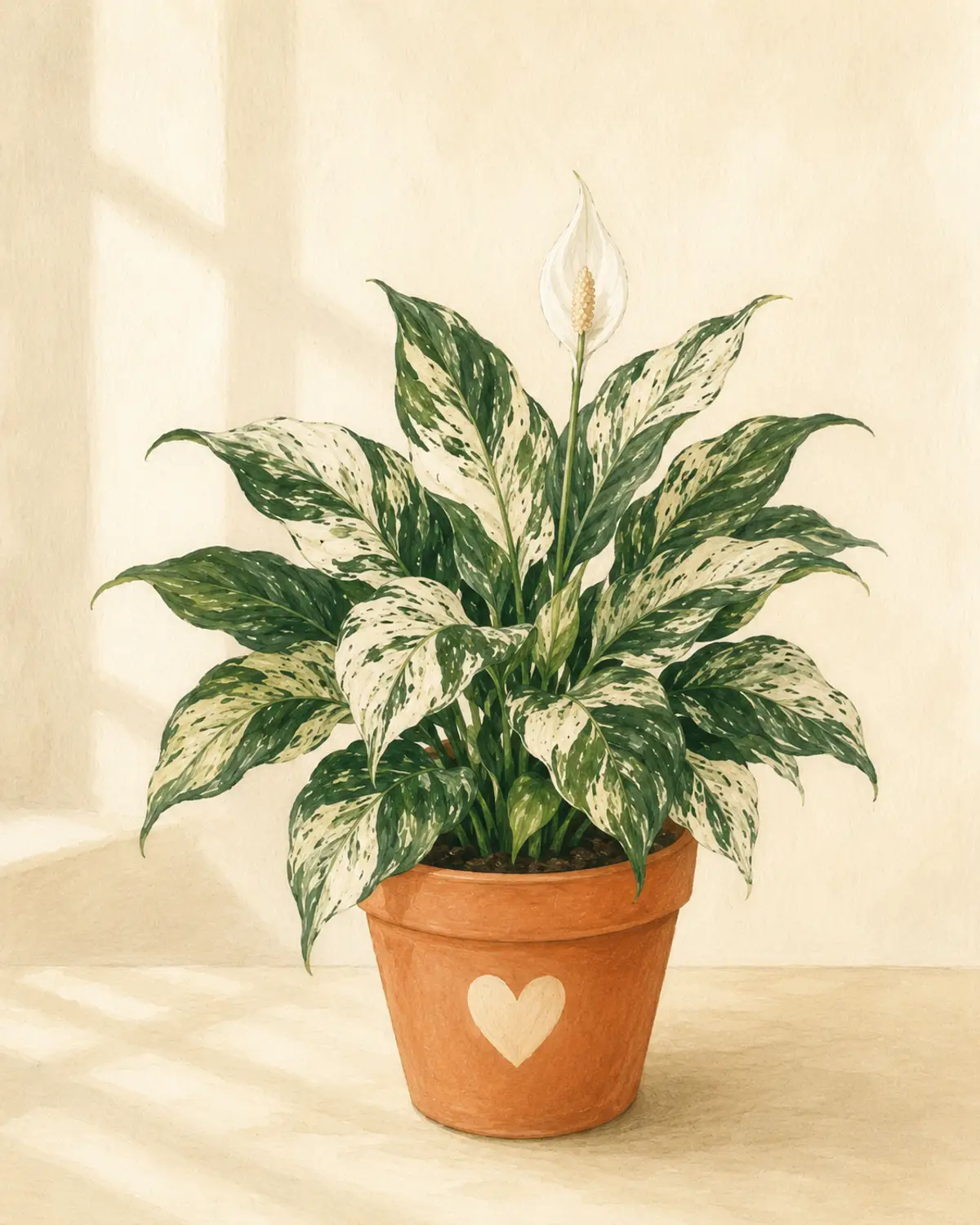
'Domino'
Compact, variegated · 1–3 ft / 30–90 cm
White-speckled foliage
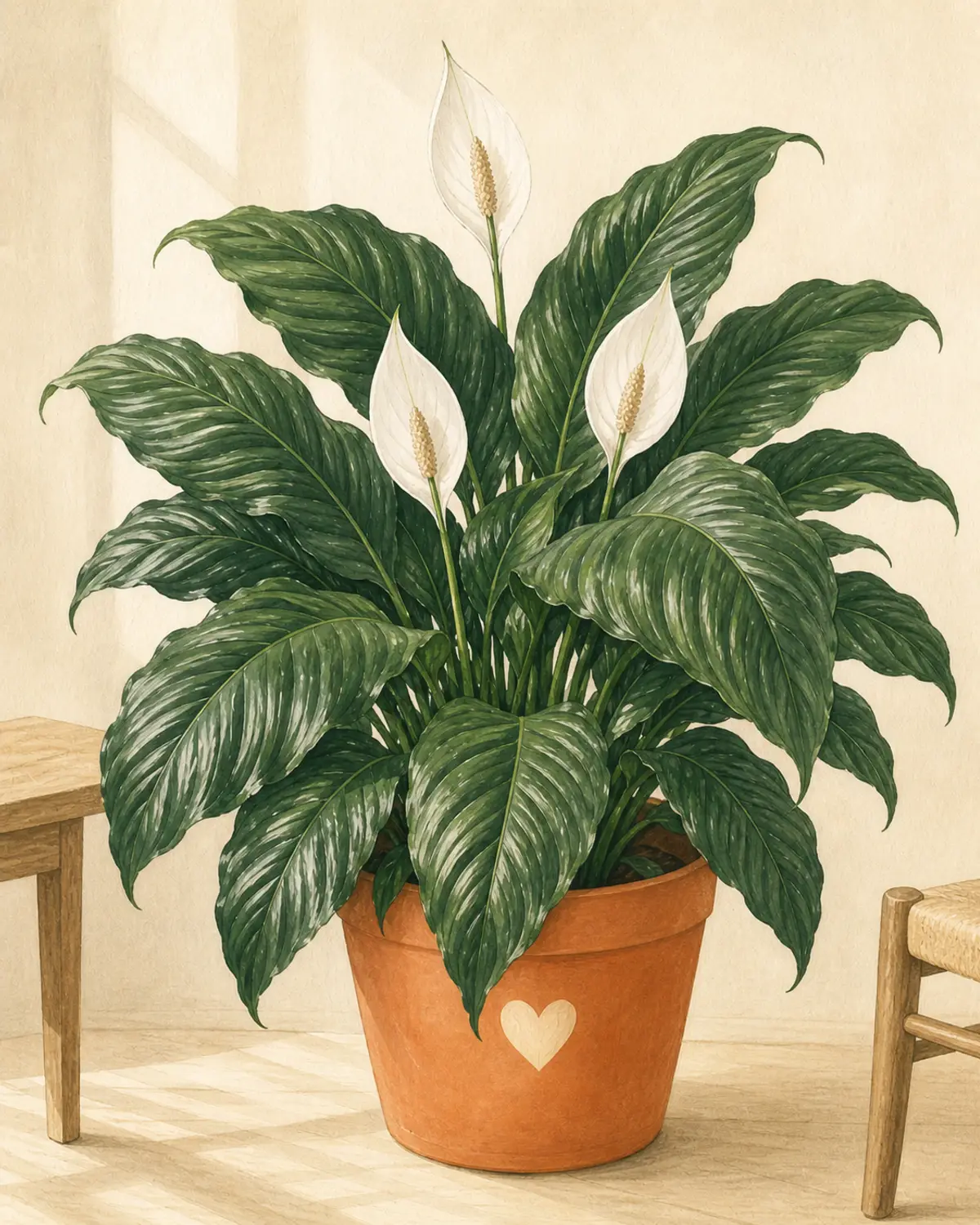
'Sensation'
Large floor plant · 4-6 ft
Massive ribbed leaves
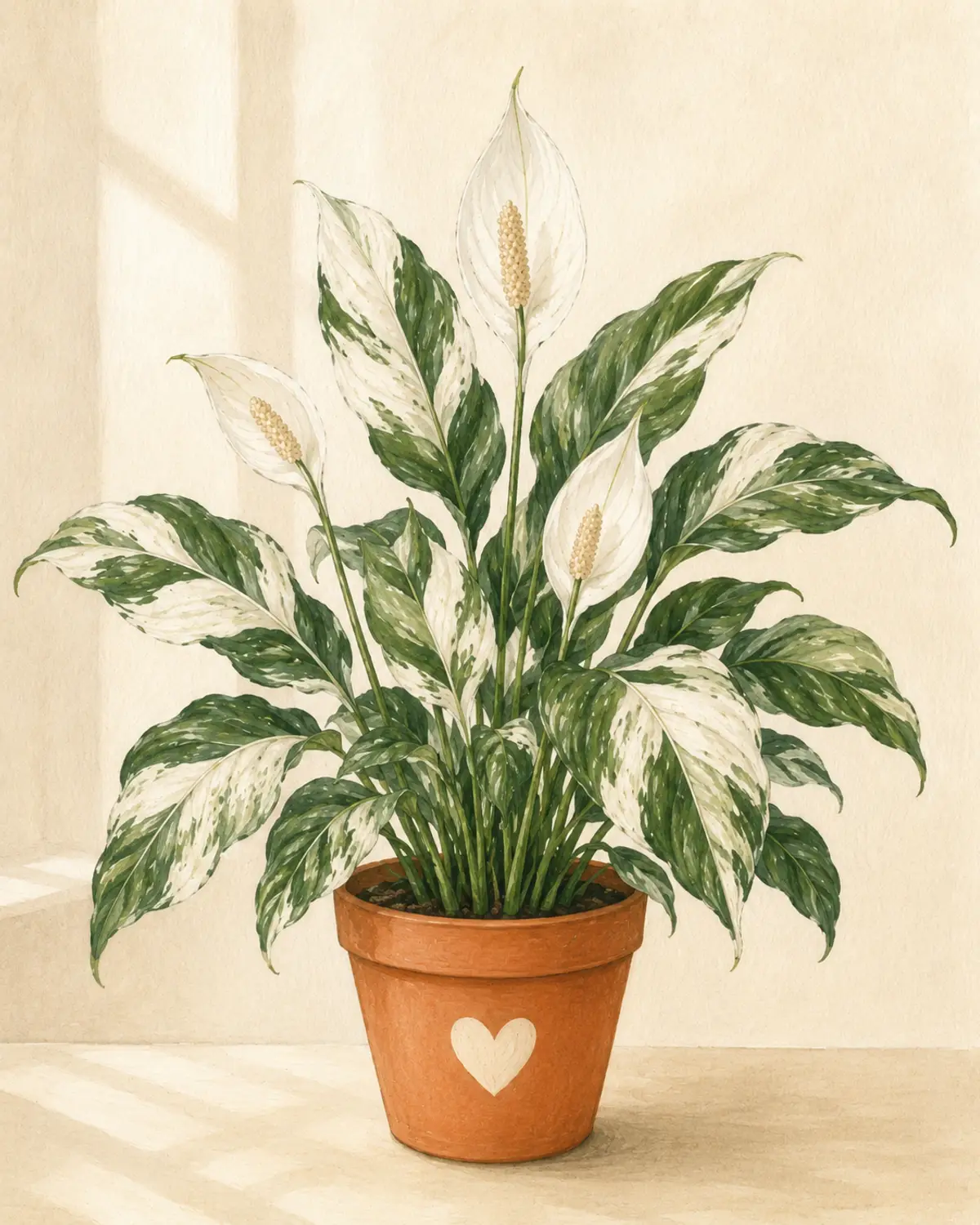
'Picasso'
Hand-painted look · Size varies; check grower label
Bold white panels per leaf
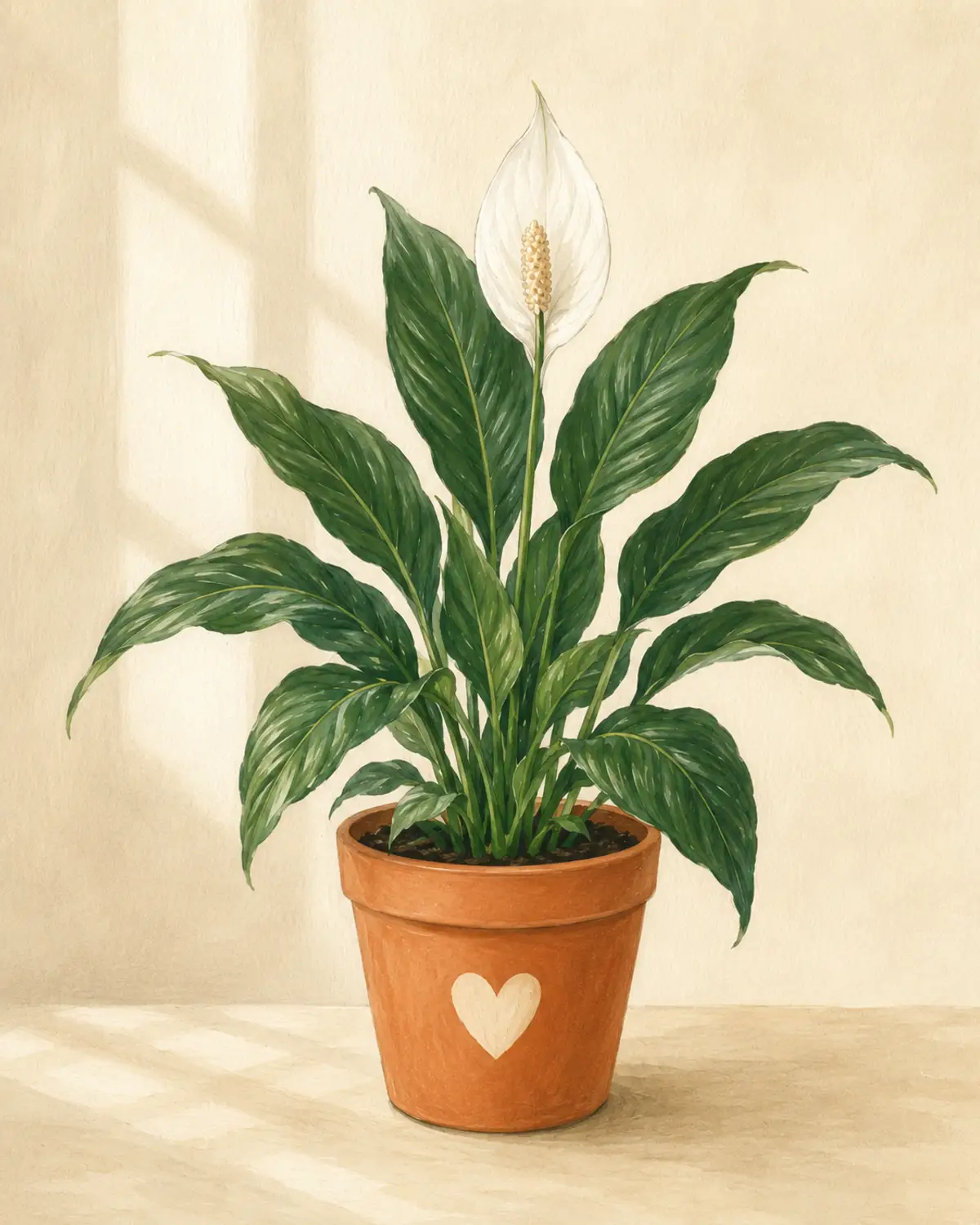
'Mauna Loa'
The classic · Large green cultivar
Large white spathes
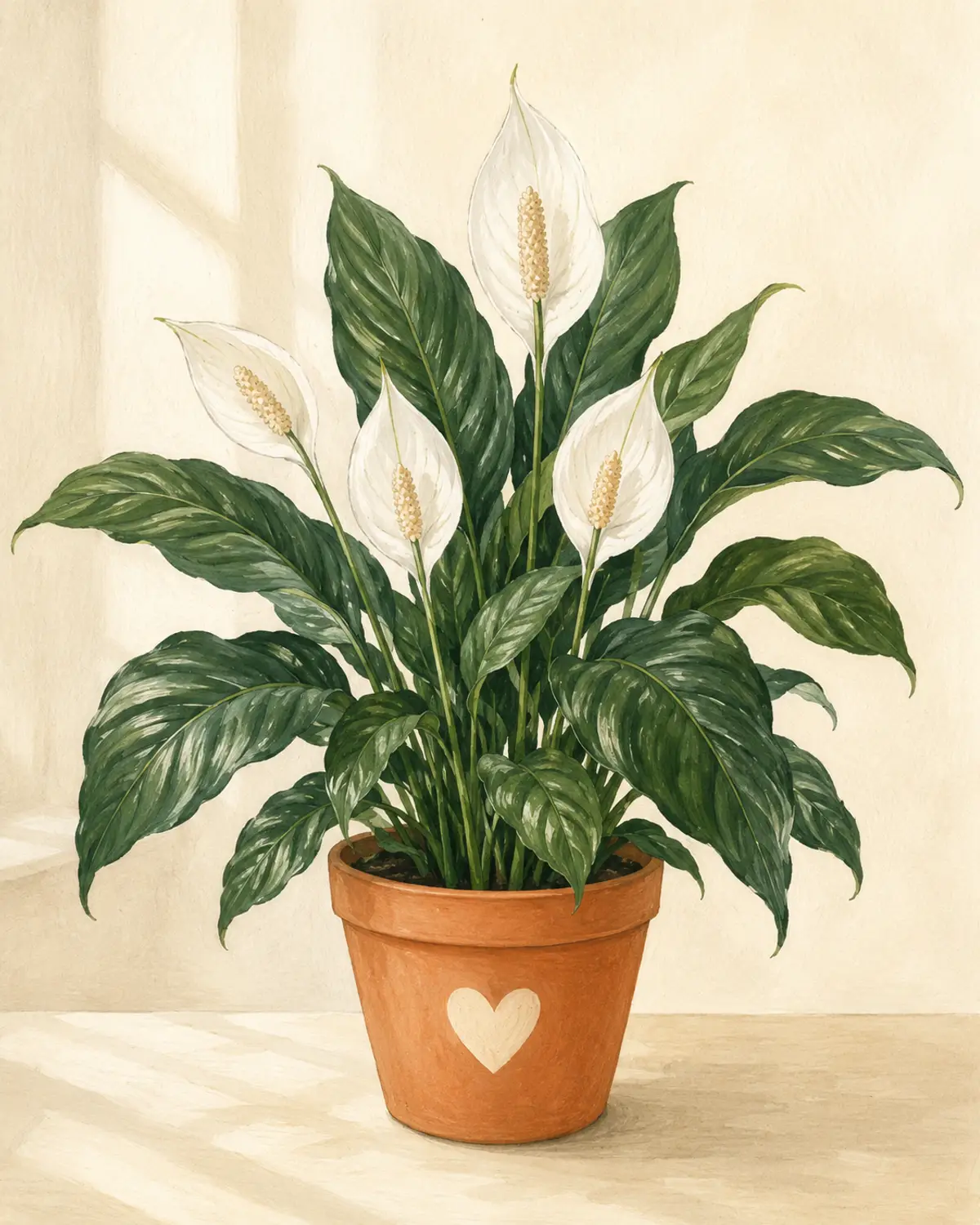
'Clevelandii'
Tabletop favorite · Check grower’s height and spread
Glossy dark leaves
The care is similar, but the room fit is not
Most Spathiphyllum cultivars prefer bright indirect light, warm rooms, evenly moist but not soggy soil, and protection from direct sun. The differences show up in size, leaf texture, variegation, and how much space the plant needs around it.
A large cultivar can look beautiful in a nursery but awkward in a narrow apartment corner. A variegated cultivar can look striking in bright light but duller in a dim room. A compact cultivar may be easier to keep evenly watered because the pot and root system are easier to read.
Peace lily types at a glance
A species is a botanical grouping; a cultivar is a selected plant sold under a name such as ‘Domino’. Shop labels sometimes shorten or omit those names. Use the comparison to narrow your choice, then confirm the label with the grower.
| Variety | Leaf clue | Size guidance | Room fit |
|---|---|---|---|
| Domino | White-speckled foliage | 1–3 ft / 30–90 cm | Small shelves, desks, bright rooms |
| Sensation | Massive ribbed leaves | 4-6 ft | Floor plant, wide corner, statement foliage |
| Picasso | Bold white panels per leaf | Size varies; check grower label | Collectors with bright indirect light |
| Mauna Loa | Large white spathes | Large green cultivar | Most homes, offices, and gift plants |
| Clevelandii | Glossy dark leaves | Check grower’s height and spread | Compact rooms and classic green foliage |
Dimensions are approximate and depend on conditions. NC State Extension lists Domino at 1–3 feet and Sensation as a large type exceeding 5 feet. A nursery-pot size is not a mature plant size. For Picasso and Clevelandii, check the grower’s height and spread rather than relying on a fixed figure here.
Variegated peace lilies need a little more light
Plants like 'Domino' and 'Picasso' have less green surface on some leaves. They can still be easy houseplants, but they usually look better with brighter indirect light than a plain green cultivar would need. In too little light, growth slows and variegation may become less impressive.
Do not solve that by putting them in harsh sun. Direct afternoon sun can scorch pale leaf areas quickly. Think bright room, filtered window, or a spot close to an east-facing window.
Large peace lily varieties need floor space
'Sensation' can become a true floor plant with large ribbed leaves. It needs more physical room, a stable pot, and a watering routine that matches a bigger root system. A large plant also gathers dust faster, so leaf cleaning becomes part of care.
If you want flowers more than foliage, choose a classic blooming type such as 'Mauna Loa' instead of buying the largest foliage cultivar and expecting it to behave like a compact tabletop plant.
If the label is missing
Many store peace lilies are sold without a cultivar name. That is fine. You can still care for the plant by observing size, leaf color, and growth habit. If it has plain green leaves and white spathes, use the general care guide. If it has speckled or panelled leaves, give it the brighter end of indirect light and watch for scorch.
Choosing a peace lily for a small room
For a desk, shelf, or small bedroom, check the expected mature spread as well as height. A young Domino may fit a shelf now without remaining shelf-sized for life. For a bright living room corner, a larger cultivar can work if it has room to spread. For an office, a classic green peace lily is usually more forgiving than a heavily variegated one.
If you travel often or tend to forget watering, avoid buying the most stressed-looking variegated plant on the shelf. A healthy green cultivar will usually recover from small mistakes more gracefully than a rare-looking plant that was already struggling at the store.
Buying checklist
- Leaves: choose firm leaves with no widespread yellowing, spotting, or sticky residue.
- Crown: avoid mushy bases or a sour smell from the pot.
- Soil: damp is fine; swampy, compacted, or moldy soil is a warning.
- Pests: check undersides and leaf joints before bringing the plant home.
- Size: buy for the space the mature plant needs, not just the current pot size.
For the full inspection routine — leaves, crown, roots, decorative wraps, and the first-week setup at home — see the peace lily buying guide.