Black leaves: cold, rot, or fungus.
Three main causes — and they're easy to tell apart by where the black starts.
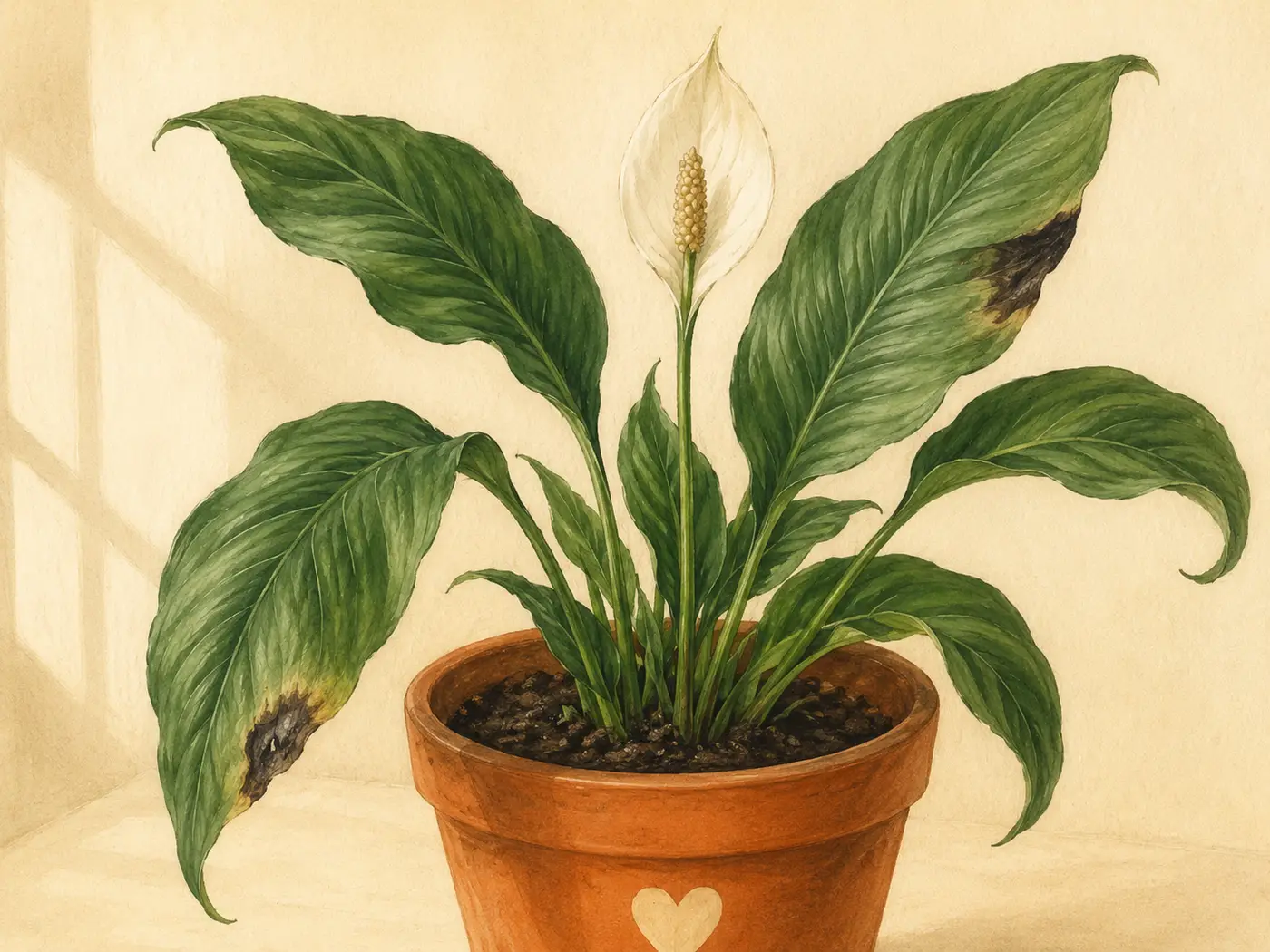
At a glance
- Tips going black
- Severe fluoride or fertilizer damage.
- Whole leaves blackening
- Cold damage from a draft or chilled water.
- Stems mushy & black
- Bacterial or fungal stem rot — urgent.
If the tips blackened first
Likely buildup of fluoride from tap water, or a fertilizer accident. Flush the soil and switch water sources.
Tip-first blackening is usually a leaf-edge stress pattern, not a whole-plant emergency. Check for white soil crust, recent fertilizer, repeated dry wilt, or direct sun. The damaged tips will not heal, but the plant can stop making new black tips once the stress is corrected.
If whole leaves went black overnight
Cold shock. Common in winter near windows or after a delivery. Move it to a warm, draft-free spot; remove the dead leaves; expect new growth in 4–6 weeks.
Cold damage often appears suddenly because chilled tissue collapses after it warms. Check the plant's exact location: cold glass, an exterior door, an AC vent, or a winter car ride can all be enough. The winter care guide covers the placement and watering changes that prevent this.
If stems are black and squishy
Cut affected stems back to firm, healthy tissue. Treat the soil with a copper-based fungicide and reduce watering frequency.
Also inspect the roots. Black, mushy stems often come with a wet root zone, and treating the leaves alone will not fix that. If the base smells sour or the potting mix stays wet, move to a full root rot rescue.
What to remove
Remove leaves that are fully black, mushy, or collapsed. Leave partly green leaves if they are firm, because they can still help the plant photosynthesize while it recovers. Use clean scissors and cut at the base of the stem rather than tearing.
What not to do
- Do not fertilize a plant with blackened leaves.
- Do not place it in direct sun to "warm it up."
- Do not keep watering if the soil is already wet.
- Do not reuse sour soil after a rot problem.
Recovery signs
Recovery means the blackening stops spreading and the crown stays firm. New leaves may be smaller at first. If black tissue keeps moving down stems, or the crown becomes soft, the plant is still declining and needs a root and crown inspection.
Black leaves after shipping or a store trip
If black leaves appear a day or two after bringing the plant home, think temperature first. Peace lilies can be chilled in a delivery truck, store entryway, or car even when the final room is warm. The damage often shows after the tissue warms back up.
Keep the plant in stable bright indirect light and resist the urge to repot immediately unless the soil is soaked. A plant recovering from cold shock needs boring care: warmth, moderate moisture, and time.
Black spots vs black leaves
Small black or brown spots with yellow halos behave differently from whole leaves turning black. Spots can point to leaf disease, wet foliage, poor airflow, or water splashing soil onto leaves. Remove the worst spotted leaves, keep foliage drier, and read the leaf spot guide if new spots keep appearing.
Prevention
Keep peace lilies above 65 F when possible, and never let them sit against winter glass. Water with room-temperature water, avoid fertilizer on a stressed plant, and make sure the pot drains freely. Most black-leaf problems are easier to prevent than reverse because dead tissue cannot turn green again.
After any black-leaf event, take one clear photo every week. It is easier to see whether the damage is spreading when you can compare the same angle over time.
If the next new leaf opens green, the emergency has likely passed.
Keep care steady while that leaf develops in warm indirect light.
Sources & further reading
- University of Florida IFAS Extension — Spathiphyllum disease management.
- RHS plant problems database, retrieved May 2026.
- Chen, J. — Common abiotic disorders of foliage plants, ENH-Florida.