Leggy growth: more light, immediately.
Long bare stems with leaves spaced widely apart = the plant is reaching for light it can't find.
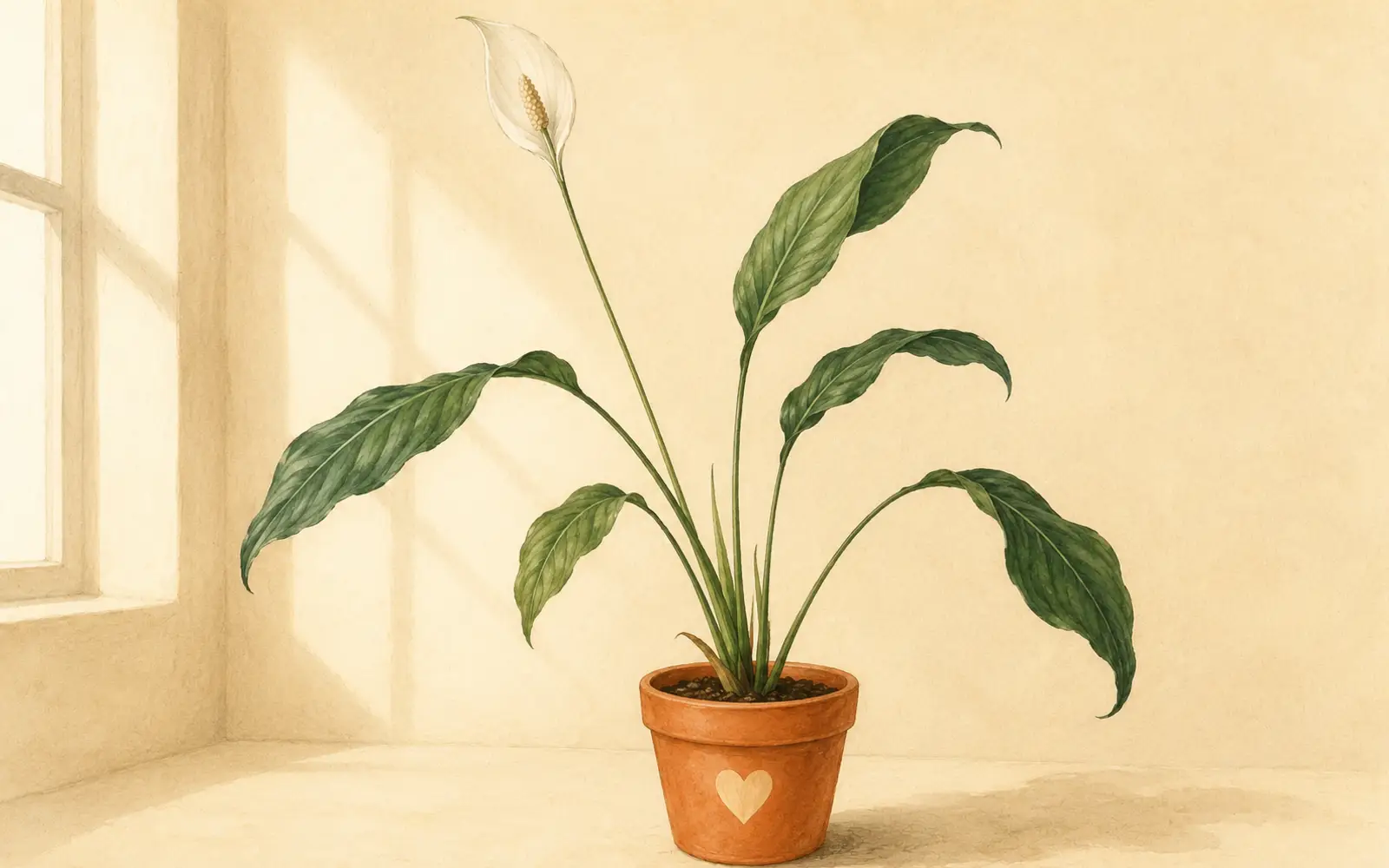
At a glance
- Cause
- Insufficient light.
- Fix
- Move closer to a window or supplement with a grow light.
- Recovery
- New growth fills in within 2–3 months once light improves.
Peace lilies tolerate low light — but tolerating isn't thriving. In dim corners they stretch their stems toward the brightest available source, leaving long internodes with sparse leaves.
Fix it in two steps
- Move within 4 feet of a bright window.
- Trim the leggiest stems back at the base. New, compact growth comes from the crown.
What leggy growth looks like
A leggy peace lily has long leaning stems, leaves spaced far apart, and a plant shape that points toward the window. It may still be green, but it looks loose instead of full. Low light can also mean fewer blooms, smaller new leaves, and soil that stays wet longer than expected.
Move brighter without scorching
Choose bright indirect light: near an east window, a few feet back from a south or west window, or behind a sheer curtain. Do not move a dim-grown plant straight into hot afternoon sun. Increase light in stages over one to two weeks so leaves can adjust.
Can old leggy stems become compact?
No. Stretched stems will not shorten. The plant improves by making better new growth from the crown. Remove the worst stretched stems once the plant has enough healthy leaves left to keep feeding itself.
Rotate and reshape
Rotate the pot a quarter turn each week so the plant does not lean in one direction. If one side is bare, face that side toward the light for a while. Peace lilies respond slowly, so give the plant a full growing season to fill out after a brighter move.
When to divide a leggy plant
If the plant is crowded into several crowns and looks uneven, division during repotting can make cleaner smaller plants. Do not divide a weak plant just because it is leggy. Improve light first, then divide when roots are healthy and new growth is active.
Grow light option
If your home has no bright window, a simple full-spectrum grow light can prevent stretched growth. Place it close enough to brighten the leaves but not so close that it heats them. Run it on a consistent daytime schedule. The goal is steady bright light, not a spotlight.
Water changes after more light
Once the plant moves brighter, it may use water faster. Check the soil more often for the first few weeks. Better light can also reveal old weak leaves, so remove yellowing stretched leaves gradually instead of stripping the plant all at once.
How long reshaping takes
Expect visible improvement over months, not days. The first compact new leaf is a good sign, then the crown slowly fills in. A plant that spent a year stretching in low light will need a growing season to look balanced again.
Prevention
Do not choose a peace lily for a dark corner if you want a full, blooming plant. Use the darkest corners for short display periods only, then rotate the plant back to better light. Bright indirect light is what keeps the plant dense.
When in doubt, choose the spot where the plant casts a soft shadow during the brightest part of the day. No shadow at all usually means the location is too dim for compact growth.
What not to fix with fertilizer
Fertilizer will not correct leggy growth caused by low light. Feeding a dim plant can create weak growth and salt buildup while the real problem remains. Improve light first, then feed lightly during active growth if the plant responds well.
Compact growth is a light result, not a fertilizer result.
Sources & further reading
- University of Florida IFAS Extension — Spathiphyllum disease management.
- RHS plant problems database, retrieved May 2026.
- Chen, J. — Common abiotic disorders of foliage plants, ENH-Florida.