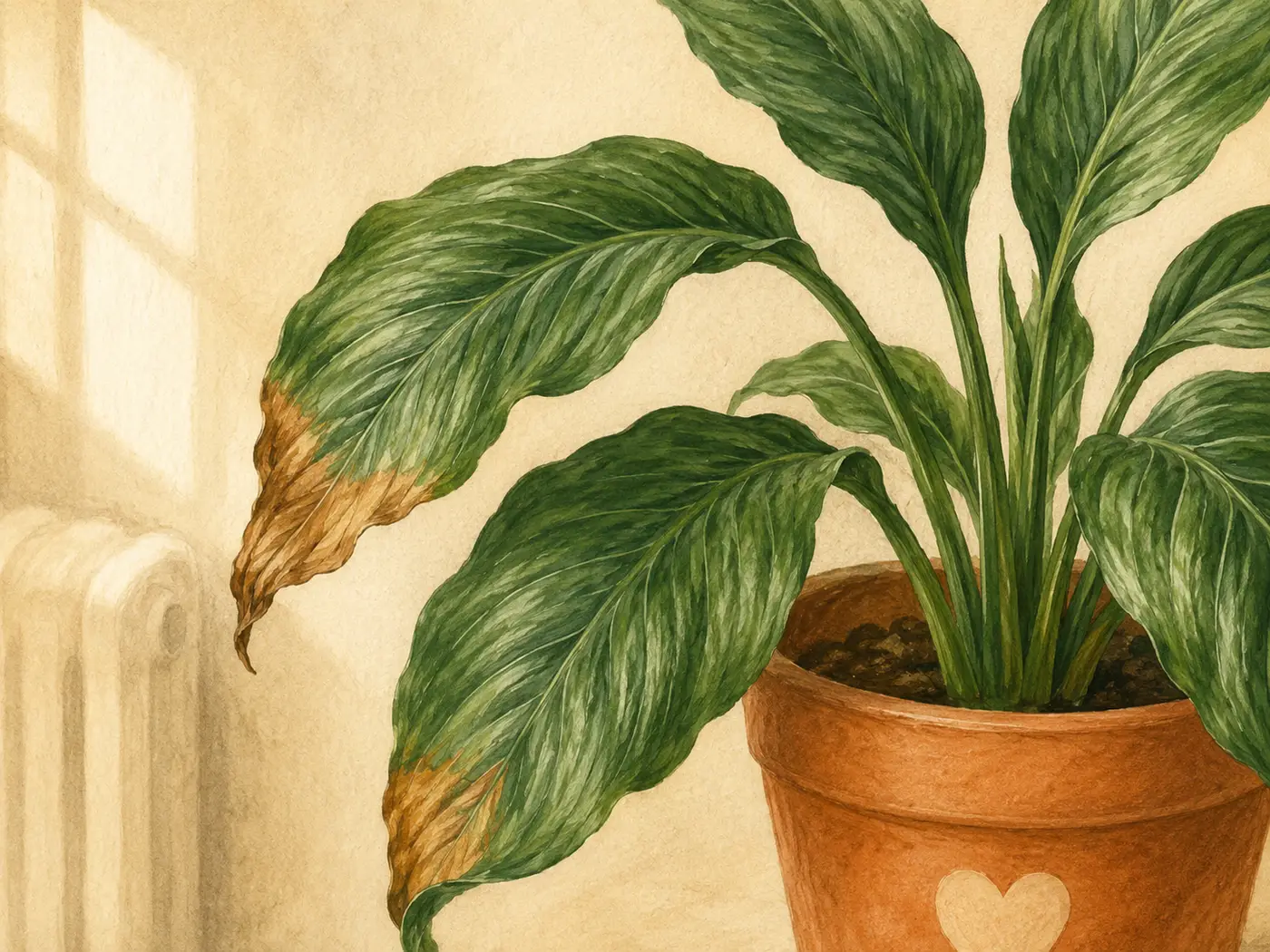
Brown leaf tips: dry air, minerals, or stress.
Brown tips are common on peace lilies. The useful clue is whether new tips keep forming after you improve the growing conditions.
At a glance
- Common causes
- Dry air, mineral buildup, inconsistent watering, fertilizer, or direct sun.
- Fix first
- Check humidity, water quality, and fertilizer strength.
- Do old tips heal?
- No. Watch the next leaf.
- Action
- Trim cleanly, then solve the upstream stress.
1. Mineral buildup from water
Minerals and treatment chemicals can build up in potting mix over time, especially if you water lightly and never let water drain through. The salts move to leaf tips and edges first, where brown tissue shows up.
Fix: water with filtered, distilled, or rainwater if your tap water is hard. Flush the pot occasionally by watering until extra water drains out, then empty the saucer. The full breakdown of which water types cause and prevent this is in the water quality guide; letting tap water sit out can reduce chlorine in some places, but it does not remove minerals, fluoride, or chloramine.
2. Low humidity
Below 30%, leaf edges desiccate faster than the plant can replace water. Get a humidifier or group your plants.
Humidity problems are usually worst in winter, near heating vents, or in very dry rooms. If a hygrometer reads 40-60% and new leaves still brown, keep looking; humidity is not the only possible cause.
3. Fertilizer burn
Brown tips with a yellow halo, plus white crust on the soil = too much fertilizer. Flush the pot.
4. Drying too far between waterings
A peace lily that repeatedly wilts hard can develop crispy tips even if you water it well afterward. The plant survives the dramatic droop, but the oldest and thinnest leaf tissue may not. Adjust the rhythm so the mix dries partly, not completely, before watering.
5. Direct sun or heat
Brown tips and edges on the side facing the window can come from hot glass or direct afternoon sun. Peace lilies want bright indirect light. If sunlight lands on the leaves for more than a short gentle morning period, pull the plant back or add a sheer curtain.
Should I trim them?
Yes — purely cosmetic, but go ahead. Cut just into the green tissue at an angle that mimics the leaf's natural taper. The fix is upstream; trimming alone won't stop new tips browning.
What to check in order
- Look for white crust on the soil, pot rim, or drainage holes.
- Check the room humidity with a hygrometer instead of guessing.
- Review fertilizer: strength, frequency, and whether you fed in winter.
- Notice whether the plant has been repeatedly drooping dry.
- Check whether direct sun or hot/cold air hits the leaf tips.
When brown tips are just old history
If the plant had brown tips when you bought it, those tips are not proof your current care is wrong. Trim them if you like, then judge only new growth. A healthy new leaf that opens cleanly is the best sign that the plant has settled into better conditions.
Brown tips plus yellow leaves
When brown tips appear together with yellowing lower leaves, inspect watering and roots before blaming dry air. A plant with stressed roots cannot supply the leaf tips well, even in a humid room. Wet soil, a heavy pot, or a sour smell should send you to the root rot guide.
A practical two-week reset
For two weeks, keep the plant in bright indirect light, water only after checking the soil, avoid fertilizer, and use filtered or rainwater if available. Trim only the worst tips. If new browning slows, you found a stress pattern. If it continues on fresh leaves, narrow the search to roots, salts, direct sun, or pests.
Do not change everything forever after one brown tip. Peace lilies often carry a few imperfect old leaves. The goal is fewer new brown tips, not a flawless plant every day of the year.
Sources & further reading
- University of Florida IFAS Extension — Spathiphyllum disease management.
- RHS plant problems database, retrieved May 2026.
- Chen, J. — Common abiotic disorders of foliage plants, ENH-Florida.