Something is wrong with my peace lily.
Start with the soil, then match the symptom. Most peace lily problems come from water, light, temperature, pests, or a pot that is no longer working well.
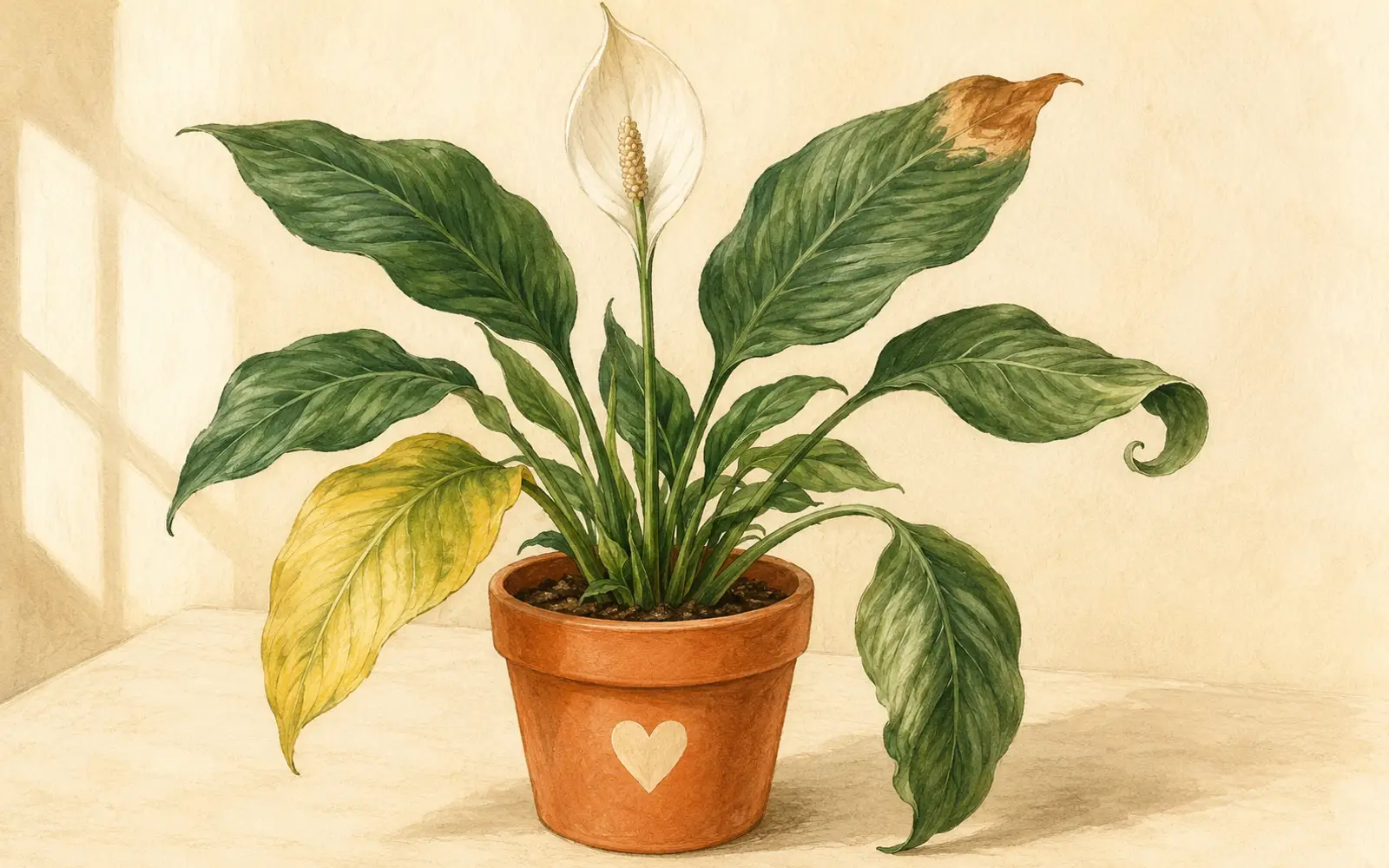
Fast diagnosis
- First check
- Feel the soil before you water. Dry droop and wet droop need opposite fixes.
- Most urgent sign
- Wilting while soil is wet, sour-smelling mix, black stems, or mushy roots.
- Most common cause
- Watering that does not match light, pot size, or soil condition.
- Best approach
- Change one thing at a time, then watch the plant for several days.
Pick the symptom you see
Start with wet or dry
The same peace lily can look dramatic for opposite reasons. A dry plant droops because it cannot move enough water into the leaves. A wet plant droops because damaged roots cannot take up water even though the pot is soaked. That is why watering before checking the soil can make a sick plant worse.
Push a finger or wooden skewer into the mix. If the top inch is dry and the pot feels light, water thoroughly and watch for recovery over the next few hours. If the pot is heavy, the soil is wet, or the plant smells sour, stop watering and inspect drainage and roots.
A peace lily that wilts in wet soil may have root rot. Do not keep watering it because the leaves look thirsty. Check the roots, remove mushy tissue, and repot into fresh airy mix if rot is present.
All problems, by symptom
Read the pattern, not one leaf
One old yellow leaf low on the plant is usually normal. Several yellow leaves at once points to a care issue. One brown tip may be old damage. Brown tips spreading across many leaves suggests water quality, fertilizer buildup, dry air, or inconsistent watering. A peace lily tells a story through pattern and timing.
Look at where the symptom appears. Lower old leaves often reflect age or long-term care. New growth damage can mean active stress. Leaf edges often show water, humidity, or salt stress. Whole-plant collapse points first to soil moisture, temperature shock, or root health.
What not to do first
- Do not fertilize a sick plant. Fertilizer does not repair damaged roots and can burn stressed tissue.
- Do not repot every problem. Repot only when roots, soil, or rot signs justify it.
- Do not move it into direct sun. More light can help, but harsh sun can scorch leaves quickly.
- Do not prune all imperfect leaves at once. Damaged leaves still help the plant photosynthesize while it recovers.
A sensible recovery order
- Check soil moisture and drainage. Decide whether the plant is dry, evenly moist, or staying wet too long.
- Check light. A dim plant uses less water and is more likely to stay wet.
- Inspect leaves and undersides. Look for webbing, cottony tufts, sticky residue, spots, or insects.
- Inspect roots if wet symptoms continue. Firm pale/tan roots are workable; mushy, hollow, sour roots need cleanup.
- Make one fix. Adjust watering, light, potting mix, or pest treatment, then give the plant time.
For one-line answers to recurring questions across these symptoms, see the peace lily FAQ.
Sources & further reading
- NC State Extension Gardener Plant Toolbox — Spathiphyllum.
- UF/IFAS Gardening Solutions — Peace Lily.
- Missouri Botanical Garden Plant Finder — Spathiphyllum group.