Drooping: thirsty, or drowning?
Peace lilies droop dramatically. The trick is figuring out which direction the problem runs in.
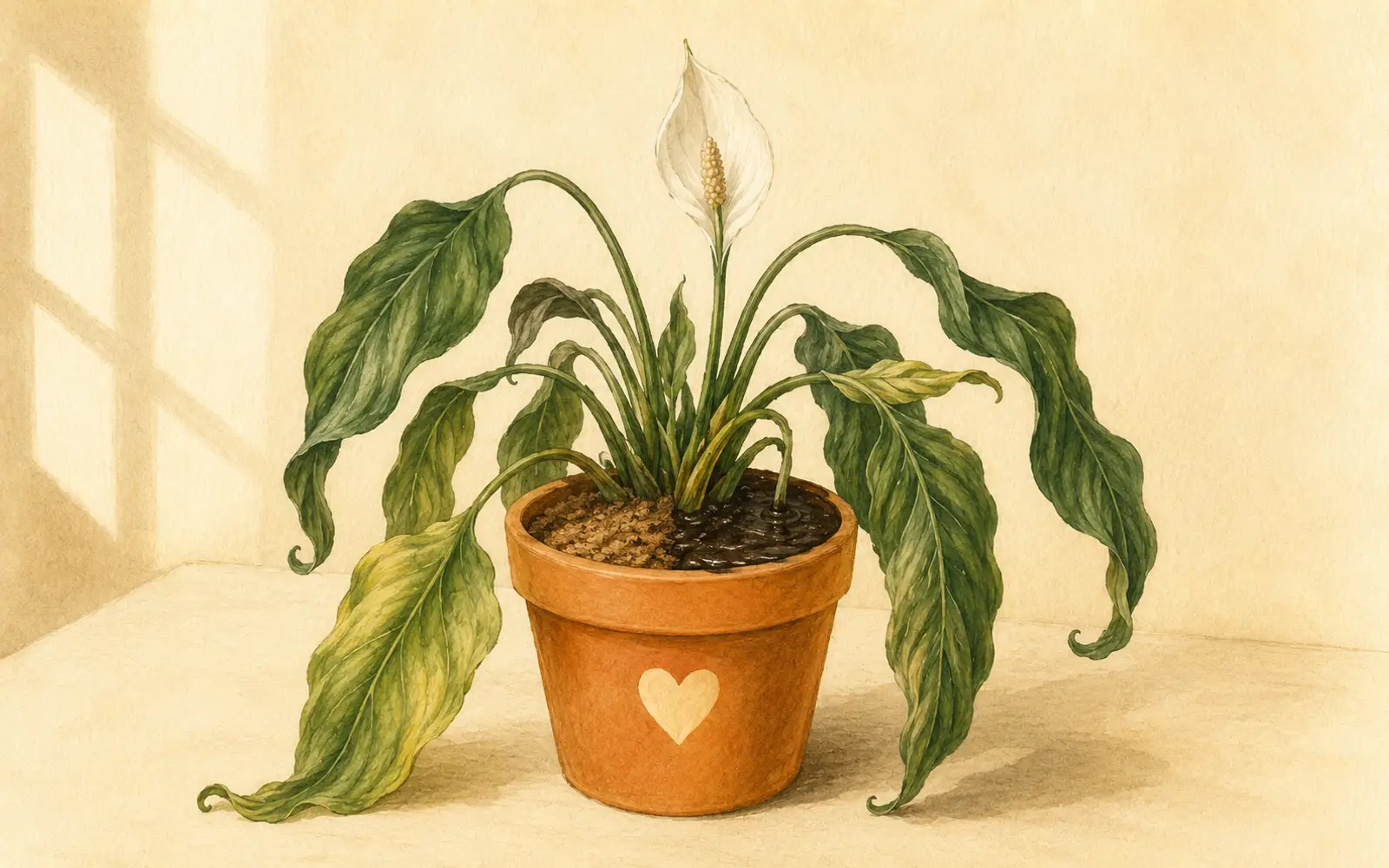
At a glance
- Thirsty droop
- Soil bone-dry; leaves recover within hours of watering.
- Drowning droop
- Soil soggy; leaves don't recover after watering — they get worse.
- Test
- Press finger 2 inches into soil before deciding.
If the soil is dry
Water deeply. Most peace lilies perk back up within 4 hours. A thorough recovery shows by morning.
If the pot is so dry that water runs down the sides and out immediately, bottom-water for 20-30 minutes, then let it drain. Very dry peat-based mixes can repel water until they are rehydrated.
If the soil is wet
Don't water. The roots are already failing. Tip the plant out and check: healthy roots are firm and white; rotting roots are brown, mushy, and smell sour.
If it's root rot, you need to act today — not next weekend.
The recovery-time test
A thirsty peace lily usually perks up within a few hours of a thorough watering. An overwatered peace lily stays limp, yellows, or gets worse after more water. That difference is important: the same drooping shape can mean opposite treatments.
Use the recovery-time test only after you have checked the soil. Do not water a wet plant just to see what happens.
Other reasons a peace lily droops
- Repotting shock: leaves may soften for a week after root disturbance — see repotting.
- Cold exposure: droop can appear after a chilly window, cold car ride, or AC blast. See temperature and black leaves if patches are darkening too.
- Heat: leaves can slump near hot glass or vents even when soil is moist.
- Pests: heavy infestations weaken new growth and can make the plant look tired — start with pests & diseases.
- Yellowing alongside droop: usually overwatering. Cross-check with yellow leaves.
What to do today
- Press a finger or wooden skewer two inches into the soil.
- Lift the pot: dry pots feel surprisingly light; wet pots feel heavy.
- If dry, water thoroughly and let excess drain.
- If wet, stop watering and check roots if the plant does not improve.
- Move the plant away from direct sun, vents, and cold glass while it recovers.
How to prevent repeat drooping
Do not water by calendar. Peace lilies use water faster in bright warm rooms and slower in cool dim rooms. Check the soil, then water deeply when the upper mix has dried enough. A pot with drainage and a consistent light level makes the rhythm much easier to learn.
Drooping after repotting
Repotting can make a peace lily droop even when you did everything right. The roots have been handled, the soil changed, and the plant needs time to reconnect. Keep it in bright indirect light, avoid fertilizer, and water only when the mix starts to dry. Most mild repotting droop improves within one to two weeks.
Drooping every few days
If the plant dramatically wilts every few days, the pot may be too small, the room may be too hot, or the soil may be drying unevenly. Check whether roots circle the pot and whether water is running straight through dry mix. If the plant is root-bound and otherwise healthy, repotting may be the real fix.
When drooping is urgent
Urgent droop means the soil is wet, the pot smells sour, leaves are yellowing quickly, or stems are soft at the base. That combination is not thirst. It is a root problem until proven otherwise, and waiting several more watering cycles usually makes it worse.
If the plant is dry, the fix can be immediate. If the plant is wet, the fix is restraint plus inspection. That is the whole drooping puzzle: same symptom, opposite response.
Best long-term setup
Use a draining inner pot, a saucer you actually empty, and a light level that lets the plant use water at a steady pace. A peace lily in a dark corner of a closed decorative pot is much harder to water correctly.
Sources & further reading
- University of Florida IFAS Extension — Spathiphyllum disease management.
- RHS plant problems database, retrieved May 2026.
- Chen, J. — Common abiotic disorders of foliage plants, ENH-Florida.