Peace lily blooms, explained simply.
The white part is a spathe, the central spike is the spadix, and the main bloom trigger indoors is enough bright indirect light over time.
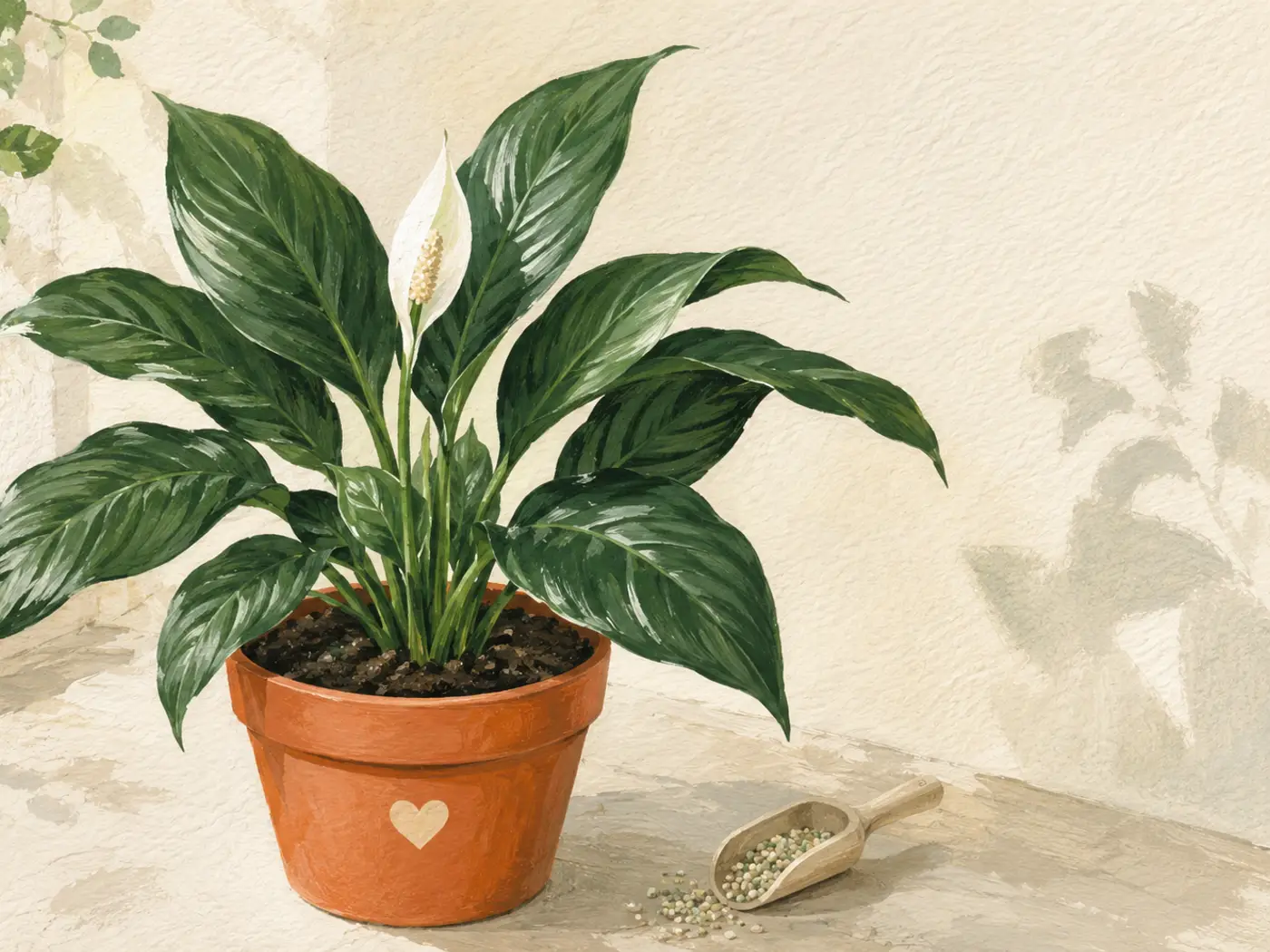
Bloom basics
- White part
- A spathe: a modified leaf that surrounds the spadix.
- True flowers
- Tiny flowers grow on the spadix, the central spike.
- Main bloom need
- Bright indirect light for weeks to months, not harsh direct sun.
- Normal aging
- Blooms often fade from white to green, then brown as they finish.
How to make it bloom
Light, maturity, feeding, and patience.
Flower turning green?
Usually normal spathe aging, not a failure.
Flower turning brown?
When to deadhead and when to check stress.
What a peace lily flower actually is
Most people call the white sail-shaped part the flower. Botanically, that white part is the spathe. The actual flowers are tiny and sit on the spadix, the upright central spike. This matters because the spathe behaves more like a leaf than a fragile petal. It can turn green as it matures because it contains chlorophyll.
A healthy spathe can last for weeks. It usually opens pale white, ages toward cream or green, then eventually browns. That sequence is normal. What matters is whether the plant keeps producing healthy leaves and whether new blooms appear during good growing conditions.
Why peace lilies stop blooming indoors
The most common reason is low light. Peace lilies can tolerate dim rooms, but they bloom better where they receive bright indirect light. A plant in a dark corner may stay alive for years and still never flower. If leaves are healthy but blooms are absent, light is the first thing to improve.
Other causes include immaturity, recent repotting or division, root stress, winter slowdown, and very weak feeding over a long period. Fertilizer alone will not make a dark-room plant bloom. Fix light first, then feed lightly during active growth.
Too much fertilizer can burn roots and create brown tips. A peace lily needs enough light to use nutrients. Feed lightly only when the plant is actively growing.
How to encourage blooms
- Move it to brighter indirect light. Try an east window or a bright room away from harsh afternoon sun.
- Keep watering steady. Repeated drought and soggy soil both stress roots and delay flowering.
- Let it be slightly snug. A mildly pot-bound peace lily can bloom well; a huge wet pot can slow it down.
- Feed lightly in spring and summer. Use diluted balanced fertilizer and flush salts occasionally.
- Give it time. Improvements in light may take weeks or months to show as blooms.
When to remove old blooms
Cut a spent bloom when the spathe is brown, papery, or no longer attractive. Follow the bloom stalk down to the base and cut it cleanly without cutting nearby leaves. Removing old blooms keeps the plant tidy and lets you notice new growth more easily.
If blooms turn brown very quickly, check for harsh sun, drought, heat, fertilizer burn, or root stress. If they gradually turn green first, then brown later, that is usually normal aging.
What to expect after buying one in bloom
A store plant may arrive with several blooms because it was grown under controlled nursery conditions. Those blooms will age. The plant may then spend months making leaves while it adapts to your home. That does not mean you failed. It means the plant is adjusting to a different light level and care rhythm.
If you want repeat blooms, focus on the next growth cycle: brighter indirect light, steady watering, modest feeding, and a pot that is not too large. Do not chase blooms by constantly moving, repotting, and fertilizing.
Bloom color clues
- White or cream: fresh to mature spathe color for many plants.
- Green: often normal aging or lower light; not automatically a problem.
- Brown and papery: finished bloom that can be cut off.
- Brown quickly with leaf stress: check sun, drought, fertilizer, or root health.
Sources & further reading
- NC State Extension Gardener Plant Toolbox — Spathiphyllum flower and care notes.
- UF/IFAS Gardening Solutions — Peace Lily.