You just got a peace lily. Now what?
Five minutes of work in your first week saves months of trouble. Here's exactly what to do — and, just as important, what not to do.
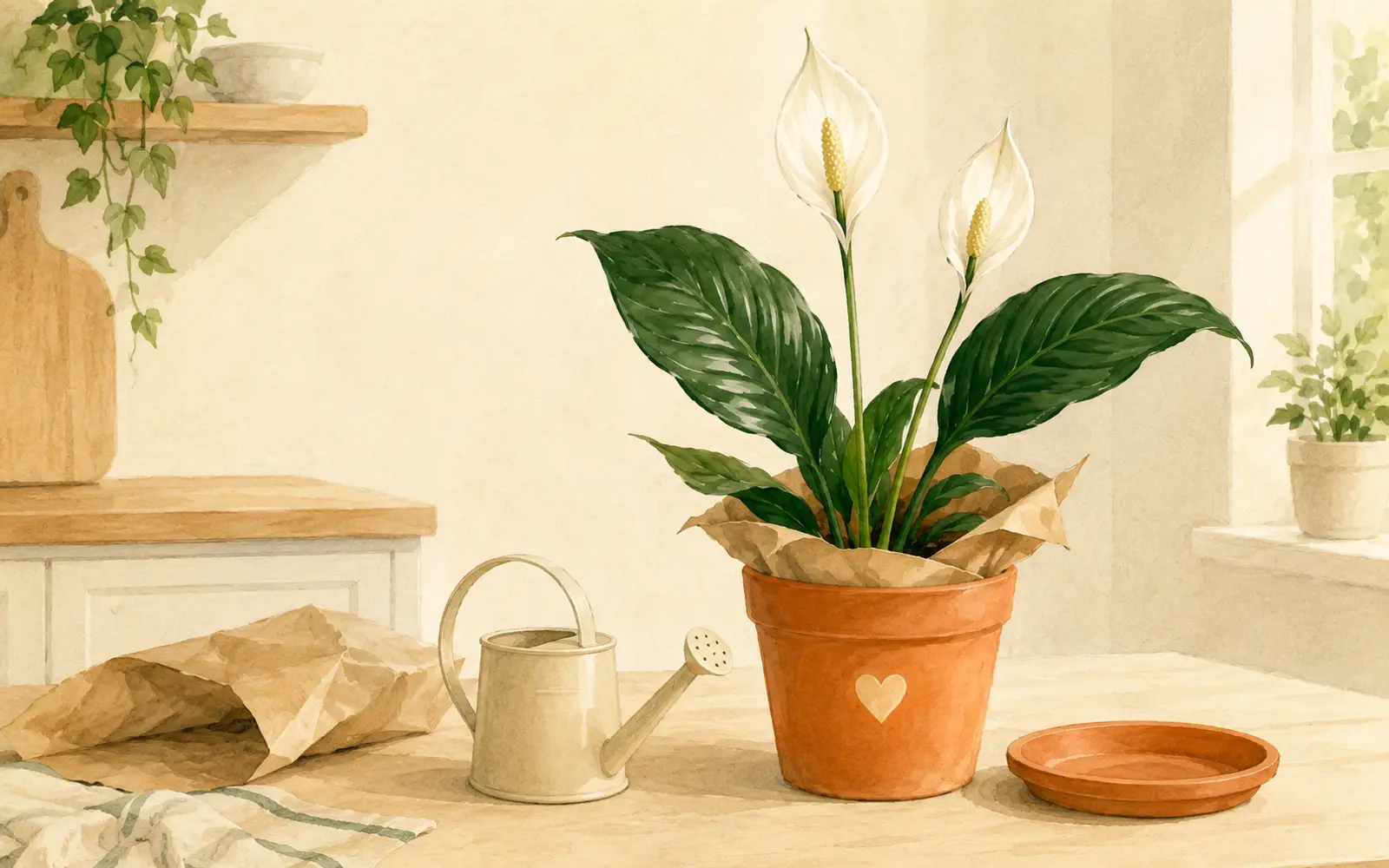
The 60-second version
- Today
- Put it 4–6 ft from a bright window (not in direct sun). Don't water yet.
- This week
- Water once, deeply, when the top inch of soil feels dry.
- This month
- Don't repot. Don't fertilize. Don't move it. Just observe.
Day 1: Where to put it
Peace lilies want the kind of light you'd want to read by — bright, but not direct sun. The single biggest mistake new owners make is sticking the plant on a south-facing windowsill. Direct afternoon sun will scorch the leaves within a week.
The best spot in most homes: 4 to 6 feet back from an east- or north-facing window. They tolerate lower light beautifully but won't bloom in dim conditions. Detailed light guide →
The grower watered it before shipping. Wet soil + a stressed plant = rot. Wait until the top inch feels dry — usually 5–10 days from arrival.
Days 2–7: Just watch
Resist the urge to do anything. Peace lilies are dramatic. They'll droop, perk back up, drop a leaf or two — all of that is normal acclimatization. If a leaf yellows in the first week, leave it. The plant is allocating energy to its new home.
- Check the soil daily with one finger. Press an inch in. Wet, damp, or dry?
- The first time it's dry, water slowly until it drains from the bottom. Empty the saucer after 10 minutes.
- Wipe the leaves with a damp cloth if there's shipping dust. Both sides.
- Don't repot. Even if the pot looks small. The shock will set you back weeks.
- Don't fertilize. Nursery soil is loaded for months.
Week 2 onward: The rhythm
By now your peace lily knows where it lives. From here, the routine is:
- Water when the top inch is dry (usually every 7–10 days).
- Fertilize at half-strength every 6 weeks in spring and summer only.
- Wipe leaves monthly to keep them photosynthesizing efficiently.
- Repot only when roots circle the bottom or push out drainage holes — usually once every 2 years.
The first month checklist
Keep the plant in one stable place, learn how heavy the pot feels after watering, and watch the newest leaf. New growth tells you more than old nursery leaves. Do not chase every small blemish with a new product or a new pot.
If the plant came wrapped in foil or sitting inside a decorative cover, check that water can drain. Many first-month problems come from a hidden puddle under a nursery pot.
What not to buy yet
You do not need fertilizer, leaf shine, moisture gadgets, or a bigger pot on day one. A good location, a draining pot, and careful watering matter more. Buy extra supplies only when the plant shows a real need.
If you are still shopping and have not chosen a plant yet, the how-to-buy guide walks through what to inspect at the store and how to avoid bringing home a plant that is already struggling.
If something goes wrong
Sources & further reading
- University of Florida IFAS Extension — Spathiphyllum spp. fact sheet, 2024.
- Royal Horticultural Society — Peace lily care guide, retrieved May 2026.
- Missouri Botanical Garden — Spathiphyllum wallisii, plant finder database.