Fungus gnats in peace lily soil: identify and treat them.
Tiny dark flies around the soil may be fungus gnats. Check the insects and the mix: persistent moisture favors them, but flies alone do not prove the roots are rotting.
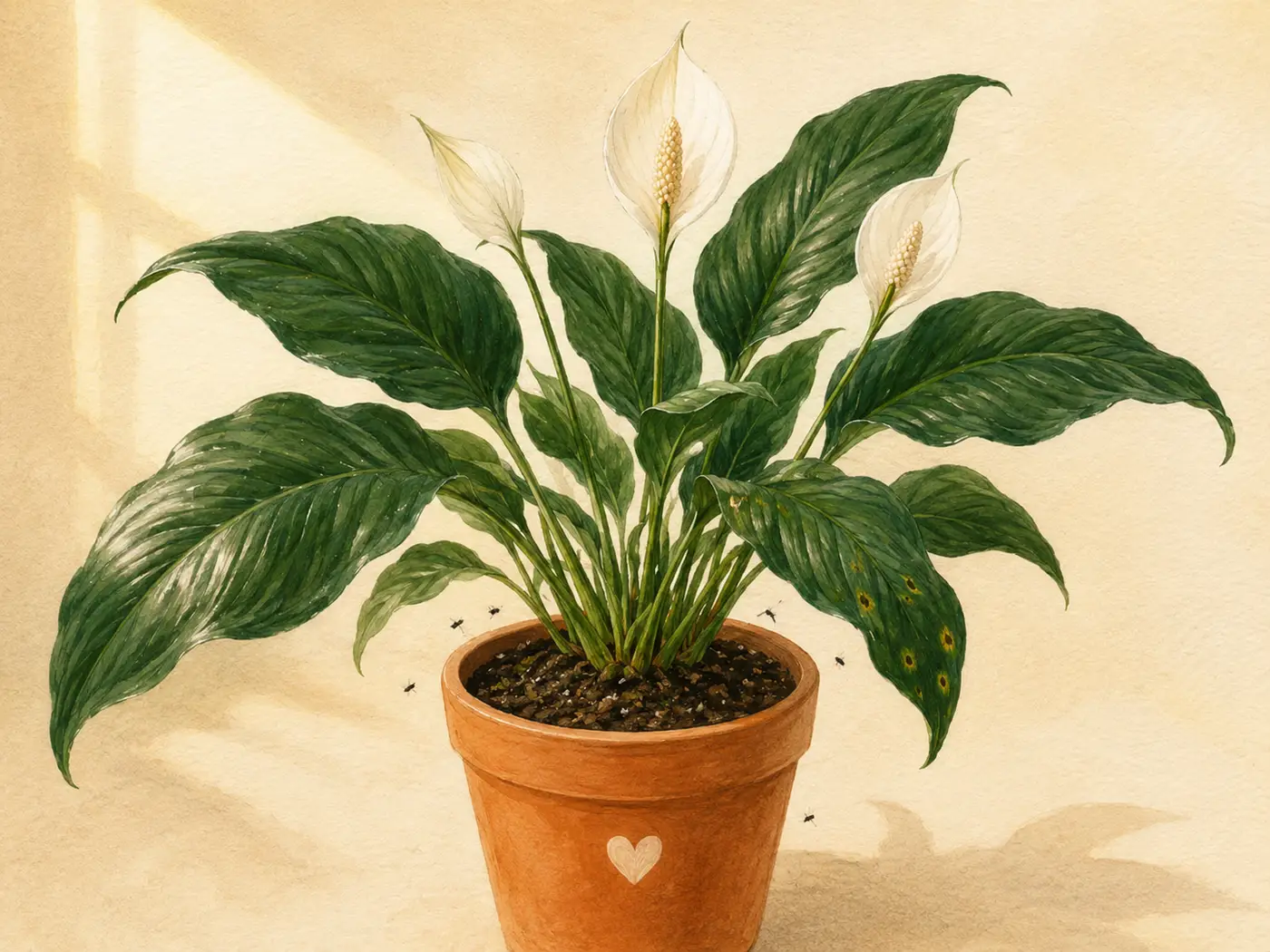
At a glance
- Tell
- Small black flies hovering near soil; tiny worms in topsoil
- Cause
- Soil staying wet too long
- Treatment
- Manage surface moisture; trap adults; use a labeled larval treatment if needed
The fix
- Check soil moisture. Allow the surface to dry between waterings without leaving the entire root ball bone dry.
- Place yellow sticky traps near the pot to catch adults.
- If larvae persist, choose a BTI product labeled for fungus gnats and the intended use site. Follow its preparation, application and repeat-treatment instructions.
- Empty trapped water and adjust watering to the plant and mix. Do not deliberately keep a wilting plant dry just to treat gnats.
Do peace lilies attract gnats?
Fungus gnats breed in consistently damp organic potting mix. Peace lilies like evenly moist soil, so they are easy to overwater just enough to invite gnats. The flies are annoying, but the bigger message is that the surface of the soil is staying wet too long.
Adults vs larvae
Sticky traps catch adult flies, which reduces the swarm, but larvae live in the top layer of soil. To actually end the cycle, dry the surface between waterings and use BTI if the problem persists. BTI targets larvae; not every mosquito product has the same label or application method.
Check that they really are fungus gnats
| What you see | What to inspect |
|---|---|
| Small dark flies walking on or hovering near soil | Moist mix and adults caught on a sticky card: possible fungus gnats |
| Fine webs and pale speckling on leaves | Leaf undersides: consider spider mites, which do not fly |
| White insects flying up when foliage is disturbed | Check leaf undersides; do not assume a soil treatment will solve it |
Check neighboring pots too. Record whether new adults keep appearing after treatment; use the product’s repeat interval rather than a fixed three-week recipe.
Do not overcorrect
Do not let the entire root ball become bone dry for long periods just to kill gnats. Peace lilies can wilt hard when kept too dry. Aim to dry the top layer while keeping the deeper root zone from staying soggy.
Check the pot and mix
If gnats keep returning, the pot may be too large, the mix may be compacted, or drainage may be poor. A peace lily in a heavy decorative pot with no drainage is almost always harder to keep gnat-free. Repot into a draining pot and a lighter mix if the soil smells sour or stays wet for a week.
When gnats are a root warning
Gnats alone are not root rot, but gnats plus yellow leaves, drooping in wet soil, or a sour smell should make you inspect the roots. The same wet conditions that breed gnats can also deprive roots of oxygen.
How to water while treating gnats
Water deeply when the plant actually needs it, then let the pot drain and allow the top layer to dry again. Small frequent sips keep the surface damp, which is exactly what larvae prefer. A deeper, less frequent rhythm is usually better for both roots and gnat control.
Surface barriers
A thin layer of horticultural sand or fine pumice can make the surface less inviting for egg laying, but it is not a substitute for correct watering. Do not pile on a thick decorative layer that traps moisture or hides the soil from your checks.
What success looks like
Adults should decline first as traps fill. Larvae take longer because they are in the soil. If new adults keep appearing, inspect other pots and recheck moisture and drainage. Repeat a treatment only as its label directs.
Common treatment mistakes
- Using sticky traps but never changing the watering pattern.
- Letting the plant sit in saucer water after treatment.
- Adding a thick decorative top layer that keeps moisture hidden.
- Repotting into an even larger pot, which keeps more soil wet.
When to repot
Repot if the mix is sour, compacted, or staying wet despite improved watering. Choose a pot only slightly larger than the root ball and use a mix that drains well while still holding some moisture.
After repotting, skip decorative moss on top of the soil. It can look tidy, but it keeps the surface damp and makes it harder to see when the mix is drying.